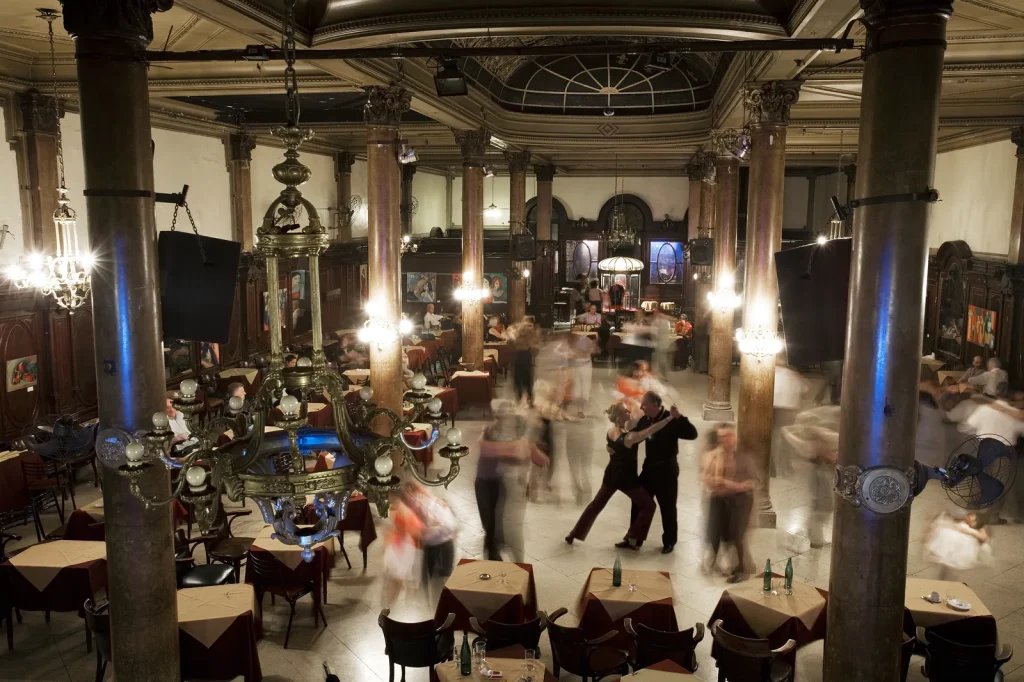
Tango: UNESCO Intangible Cultural Heritage of Argentina and Uruguay (File 00258)
Tango — the performing art encompassing music, dance, and song that emerged in the working-class neighborhoods of Buenos Aires and Montevideo along the Río de la Plata — was inscribed on UNESCO’s Representative List of the Intangible Cultural Heritage of Humanity in 2009, at the 4th session of the Intergovernmental Committee (4.COM), registered as File 00258, Decision 4.COM 13.01. The session was held in Abu Dhabi; tango was the first element examined and approved from the 76 nominations submitted to 4.COM. The inscription recognized the joint nomination of Argentina and Uruguay — acknowledging the tradition’s origins in the cross-border cultural world of the Río de la Plata basin as a synthesis of African-descended, European immigrant, and criollo communities.
- Tango is inscribed on UNESCO’s Representative List as File 00258, Decision 4.COM 13.01, 2009 (4th session of the Intergovernmental Committee, Abu Dhabi) — a joint nomination by Argentina and Uruguay.
- Tango emerged in the working-class port neighborhoods of Buenos Aires and Montevideo in the late 19th century (the word appears in Argentine usage by the 1890s; the Teatro Opera included it in balls by 1902) — synthesizing Cuban habanera, Argentine milonga, Uruguayan candombe, and European dance forms (polka, mazurka, waltz).
- The bandoneón — an accordion-like instrument from Germany that arrived in Buenos Aires around 1870 and became inextricably linked to tango from around 1910 — defines the tango sound; the standard ensemble is the orquesta típica with bandoneón, piano, and violin.
- The Golden Age of tango (1935–1955) was dominated by the orquestas típicas of Juan D’Arienzo (“El Rey del Compas”), Carlos Di Sarli, and Aníbal Troilo; Astor Piazzolla’s nuevo tango (from the 1950s) incorporated jazz and classical elements, elevating the genre to concert stages.
- Tango is transmitted through the social ecosystem of the milonga (the dance event and the dance form associated with tango’s precursor), through teacher-pupil relationships, and through a global network of tango schools, festivals, and community events that UNESCO recognized as the living transmission system of the practice.
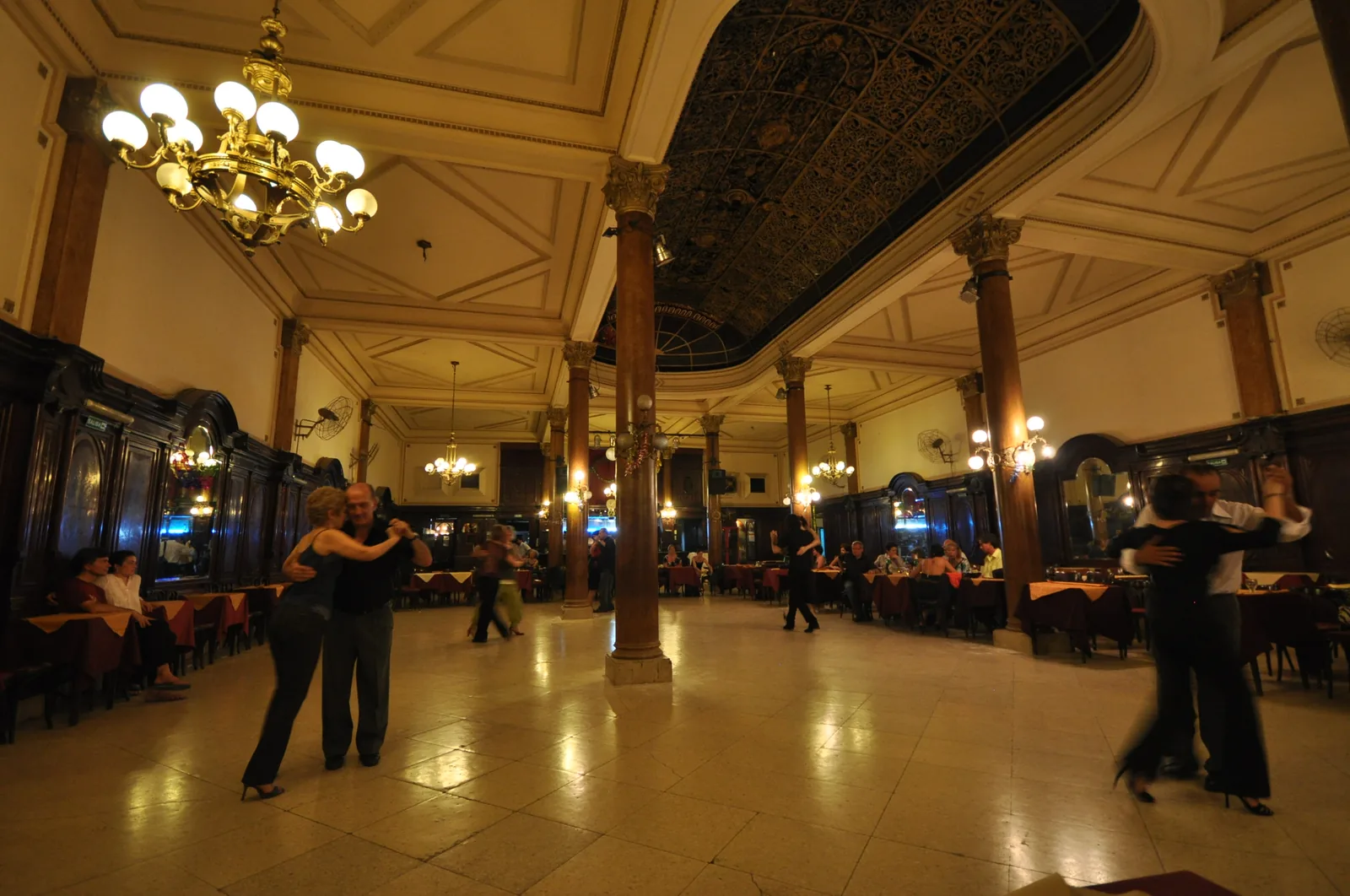
Tango: Origins in the Río de la Plata and UNESCO Inscription
Tango emerged in the 1880s–1890s in the working-class port neighborhoods and conventillos (immigrant tenement housing) of Buenos Aires and Montevideo — neighborhoods where African-descended communities, Italian and Spanish immigrants, and native-born criollos lived in close proximity. The synthesis produced a new music and dance form: the milonga, the immediate precursor of tango, drew on the candombe of Afro-Uruguayan tradition, the Cuban habanera brought through maritime trade routes, and the rhythms of European dances (polka, mazurka, waltz) brought by immigrant communities. The word “tango” was used in the Río de la Plata during the 18th and 19th centuries to designate sites of Black dances; it re-entered usage in the late 19th century via Cuba and Andalusia to designate the new musical genre. By 1902, the Teatro Opera in Buenos Aires included tango in their programs. By 1912, Argentine musicians had brought tango to Europe — Paris experienced the first international tango craze, followed by London, Berlin, New York, and Helsinki by late 1913. Rudolph Valentino’s 1921 film performance introduced tango to American mass audiences. Initially dismissed by Argentine and Uruguayan elites as vulgar due to its associations with marginalized communities, tango was gradually embraced by all social classes as it achieved international recognition.
Carlos Gardel — who recorded his first tango in 1917 — transformed tango song (tango canción) into a vehicle for romantic tragedy and working-class poetry, becoming the defining interpreter of the tradition. In the 1930s, Juan D’Arienzo reinvigorated the dance by returning to the driving rhythmic emphasis of tango’s earliest forms, earning him the title “El Rey del Compas” (King of the Beat). Aníbal Troilo, who debuted in 1937, became one of the most celebrated bandoneón players and orchestra leaders of the Golden Age (1935–1955) — at its height, approximately 50 orquestas típicas performed across Buenos Aires’s salons, cafés, cabarets, and social clubs. Astor Piazzolla, who had worked as arranger for Troilo’s orchestra, developed nuevo tango from the 1950s onward — incorporating jazz harmony, counterpoint, and extended compositional forms and redirecting tango from the social dance floor to the concert stage. Piazzolla’s reinvention was initially controversial among traditionalists but ultimately expanded the tradition’s artistic scope internationally.
UNESCO inscribed tango in 2009 at 4.COM under Decision 4.COM 13.01. The inscription recognized tango as embodying “diversity and cultural dialogue” — acknowledging its origins in the fusion of African, European, and criollo cultures as a defining feature of the tradition, not a background historical footnote. The nomination was submitted jointly by Argentina and Uruguay, recognizing the tradition’s binational character. UNESCO identified the milonga — the dance event where tango is practiced socially — as the primary transmission environment, alongside teachers, academies, and the broader community of dancers, musicians, singers, and choreographers. Tango is transmitted through both informal practice and formal instruction; the living community today includes professional performers, social dancers, and an international network of practitioners across Europe, East Asia, and North America. For broader context on UNESCO’s ICH framework, the UNESCO intangible cultural heritage overview explains the 2003 Convention; for comparison with another dance tradition, the flamenco UNESCO inscription article covers the 2010 inscription of Spain’s cante-baile-toque tradition.
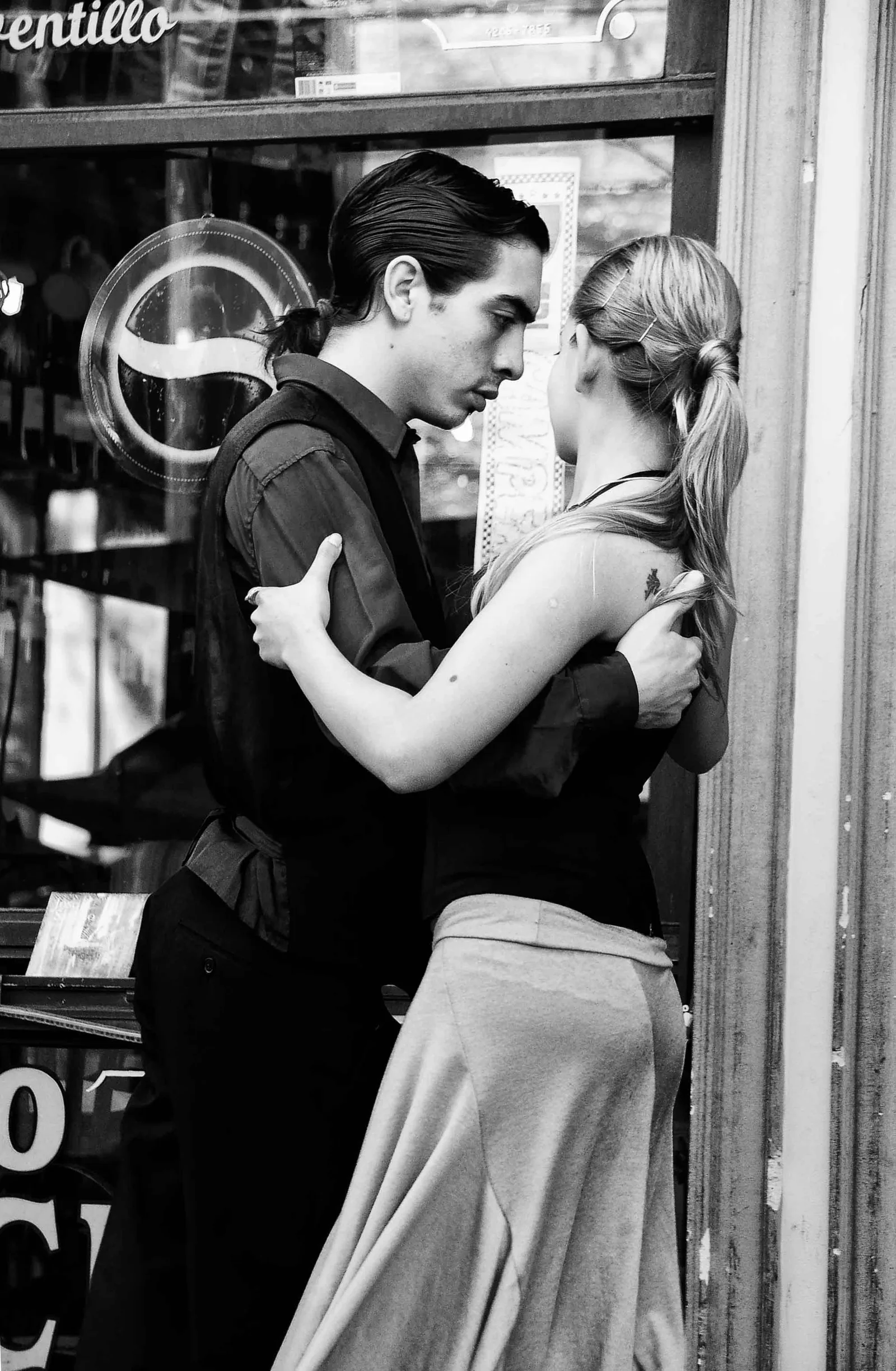
Tango Music, Dance, Performance Styles, and Transmission
The musical foundation of tango is built around the bandoneón — an accordion-like free-reed instrument developed in Germany in the mid-19th century that arrived in Buenos Aires around 1870 and became the defining voice of tango from around 1910 onward. The standard tango ensemble is the orquesta típica: bandoneón section, piano, violin section, double bass, and optional cello. Between 1910 and 1920, tango featured on approximately 2,500 of the 5,500 records released in Argentina — establishing it as the dominant popular music of the era. The compás (rhythmic structure) of tango is organized in 2/4 or 4/8 time with a characteristic emphasis on the second beat; the milonga form uses a faster, more syncopated rhythm drawing directly on candombe and habanera. The basic tango couplet structure consists of two eight-bar phrases with a characteristic AA BB form; improvisation occurs within this structure.
Tango dance is categorized into several recognized styles. Tango de salón is the social dance form practiced at milongas — characterized by close embrace, walking technique, and communication through the torso without fixed choreography. Tango escenario (stage tango) is theatrical, with open embrace, acrobatic elements, and preset choreography. The milonga dance form (distinct from the event) is faster, more rhythmically emphatic, and associated with the music’s candombe roots. Vals tango applies tango movement vocabulary to 3/4 waltz time. Social tango transmission occurs through the milonga event itself: invitation is traditionally extended by cabeceo (a head-nod system that allows both parties to accept or decline without direct approach), and the dance is performed in tandas (sets of three to four consecutive songs by the same orchestra, separated by a cortina — a brief musical interlude signaling partner change). UNESCO recognized this social infrastructure — the codes, etiquette, and community knowledge of the milonga — as integral to the intangible heritage. For the official inscription documentation, ich.unesco.org/en/RL/tango-00258 is the authoritative source.
Frequently Asked Questions
Is tango a UNESCO intangible cultural heritage?
Yes. Tango is inscribed on UNESCO’s Representative List of the Intangible Cultural Heritage of Humanity as File 00258. It was inscribed in 2009 at the 4th session of the Intergovernmental Committee (4.COM, Decision 4.COM 13.01) in Abu Dhabi, through a joint nomination by Argentina and Uruguay. UNESCO recognized tango as a living cultural practice encompassing music, dance, and song that embodies diversity and cultural dialogue through its origins in the fusion of African, European, and criollo cultures in the Río de la Plata region.
Where did tango originate?
Tango originated in the 1880s–1890s in the working-class port neighborhoods of Buenos Aires (Argentina) and Montevideo (Uruguay) along the Río de la Plata. It emerged from the convergence of African-descended communities (candombe), Italian and Spanish immigrants (European dance forms), and criollos who together developed the milonga — the immediate precursor of tango. The word “tango” appears in Argentine usage by the 1890s; the Teatro Opera in Buenos Aires included it in their programs by 1902.
What is the bandoneón and why is it central to tango?
The bandoneón is an accordion-like free-reed instrument developed in Germany in the mid-19th century that arrived in Buenos Aires around 1870 and became inextricably linked to tango music from around 1910 onward. It provides tango’s characteristic melancholic and expressive tonal quality. The standard tango ensemble — the orquesta típica — is built around the bandoneón section alongside piano, violin, and double bass. Carlos Gardel, Juan D’Arienzo, and Aníbal Troilo all performed with bandoneón-led orchestras; Astor Piazzolla was himself a virtuoso bandoneón player as well as a composer.
What is the Golden Age of tango?
The Golden Age of tango (1935–1955) was the period of maximum popularity and artistic achievement in Buenos Aires, when approximately 50 orquestas típicas performed across salons, cafés, and social clubs. Leading orchestras of the Golden Age included Juan D’Arienzo (known for rhythmic driving energy), Carlos Di Sarli, and Aníbal Troilo. Most music played at contemporary milongas worldwide is drawn from Golden Age recordings. The era ended as rock and roll displaced tango in popular entertainment, though the tradition was revived internationally from the 1980s onward.
How is tango transmitted?
Tango is transmitted through the social milonga event — where dancers practice socially and acquire movement vocabulary through the cabeceo invitation system and tandas (song sets) — alongside formal instruction through academies and teachers. UNESCO’s inscription recognized this dual system: the lived community practice of the milonga and the formal teacher-pupil transmission. Today tango has spread internationally with active communities in Europe, East Asia, North America, and beyond, connected through a global calendar of festivals and marathons.