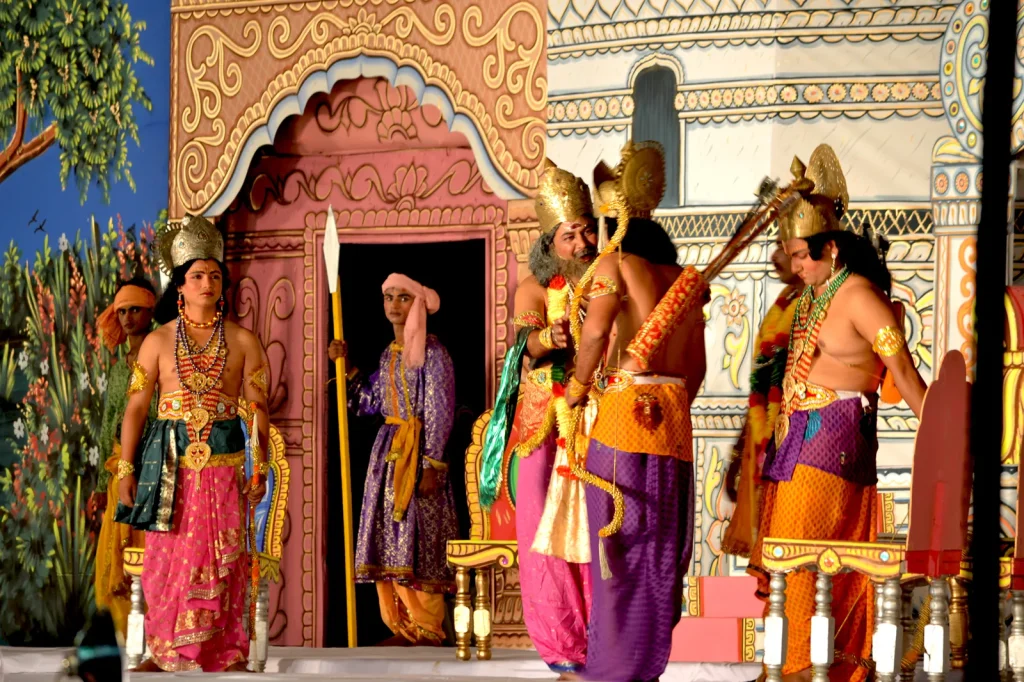
Ramlila: UNESCO Intangible Cultural Heritage of India (File 00110)
Ramlila — the traditional dramatic performance of the Ramayana epic practiced across northern India during the autumn festival of Dussehra — is inscribed on UNESCO’s Representative List of the Intangible Cultural Heritage of Humanity as File 00110. India submitted the nomination; UNESCO inscribed it at its 3rd session (Decision 3.COM 1) in 2008, having first recognized it as a Masterpiece of the Oral and Intangible Heritage of Humanity in 2005 under the predecessor programme that was absorbed into the Representative List when the 2003 Convention came into force. Ramlila — the word combines Rama (the seventh avatar of Vishnu and the epic’s protagonist) and lila (“play” or “divine performance”) — is a theatrical re-enactment of the Ramayana presented as a series of scenes combining song, narration, recital, and dialogue, performed by communities across Uttar Pradesh, Uttarakhand, and other northern Indian states during Navaratri and culminating in the burning of demon Ravana’s effigy on Dussehra.
- Ramlila (File 00110) is inscribed on UNESCO’s Representative List of the Intangible Cultural Heritage of Humanity — India’s nomination, inscribed at 3.COM in 2008 (originally proclaimed UNESCO Masterpiece in 2005). India has 16 UNESCO ICH inscriptions in total as of 2025.
- Ramlila is based on the Ramcharitmanas — a retelling of the Ramayana composed by the poet-saint Tulsidas in the 16th century in Awadhi (a dialect of Hindi) — which made the Sanskrit epic accessible to all and became the textual foundation for most North Indian Ramlila performances.
- Most Ramlilas last 10 to 12 days during the Navaratri-Dussehra period (September–October); the Ramnagar Ramlila (near Varanasi) lasts 31 days, transforms the entire town into an open-air theatrical landscape, and attracts over one million attendees annually under the patronage of the Maharaja of Kashi (Kashi Naresh).
- Ramlila performances involve Svarupas (literally “divine embodiments”) — community members who embody the divine characters — and a Vyasi (narrator/organizer) who holds the Ramcharitmanas text and directs performers; female roles are traditionally played by male performers.
- UNESCO recognized Ramlila’s particular significance as a tradition that unites communities “without distinction of caste, religion or age” — its community participation (mask-making, costume preparation, effigy construction, audience chanting) defines it as intangible heritage rather than a scripted theatrical production.
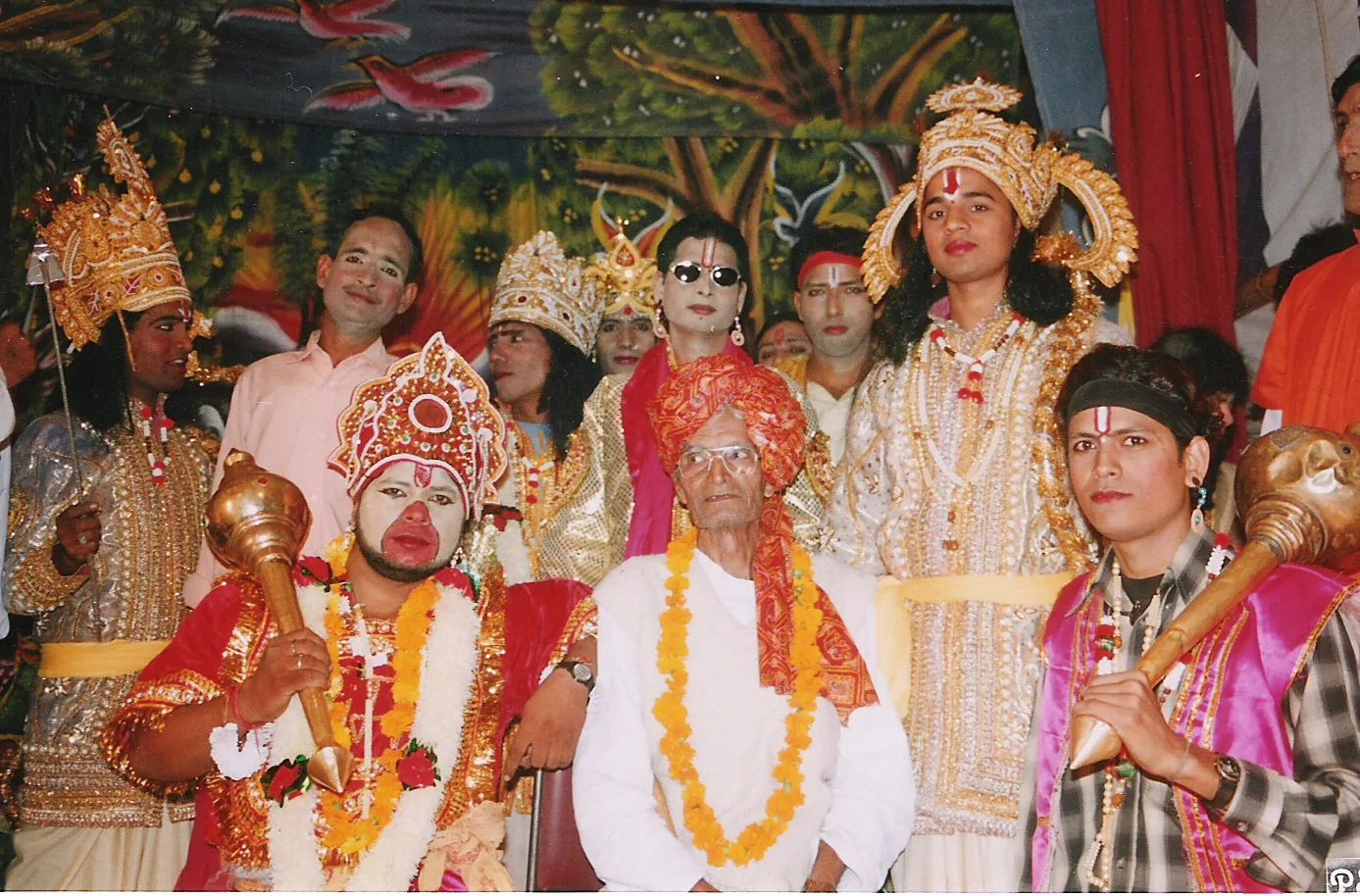
Ramlila Performance Tradition: Ramcharitmanas, Svarupas, and UNESCO’s Recognition
Ramlila (File 00110, Representative List, Decision 3.COM 1, 2008) is rooted in the Ramcharitmanas — the retelling of the Ramayana composed by Tulsidas (c. 1532–1623) in Awadhi, a dialect of Hindi spoken in the Gangetic plain of Uttar Pradesh. Tulsidas completed the Ramcharitmanas c. 1574 at Varanasi, rendering the Sanskrit epic available in the vernacular and transforming it into one of the most widely recited religious texts in North India. The documented Ramcharitmanas-based Ramlila tradition is traced to c. 1625, attributed to Megha Bhagat, a disciple of Tulsidas, who staged the first structured performance at Varanasi. The text’s Awadhi verses, which are sung and recited during performance, are considered inseparable from the tradition — Ramlila is not simply a dramatization of the Ramayana story but a performance of the specific Tulsidasi verse, which practitioners have memorized and transmitted across four centuries.
The performance structure involves several specialized roles. Svarupas (from svarupa, “own form” or “divine embodiment”) are the performers who embody the divine characters — Rama, Lakshmana, Sita, Hanuman, Ravana, and others — selected through community audition and, in some traditions, drawn from families with hereditary rights to specific roles. In the Ramnagar tradition, Svarupas are treated as literal divine presences during the performance period: audiences offer pranams (reverential salutations) to them as if to deities. The Vyasi (also rendered Vyas or Ramayani) is the narrator-organizer who holds the Ramcharitmanas manuscript, recites the verses that frame each scene, and directs performers from the side of the performance space. Local musicians — playing manjira cymbals and other traditional instruments — perform devotional hymns between scenes. Female roles are traditionally performed by male community members in most Ramlila traditions. The audience participates actively: chanting the name of Rama (Jai Shri Ram), processing between performance locations, and contributing to the construction of the elaborate effigies of Ravana, Meghnath, and Kumbhkarna that are burned on Dussehra — the culminating ritual act that marks Rama’s victory over the demon king. For the authoritative documentation, ich.unesco.org/en/RL/ramlila-the-traditional-performance-of-the-ramayana-00110 is the UNESCO source. For the ICH framework governing all inscriptions, the UNESCO intangible cultural heritage overview explains the 2003 Convention.
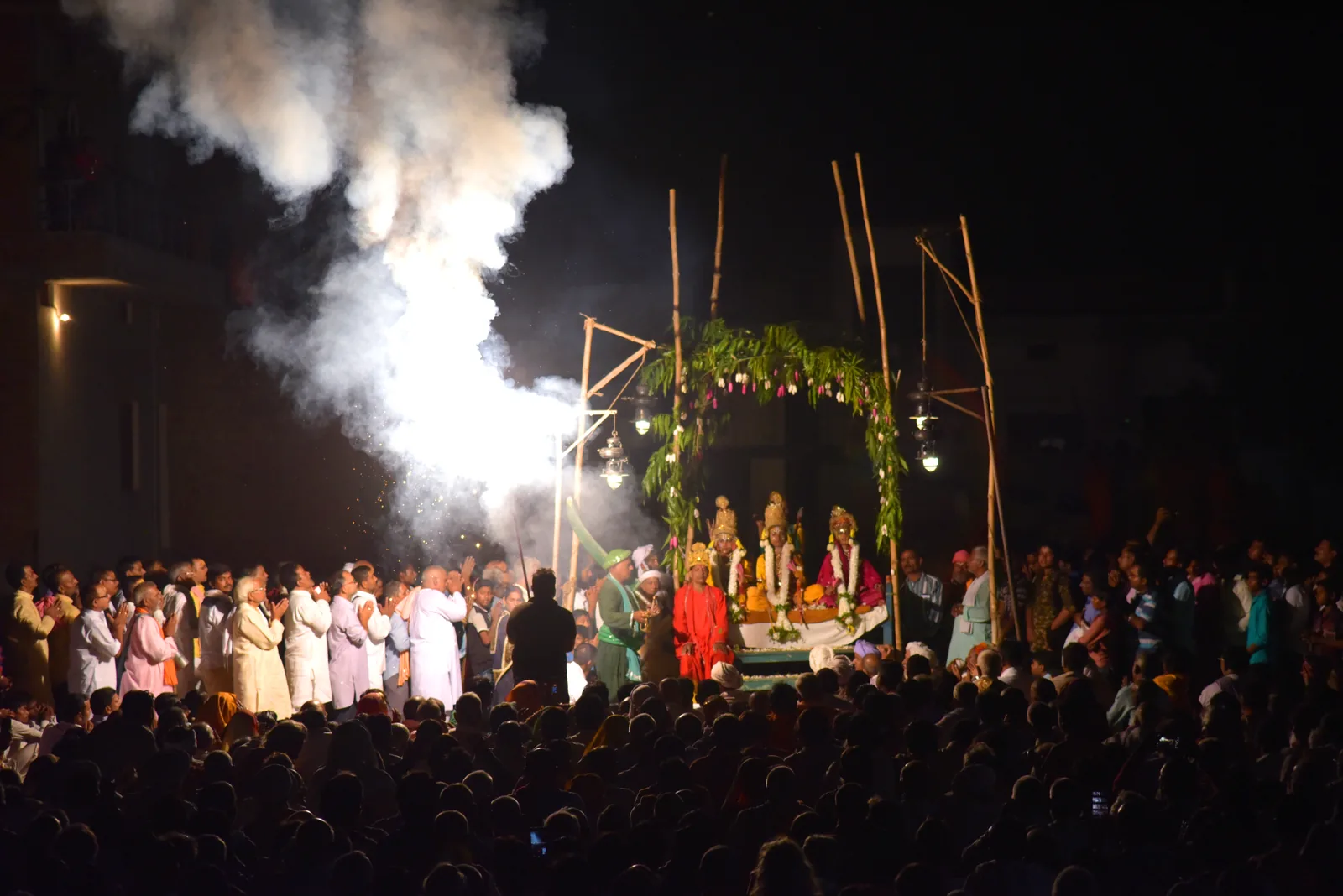
The Ramnagar Ramlila and India’s Complete UNESCO ICH List
The Ramnagar Ramlila — staged at Ramnagar, across the Ganges from Varanasi — is the most elaborate of all regional Ramlila traditions and the one that most fully exemplifies UNESCO’s recognition of the tradition’s scale and community significance. Initiated around 1830 by Maharaja Udit Narayan Singh of Kashi (Kashi Naresh), the Ramnagar Ramlila spans 31 days — the entire Ramcharitmanas is recited — and transforms the town into an open-air theatrical landscape: multiple stages are constructed across Ramnagar at locations named after sites in the Ramayana geography (Ayodhya, Janakpur, Panchvati, Kishkindha, Lanka), and the performance moves between them over the month as Rama’s journey unfolds. Spectators — over one million attend over the 31-day cycle — follow on foot, by cycle, and by vehicle between locations. The tradition requires the physical presence of the Kashi Naresh, who watches from a horse-drawn chariot accompanied by state ceremony; by convention, the Maharaja does not attend the scene of Ravana’s slaying, maintaining a traditional protocol of royal deference. Roles are transmitted hereditarily: the Vyasi’s family holds the role across generations, and certain character roles (Hanuman, Jatayu, Janaka) are traditionally associated with specific Ramnagar families.
India’s Ramlila inscription is one of 16 elements on UNESCO’s Representative List of the Intangible Cultural Heritage of Humanity from India as of 2025 — all on the Representative List, none on the Urgent Safeguarding List. India’s inscriptions span performing arts (Kutiyattam Sanskrit Theatre, File 00010, 2008; Chhau dance, File 00337, 2010; Mudiyettu, File 00345, 2010; Sankirtana of Manipur, File 00843, 2013), oral traditions (Vedic chanting, File 00062, 2008; Ramman of Garhwal, File 00281, 2009; Buddhist chanting of Ladakh, File 00839, 2012), social practices (Kumbh Mela, File 01258, 2017; Durga Puja in Kolkata, File 01649/00703, 2021), festive events (Kalbelia of Rajasthan, File 00340, 2010; Yoga, File 01163, 2016; Garba of Gujarat, File 01962, 2023; Deepavali, File 02312, 2025), and craft knowledge (Thatheras of Jandiala Guru, File 00845, 2014). Two joint inscriptions — Nowruz/Navroz (File 02097, 2024, with 12 nations) — extend India’s ICH representation across shared cultural traditions. UNESCO’s inscription of Ramlila stands out within this body for its explicit acknowledgment of social inclusion: the tradition’s defining character is not virtuosic performance by specialists but participation by entire communities across lines of caste and class — in UNESCO’s own documentation, Ramlila “brings the whole population together, without distinction of caste, religion or age.”
Frequently Asked Questions
Is Ramlila a UNESCO intangible cultural heritage?
Yes. Ramlila — the traditional performance of the Ramayana — is inscribed on UNESCO’s Representative List of the Intangible Cultural Heritage of Humanity as File 00110. India submitted the nomination; UNESCO inscribed it at its 3rd session (Decision 3.COM 1) in 2008, having first proclaimed it a UNESCO Masterpiece in 2005. It is one of India’s 16 UNESCO ICH inscriptions as of 2025.
What is Ramlila based on?
Most Ramlila performances are based on the Ramcharitmanas — the retelling of the Ramayana composed by the poet-saint Tulsidas (c. 1574) in Awadhi, a dialect of Hindi spoken in Uttar Pradesh. Tulsidas’s Awadhi verse made the Sanskrit Ramayana accessible to all; his specific verses are sung and recited during Ramlila performances. Evidence suggests Ramlila performance traditions existed before the Ramcharitmanas (pre-1625), but the Tulsidasi textual tradition became the dominant form from the 17th century onward.
How long does Ramlila last?
Most Ramlila performances last 10 to 12 days during the Navaratri-Dussehra period (September–October). The Ramnagar Ramlila, near Varanasi, is the longest — it spans 31 days, during which the entire Ramcharitmanas is recited. The performance culminates on Dussehra with the burning of the effigies of Ravana, Meghnath, and Kumbhkarna. The Ramnagar version attracts over one million attendees across its 31-day cycle.
What is the Ramnagar Ramlila?
The Ramnagar Ramlila is the most elaborate Ramlila tradition, staged near Varanasi and initiated around 1830 under the patronage of Maharaja Udit Narayan Singh of Kashi (Kashi Naresh). Over 31 days, it transforms the town of Ramnagar into an open-air theatrical landscape with multiple stages named after Ramayana locations (Ayodhya, Janakpur, Lanka). Performers with hereditary roles enact the entire Ramcharitmanas; the Maharaja of Kashi must be present for the performance to begin, watching from a horse-drawn chariot.
How many UNESCO intangible cultural heritage elements does India have?
India has 16 elements on UNESCO’s Representative List of the Intangible Cultural Heritage of Humanity as of 2025. All are on the Representative List — India has no elements on the Urgent Safeguarding List. They include Ramlila (2008), Kutiyattam (2008), Vedic chanting (2008), Ramman (2009), Chhau dance (2010), Kalbelia (2010), Mudiyettu (2010), Buddhist chanting of Ladakh (2012), Sankirtana (2013), Thatheras of Jandiala Guru (2014), Yoga (2016), Kumbh Mela (2017), Durga Puja in Kolkata (2021), Garba of Gujarat (2023), Nowruz (2024, joint), and Deepavali (2025, joint).