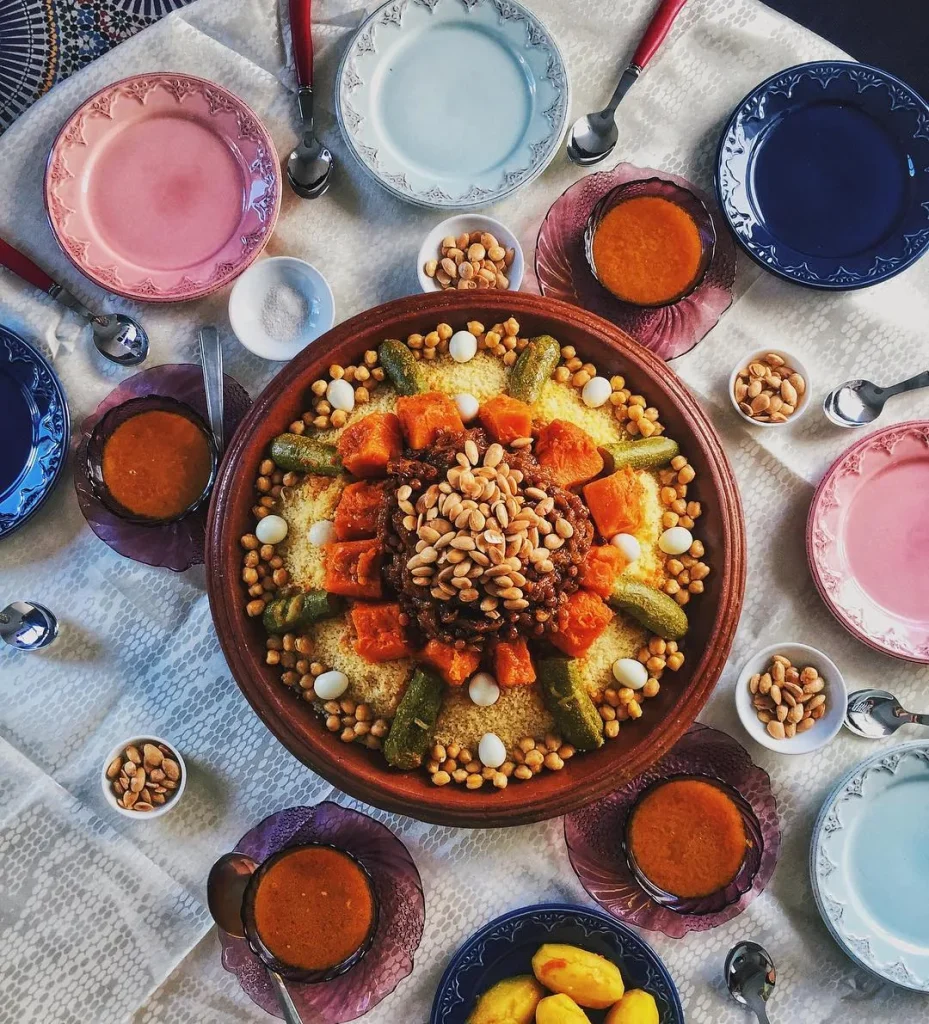
Couscous UNESCO Intangible Cultural Heritage 2020: Joint Inscription by Algeria, Morocco, Tunisia and Mauritania (File 01602)
The knowledge, know-how and practices pertaining to the production and consumption of couscous — the full chain of knowledge from cereal cultivation to hand-rolling of semolina and communal serving, practiced across the North African communities of Algeria, Mauritania, Morocco, and Tunisia — was inscribed on UNESCO’s Representative List of the Intangible Cultural Heritage of Humanity in December 2020 at the 15th session of the Intergovernmental Committee (15.COM), registered as File 01602. The joint nomination — submitted by four countries in March 2019 — was described by UNESCO Director-General Audrey Azoulay as a “real diplomatic success” in a region whose political relationships are often fractious, recognizing couscous as the shared cultural property of a transnational North African heritage community rather than the exclusive tradition of any one state.
- The knowledge, know-how and practices pertaining to couscous are inscribed on UNESCO’s Representative List as File 01602, inscribed at the 15th session of the Intergovernmental Committee (15.COM) in December 2020 — one of 16 multinational candidatures submitted that session.
- The inscription is a joint nomination by four countries: Algeria, Mauritania, Morocco, and Tunisia — submitted in March 2019 and described by UNESCO Director-General Audrey Azoulay as a “real diplomatic success” for a region with complex interstate relations.
- Couscous is made from semolina rolled by hand into small pellets, then sieved, soaked, and repeatedly steamed — a multi-stage process transmitted primarily through women, who preserve not only the technique but also associated songs, gestures, oral expressions, and ritual organization.
- UNESCO recognized couscous as a symbol of solidarity, conviviality, sharing, and togetherness — a dish that accompanies communities from birth to death, marking weddings, religious observances, family reunions, and communal gatherings across the four countries.
- Production involves an interconnected community: women as primary preparers, potters creating clay utensils, craftspeople producing wooden implements, farmers, millers, and traders — with regional variations by family and ecosystem (plains, mountains, oases, coast, island settings).
Couscous: North African Origins, Diplomatic Context, and UNESCO Inscription
Couscous — a food made from semolina (ground durum wheat, or sometimes barley, millet, sorghum, or maize) rolled into small pellets and cooked by steaming — is among the oldest and most widely distributed foodways of North Africa and the Saharan zone. The technique of rolling moistened semolina by hand into uniformly sized pellets that will expand without clumping when steamed is a skill that takes practice to master and that varies in grain size, texture, and quality by region, family, and intended use: fine couscous for festive occasions and coarser grades for everyday meals. The word “couscous” is widely believed to derive from the Amazigh (Berber) root ksksu, referring to the rounded pellets, reflecting the food’s deep origin in the indigenous cultures of North Africa that predate Arab and subsequent populations of the region.
The political path to the 2020 UNESCO inscription began with tension rather than cooperation. Algeria had initially announced plans to submit a solo nomination for couscous, drawing objections from Morocco, which regards couscous as a central element of its own national heritage. The eventual decision to pursue a joint multinational nomination resolved this standoff and produced what UNESCO framed as a model for transnational ICH cooperation: four countries with differing political relationships agreeing to recognize a food tradition as shared heritage. The joint submission, coordinated across ministries of culture in Algiers, Nouakchott, Rabat, and Tunis, was lodged with UNESCO in March 2019 and inscribed at the 15.COM session in December 2020. UNESCO Director-General Audrey Azoulay described the inscription as a “strong sign of cultural recognition” and a “real diplomatic success” — and the official inscription was cited explicitly in subsequent UNESCO documentation as an example of how joint nominations can transform cultural competition into cultural diplomacy. For the full context of food-related UNESCO ICH inscriptions, the UNESCO intangible cultural heritage examples article covers the Representative List by category.
Couscous Production, Transmission, and Social Functions
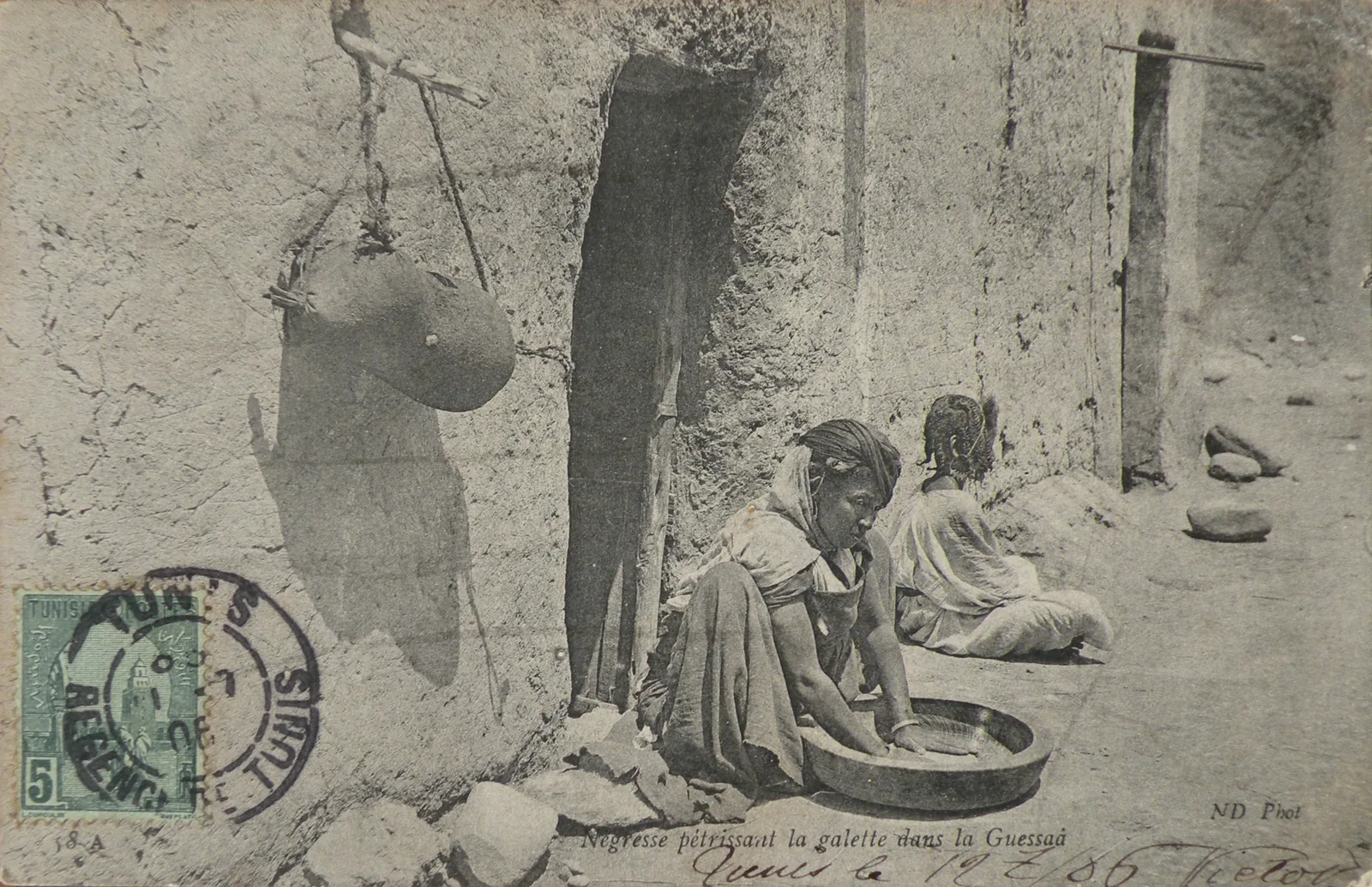
The production process recognized in UNESCO’s inscription encompasses the full knowledge chain: growing the cereal, milling to semolina, hand-rolling the semolina into pellets, sieving for consistency, soaking, and repeatedly steaming in a couscoussière (a double-chambered cooking vessel with a perforated upper section). Each stage constitutes a body of knowledge — the right moisture level for rolling, the pressure and motion of the palm, the grain size for a specific dish, the steaming cycles that give the pellets their texture. The most skilled and labor-intensive stage is the hand-rolling of semolina: moistened flour is worked by the palms in a circular motion against a flat vessel, gathering into pellets that are then rolled further between the hands. This technique, capable of producing pellets of calibrated size from ultra-fine to coarse, is the step that most distinguishes handmade couscous from mechanically produced products.
Knowledge transmission is centered on women, who are identified in UNESCO’s documentation as the primary bearers and transmitters of couscous knowledge across all four inscribed countries. Women pass on not only the technique of rolling and steaming but a broader cultural complex: songs sung during preparation, characteristic gestures, oral expressions associated with specific stages, and the ritual organization of communal couscous-making at family and community events. Transmission occurs primarily through informal observation and imitation within the household — daughters and granddaughters learning alongside mothers and grandmothers — though formal educational pathways are increasingly supplementing traditional transmission. The production ecosystem also involves potters who create the clay tagines and couscoussières used in traditional preparation, craftspeople producing wooden implements (spatulas, serving dishes), millers who produce regionally specific semolinas, and traders supplying both ingredients and equipment.
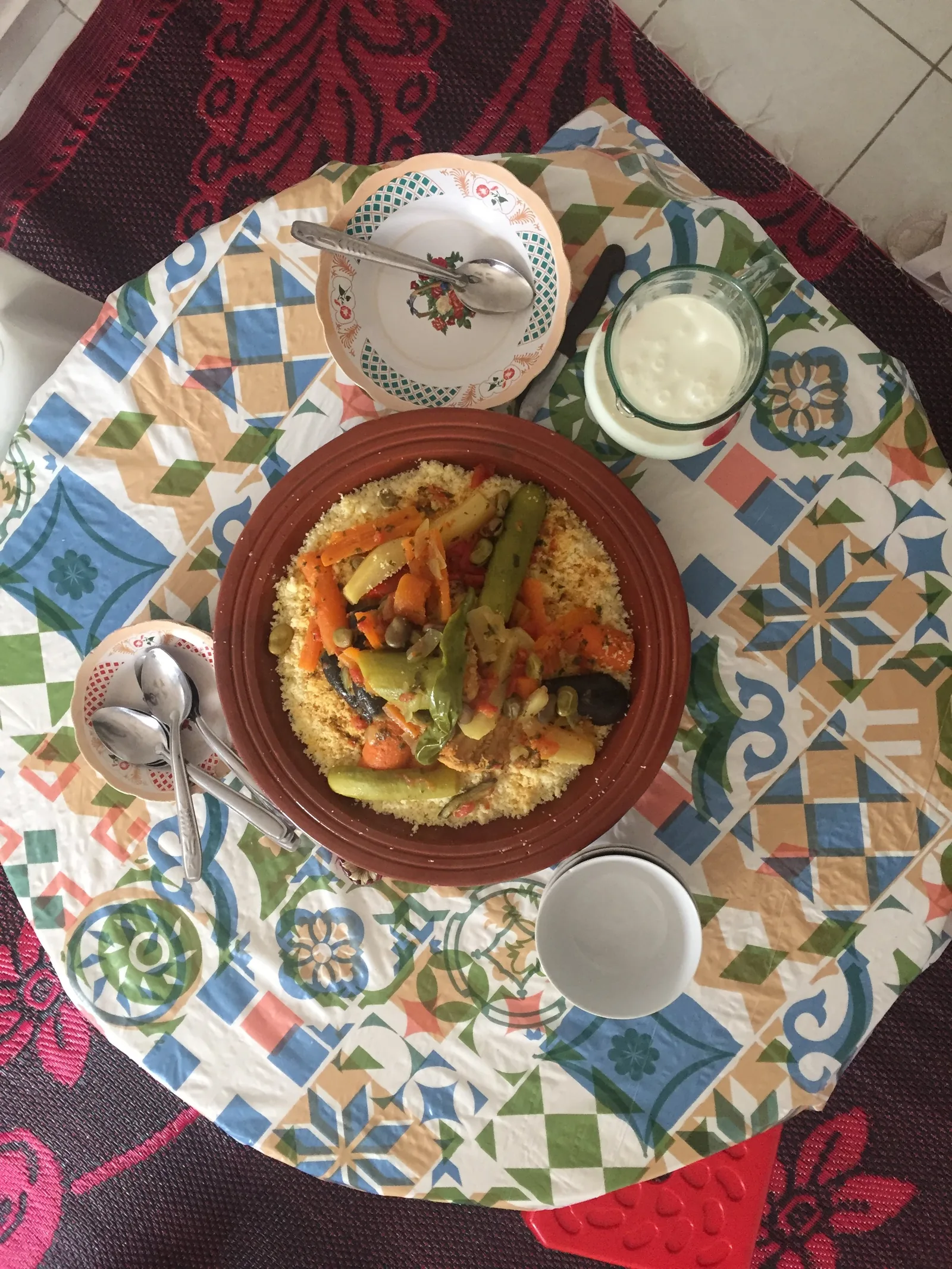
UNESCO’s inscription recognized couscous across four domains: social practices, rituals, and festive events; traditional craftsmanship; oral traditions and expressions; and knowledge concerning nature and the universe. Within the first domain, couscous functions as the ceremonial food of North African communal life: it accompanies communities, in the words of the inscription file, “from birth to death” — present at births, circumcisions, weddings, funerals, and religious observances including Friday communal meals, Eid celebrations, and gatherings at zaouïas (Sufi lodge-complexes with deep roots in Maghrebi social life). Regional and family variation is recognized as a strength rather than an inconsistency: couscous preparations differ across the plains, mountains, oases, coastal areas, and island settings of the four countries, reflecting local agricultural conditions, available grains, and the accumulated taste preferences of specific communities. For official documentation, ich.unesco.org/en/RL/…01602 is the authoritative source.
Frequently Asked Questions
Is couscous on the UNESCO intangible cultural heritage list?
Yes. The “knowledge, know-how and practices pertaining to the production and consumption of couscous” is inscribed on UNESCO’s Representative List of the Intangible Cultural Heritage of Humanity as File 01602. It was inscribed in December 2020 at the 15th session of the Intergovernmental Committee (15.COM) through a joint nomination by Algeria, Mauritania, Morocco, and Tunisia — one of 16 multinational candidatures submitted at that session.
Which countries jointly nominated couscous for UNESCO heritage status?
Four North African countries jointly nominated couscous: Algeria, Mauritania, Morocco, and Tunisia. The joint nomination was submitted to UNESCO in March 2019 and inscribed in December 2020. The joint bid was itself diplomatically significant — Algeria had initially considered a solo nomination, which Morocco opposed; the eventual shared submission was described by UNESCO Director-General Audrey Azoulay as a “real diplomatic success.”
How is couscous traditionally made?
Traditional couscous production begins with milling cereal (typically durum wheat, sometimes barley, millet, or sorghum) into semolina. The semolina is then moistened and rolled by hand in a circular motion against a flat vessel, gathering into small pellets — the most skilled and labor-intensive stage. The pellets are sieved for uniform size, soaked, and then repeatedly steamed in a couscoussière (a double-chambered vessel with a perforated upper section). The full process is transmitted primarily by women through household observation and imitation.
What is the social significance of couscous in North Africa?
Couscous functions as the ceremonial food of North African communal life, present at births, circumcisions, weddings, funerals, Friday communal meals, Eid celebrations, and gatherings at zaouïas. UNESCO recognized it as a symbol of “solidarity, conviviality, sharing, and togetherness” across all four inscribed countries. Production at communal occasions involves the whole community and transmits not just cooking technique but songs, gestures, oral expressions, and the ritual organization of shared meals.
When was couscous added to the UNESCO list?
Couscous was added to UNESCO’s Representative List of the Intangible Cultural Heritage of Humanity in December 2020, at the 15th session of the Intergovernmental Committee (15.COM). It is registered as File 01602. The joint nomination by Algeria, Mauritania, Morocco, and Tunisia was submitted in March 2019 and inscribed one session after that year’s cutoff.