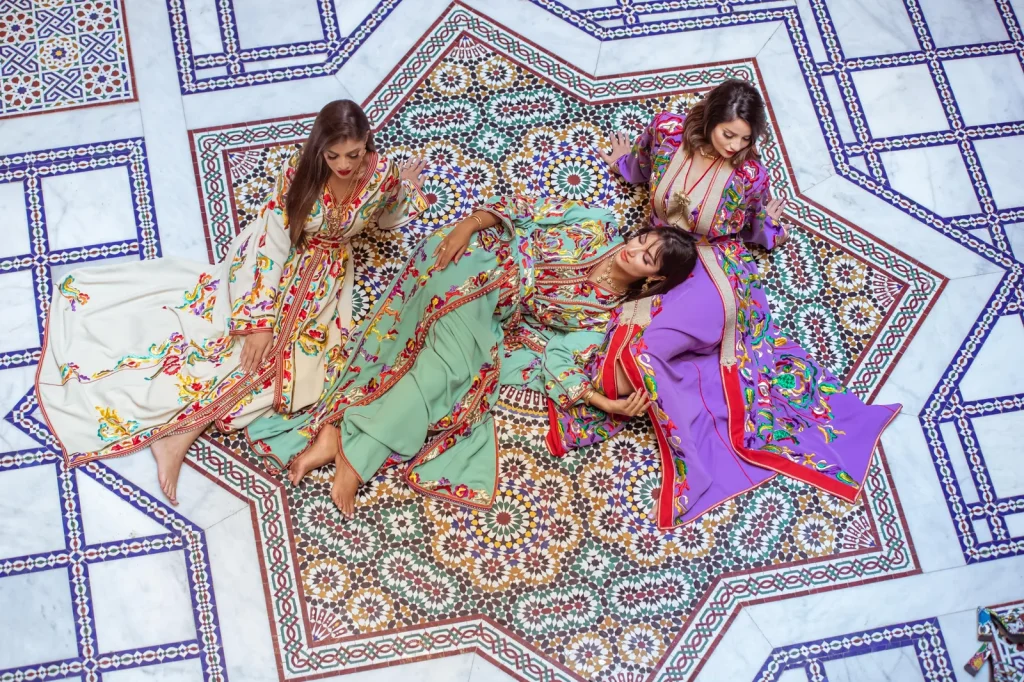
Moroccan Caftan: UNESCO Intangible Cultural Heritage (File 02077)
The Moroccan Caftan — the traditional long tunic worn in Morocco for weddings, religious festivals, baptisms, and coming-of-age ceremonies, produced by specialist weavers, tailors, embroiderers, and button-makers — was inscribed on UNESCO’s Representative List of the Intangible Cultural Heritage of Humanity on December 10, 2025, at the 20th session of the Intergovernmental Committee (20.COM), registered as File 02077, Decision 20.COM 7.B.33. The session was held in New Delhi, India (December 8–13, 2025), with the inscription recognizing the caftan as a marker of Moroccan social identity and a living craft tradition involving multiple interlocking artisan roles that UNESCO documented as under active intergenerational transmission.
- The Moroccan Caftan is inscribed on UNESCO’s Representative List as File 02077, Decision 20.COM 7.B.33, December 10, 2025, at the 20th session of the Intergovernmental Committee (20.COM) in New Delhi — submitted by Morocco.
- The caftan is a long tunic distinguished by its central opening, hand-braided buttons (aqad), decorative edge bands (sfifa), and embroidery — worn at weddings, baptisms, coming-of-age rituals, and religious festivals by people of all genders and ages.
- Regional embroidery traditions vary significantly: Fez uses ntaâ (gold and silver thread with peacock motifs), Tetouan has taajira (floral designs from zellige tile patterns), Azemmour features tarz azemmouri (zoomorphic dragon and lion motifs), and Rabat has tarz rbati (floral embroidery on fine fabrics).
- The two-piece version — the takchita, also called Mansouria after Sultan Ahmad al-Mansur — is worn with a large decorative belt and is distinct from the single-piece caftan; art historian Rachida Alaoui dates the first written records of the Moroccan caftan to the 16th century.
- Production involves at least four specialist roles: weavers (brocade, velvet, silk fabrics), tailors (cutting and construction), embroiderers, and passementerie artisans (buttons, braids, trimming) — with transmission through family apprenticeships and Morocco’s formal training centres.
Moroccan Caftan: Origins, Regional Traditions, and UNESCO Inscription
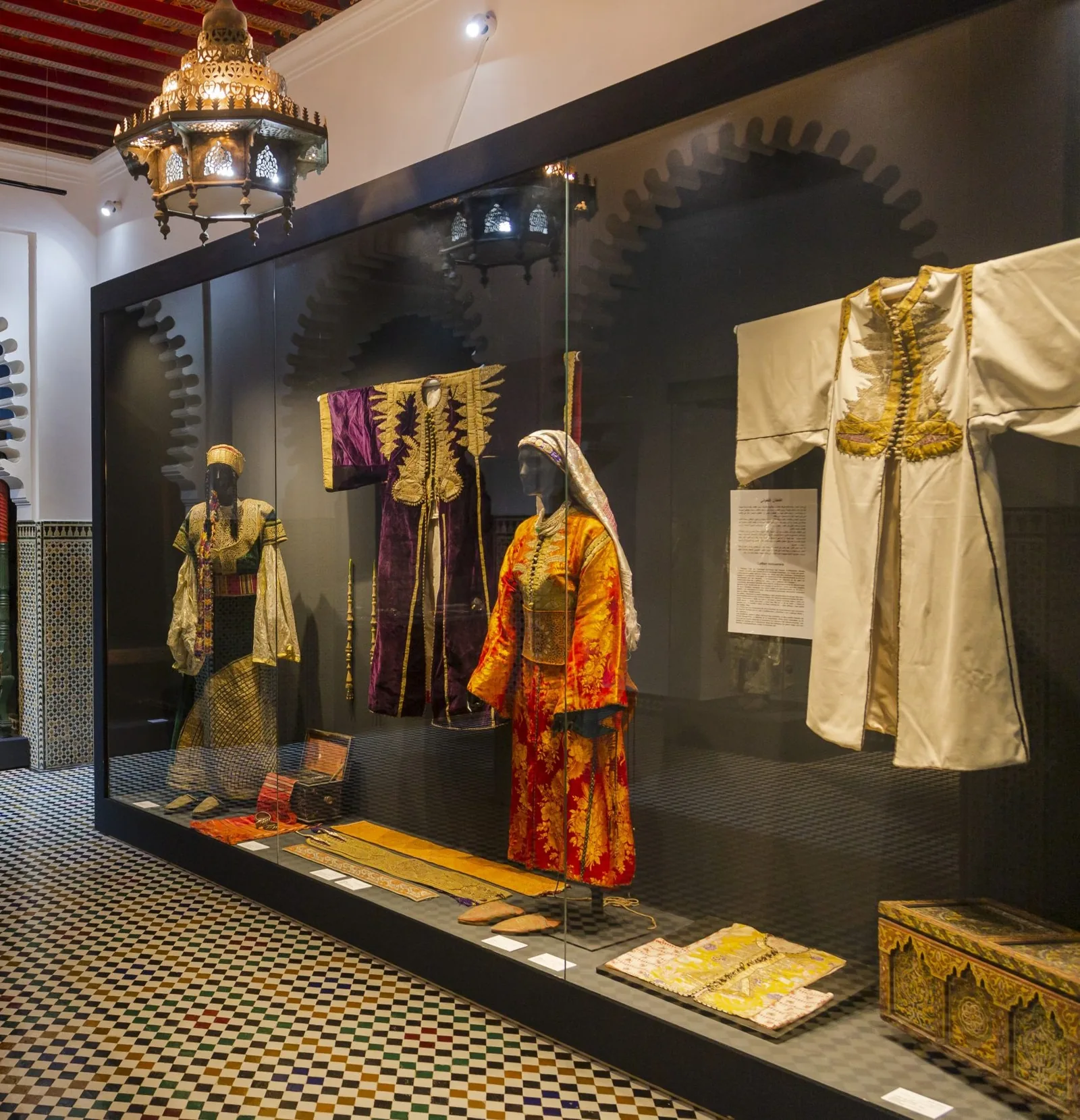
The Moroccan caftan is a long, floor-length tunic that opens at the front with a characteristic central vertical opening fastened by hand-braided buttons (aqad) and closed at the edges with decorative bands (sfifa). Art historian Rachida Alaoui dates the first written records of the Moroccan garment to the 16th century, though the form appeared in royal court contexts under the Almoravid dynasty (1056–1147) and gained broader cultural presence during the Almohad era (1121–1269). Initially reserved for palace dignitaries and royal women, the caftan became fashionable among middle-class Moroccan families from the late 17th century onward. The two-piece variant — the takchita, also called Mansouria — takes its name from Sultan Ahmad al-Mansur of the Saadian dynasty, who is credited with its invention; it consists of a base inner robe worn beneath an embroidered outer layer, fastened at the waist with a large decorative belt.
The Moroccan caftan’s most distinctive feature is the diversity of its regional embroidery traditions. In Fez, the dominant technique is ntaâ — gold and silver thread embroidery featuring complex peacock designs, deployed especially for bridal ceremonies during the henna ritual. In Tetouan, the taajira style draws its pattern vocabulary from floral designs and the geometric color schemes of zellige tilework. In Azemmour, the tarz azemmouri embroidery tradition is distinguished by zoomorphic motifs — particularly dragons and lions — that set it apart from all other Moroccan regional styles. Rabat’s tarz rbati combines floral embroidery on fine fabrics in a lighter, more intimate style. Meknes and Oujda are known for passementerie techniques using silk buttons and pearls. In Marrakech and the southern regions, lighter fabrics suitable for warmer climates are used, often incorporating Berber geometric patterns. Beyond individual stitch techniques, the Moroccan craft system classifies caftan styles by city: Chamali, Fez, and Rbati represent three of the recognized major regional style categories.
UNESCO inscribed the Moroccan Caftan on December 10, 2025, at 20.COM under Decision 20.COM 7.B.33 — the session was held in New Delhi at the Red Fort, itself a UNESCO World Heritage Site. The nomination, titled “Moroccan Caftan: art, traditions and skills,” met all five UNESCO ICH criteria: it demonstrated active community transmission (R.1), contribution to gender equality and economic development through artisan livelihoods (R.2), multi-layered safeguarding combining tradition with innovation (R.3), community-initiated nomination with documented bearer participation through a 2023 national workshop (R.4), and inclusion in Morocco’s national Inventory and Documentation of Moroccan Cultural Heritage since 2014 (R.5). The inscription joins Morocco’s growing list of UNESCO ICH recognitions, which includes Gnawa music (2019) and Aïssawa (2019), as well as the joint inscription of couscous by Morocco, Algeria, Mauritania, and Tunisia (2020). For the UNESCO ICH framework context, the UNESCO intangible cultural heritage overview explains the 2003 Convention.
Craftspeople, Fabrics, Embroidery Techniques, and Transmission of the Moroccan Caftan
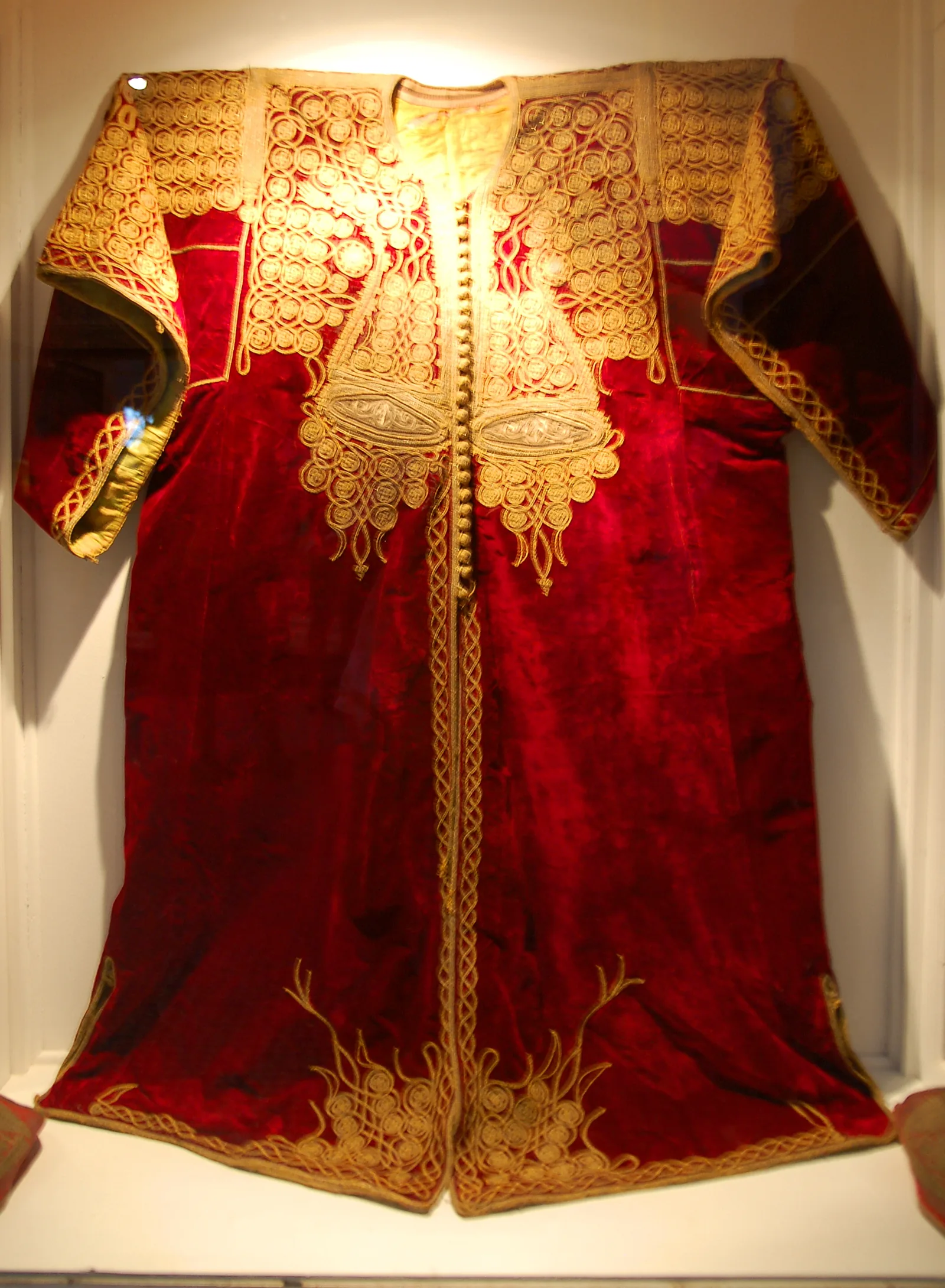
The production of a single Moroccan caftan involves at least four distinct specialist roles, each representing an independent transmission lineage. Weavers produce the base fabrics — brocade (dib), velvet (qutifa), and silk (harir) — using techniques in which the decorative pattern is woven directly into the fabric during production, without requiring additional embroidery; this is the brocade method, in which the design emerges from the weave structure itself. Tailors cut and construct the garment from the woven fabric, shaping the body, sleeves, and front opening according to the regional style being produced. Embroiderers apply additional decorative work — the ntaâ, taajira, tarz azemmouri, or tarz rbati — using hand techniques that can require weeks or months of work on a single garment. Passementerie artisans produce the hand-braided buttons (aqad) and the decorative trimming bands (sfifa) that frame the garment’s opening — elements that UNESCO’s nomination identifies as markers of regional and individual identity within the broader tradition.
Transmission of caftan knowledge occurs through two parallel systems that UNESCO documented as mutually reinforcing. The informal system operates through family apprenticeships: children and young adults learn by working alongside skilled relatives or in workshops, acquiring techniques through observation and practice rather than formal instruction. This system produces the deepest technical knowledge, particularly for complex regional embroidery styles. The formal system includes Morocco’s network of artisanal training centres and fashion schools, where structured curricula teach pattern construction, embroidery techniques, and fabric knowledge to students who may lack access to family-based transmission. The UNESCO nomination explicitly recognized both systems as necessary: the informal system sustains regional variation and tacit knowledge; the formal system expands access and documents endangered techniques. UNESCO’s inscription documentation described the caftan as simultaneously “a marker of social status and belonging” and “a source of income for the many people involved in its production and sale” — acknowledging both its cultural and economic dimensions. For the official inscription documentation, ich.unesco.org/en/RL/moroccan-caftan-art-traditions-and-skills-02077 is the authoritative source.
Frequently Asked Questions
Is the Moroccan caftan a UNESCO intangible cultural heritage?
Yes. The Moroccan Caftan — inscribed as “Moroccan Caftan: art, traditions and skills” — was added to UNESCO’s Representative List of the Intangible Cultural Heritage of Humanity on December 10, 2025, at the 20th session of the Intergovernmental Committee (20.COM, Decision 20.COM 7.B.33) in New Delhi, India. It is registered as File 02077. Morocco submitted the nomination, which UNESCO recognized as meeting all five ICH criteria including active community transmission, artisan livelihoods, and multi-generational knowledge transfer.
What is the Moroccan caftan?
The Moroccan caftan is a long, floor-length tunic worn at weddings, baptisms, coming-of-age rituals, and religious festivals. It is distinguished by its central front opening fastened with hand-braided buttons (aqad), decorative edge bands (sfifa), and rich embroidery or brocade work. It is worn by people of all genders and ages. The two-piece variant — the takchita (also called Mansouria, after Sultan Ahmad al-Mansur) — consists of an inner robe worn beneath an embroidered outer layer, secured with a large decorative belt.
What are the regional styles of the Moroccan caftan?
The Moroccan caftan has distinct regional embroidery traditions: Fez (ntaâ — gold and silver thread with peacock motifs for bridal ceremonies), Tetouan (taajira — floral designs derived from zellige tilework), Azemmour (tarz azemmouri — zoomorphic dragon and lion motifs), Rabat (tarz rbati — floral embroidery on fine fabrics), and Meknes/Oujda (passementerie with silk buttons and pearls). Southern regions including Marrakech use lighter fabrics and Berber geometric patterns. Major style categories include Chamali, Fez, and Rbati.
Who makes the Moroccan caftan?
Production of the Moroccan caftan involves four specialist roles: weavers (producing brocade, velvet, and silk fabrics — including direct-woven brocade patterns), tailors (cutting and constructing the garment), embroiderers (applying regional hand-embroidery techniques that can take weeks or months per garment), and passementerie artisans (making the hand-braided buttons and decorative trimming bands). Each role represents an independent craft tradition with its own transmission lineage.
How is caftan knowledge transmitted in Morocco?
Caftan knowledge is transmitted through two parallel systems: informal family apprenticeships (children and young adults learning by working alongside skilled relatives or in workshops, acquiring tacit knowledge and regional embroidery traditions) and formal education through Morocco’s artisanal training centres and fashion schools (structured curricula for those without family-based access). UNESCO recognized both systems as mutually reinforcing in the nomination for File 02077.