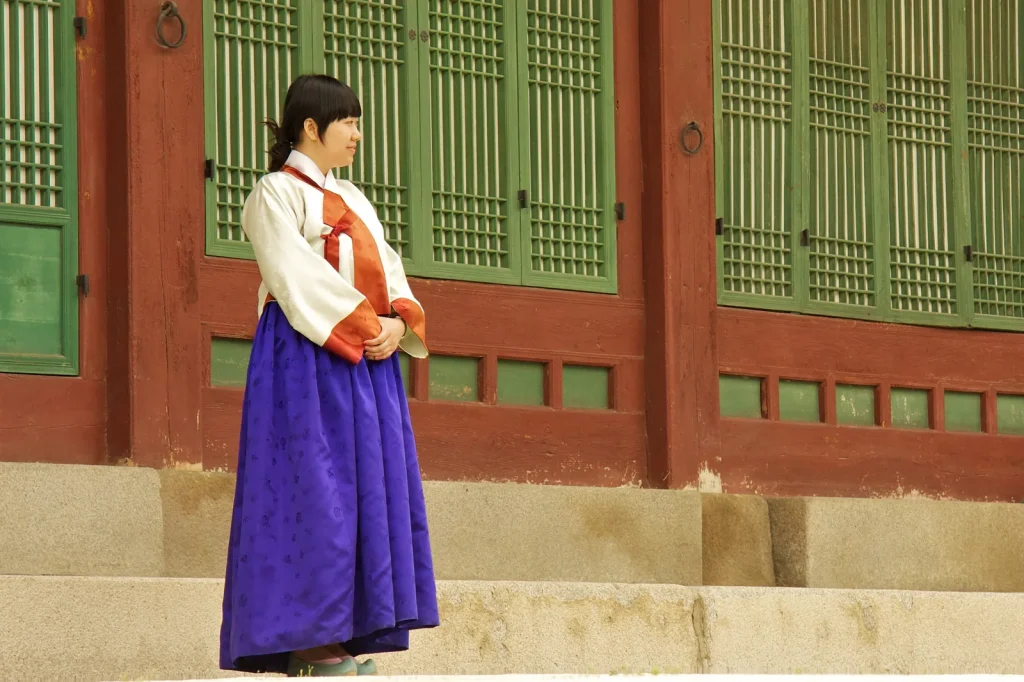
Weaving of Mosi (Fine Ramie) in the Hansan Region: UNESCO ICH (File 00453)
The Weaving of Mosi (fine ramie) in the Hansan region — the traditional craft of producing ultra-fine ramie cloth through hand processes from plant cultivation to finished textile, practiced by women in the Hansan area of Seocheon County in South Korea’s South Chungcheong Province — was inscribed on UNESCO’s Representative List of the Intangible Cultural Heritage of Humanity in 2011 at the 6th session of the Intergovernmental Committee (6.COM), held in Bali, Indonesia. Registered as File 00453, the inscription recognized Hansan mosi weaving as a living textile tradition maintained primarily by middle-aged women in the Seocheon region, transmitting a craft identified as Korean intangible cultural property since 1967 — a lineage of refined fabric-making rooted in more than a millennium of Korean textile history.
- Hansan mosi is inscribed on UNESCO’s Representative List as File 00453, inscribed at the 6th session of the Intergovernmental Committee (6.COM) in 2011 in Bali, Indonesia — the same session as Mariachi (Mexico) and other global ICH traditions.
- Mosi is woven from ramie (Boehmeria nivea), a flowering plant in the nettle family; ramie has been cultivated and woven in Korea since the 9th century, with fabrics so fine they were compared to cicada wings during the Goryeo dynasty (918–1392).
- The weaving tradition is concentrated in Seocheon County, South Chungcheong Province, where the warm and humid climate is ideal for growing ramie; approximately 500 practitioners remain active in the province.
- The production process involves eight stages — from harvesting to loom weaving — including a distinctive step in which weavers split individual ramie fibers between their front teeth to achieve the ultra-fine thread required for Hansan-quality mosi.
- Hansan mosi fabric is lightweight, ultra-absorbent, and breathable, making it the traditional summer textile of Korea; it was historically presented as tribute to the Chinese imperial court during the Goryeo dynasty and remains central to the annual Hansan Ramie Fabric Cultural Festival in Seocheon.
Hansan Mosi: Origins in Korean Textile History and UNESCO Inscription
Ramie — known as mosi (모시) in Korean and derived from the plant Boehmeria nivea, a flowering member of the nettle family native to eastern Asia — has been cultivated and woven in Korea since at least the 9th century. The earliest documentary evidence situates mosi fabric within the textile culture of the Three Kingdoms period, and under Unified Silla (668–935 CE), weaving techniques advanced to the point of producing fabrics of exceptional fineness. During the Goryeo dynasty (918–1392), mosi weaving reached a level of refinement described in historical sources as producing cloth “light as cicada wings” — fabric so transparently fine and lightweight that it was among Korea’s most prestigious luxury exports. Historical records document that Hansan and the neighboring Imcheon region were the first areas to supply ramie cloth as tributary gifts to the Chinese imperial court, alongside ginseng, establishing the region’s reputation as the center of Korea’s finest ramie production. During the Joseon dynasty (1392–1910), ramie fabric became a standard textile used by both nobility and commoners across a range of seasonal garments, with the weft-ribbed gauze technique — a refined variant specific to the Joseon period — expanding the repertoire of mosi weaving.
The Hansan area of Seocheon County in South Chungcheong Province (충청남도) became and remains the primary center of fine mosi production. The region’s warm and humid climate — characteristic of Korea’s central-west coast — provides optimal growing conditions for ramie, producing plants with the long, fine, strong fibers necessary for weaving at the level of fineness that distinguishes Hansan mosi from ordinary ramie cloth. The South Korean government designated Hansan mosi weaving as an Important Intangible Cultural Property (국가무형문화재) in 1967, beginning the formal institutional recognition that preceded the UNESCO nomination. UNESCO inscribed the tradition at 6.COM in Bali in November 2011 — the same session at which Mariachi (Mexico, File 00575) and Nowruz (File 00340) were also inscribed. For the broader context of Korea’s UNESCO ICH portfolio, the UNESCO intangible cultural heritage examples article covers inscriptions across the full Representative List.
The Mosi Weaving Process: Craft Technique, Practitioners, and Transmission
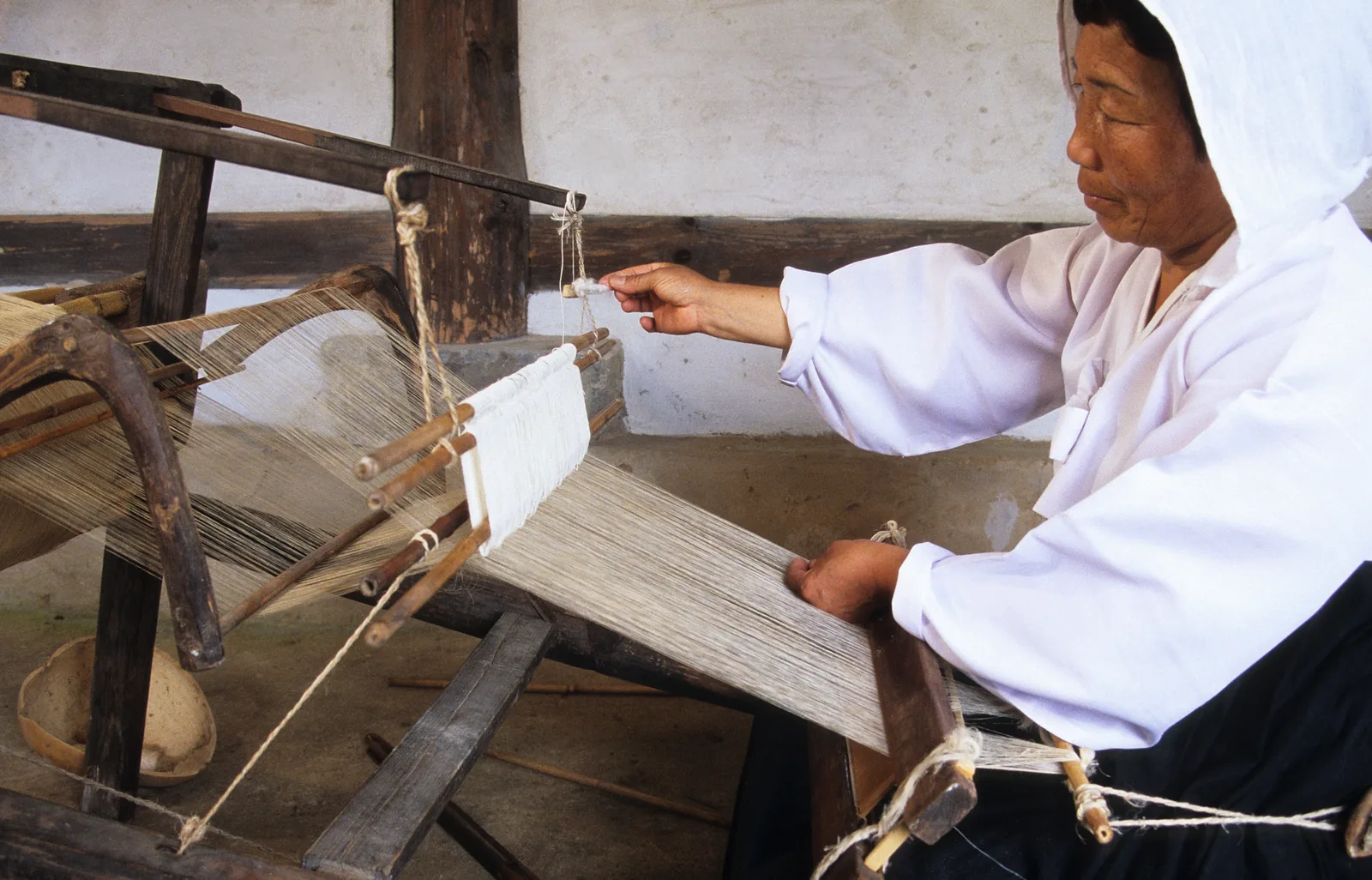
The production of Hansan mosi proceeds through a multi-stage process that begins in the field and ends on the loom — a sequence whose individual steps demand years of practice to master and whose refinement defines the quality difference between ordinary ramie cloth and the ultra-fine Hansan standard. The process begins with harvesting ramie shoots from cultivated plants; after harvest, the outer skin is removed using a specialized ramie knife (mosini kal), and the green fibers are sun-dried until they turn brown. The next stage — the one most demanding of skill and the most distinctive of Hansan’s technique — involves splitting the individual fiber strands between the front teeth: weavers pull each ramie strand through their teeth to separate and thin the fiber to the ultra-fine caliber that Hansan mosi requires. This practice, described as time-consuming and often physically demanding, is the step that most clearly distinguishes Hansan mosi from mechanically processed ramie cloth and from ramie fabrics produced in other traditions.
After the fibers are prepared, they are spun and inserted through a yarn guide to ensure even thread tension. The threads are then strengthened through a starching process in which the fibers are brushed over a slow-burning coal fire — a heat application that achieves the uniform firmness required for weaving. Weaving is performed on a hybrid back-strap/standing loom, a traditional Korean implement specific to mosi production, on which special pulleys attached to the weaver’s shoes control the heddle — giving the weaver foot-pedal control over the loom’s shed mechanism. A single length of finished mosi cloth requires approximately three months of work from start to finish.
The finished Hansan mosi cloth is lightweight, ultra-absorbent, and breathable — properties that made it the traditional summer textile of Korea for royalty, aristocrats, and commoners alike. It is used for garments (including components of traditional hanbok) and for bojagi, the traditional Korean wrapping cloths. Today approximately 500 practitioners remain active in South Chungcheong Province. The tradition is transmitted primarily through direct apprenticeship — including a designated master holder system maintained by the South Korean government. Bang Yeon-ok, a designated national intangible cultural asset master, is the most recognized practitioner of Hansan mosi weaving. The community dimension of the practice — where weaving was traditionally done together with neighbors — continues as a social bond of the Seocheon community, reinforced by the annual Hansan Ramie Fabric Cultural Festival and the Seocheon Hansan Mosi Museum. For official documentation, ich.unesco.org/en/RL/weaving-of-mosi-fine-ramie-in-the-hansan-region-00453 is the authoritative source.
Frequently Asked Questions
Is Hansan mosi a UNESCO intangible cultural heritage?
Yes. The Weaving of Mosi (fine ramie) in the Hansan region is inscribed on UNESCO’s Representative List of the Intangible Cultural Heritage of Humanity under File 00453. It was inscribed in 2011 at the 6th session of the Intergovernmental Committee (6.COM) in Bali, Indonesia. The inscription recognized Hansan mosi weaving as a living Korean textile craft tradition transmitted primarily by women in Seocheon County, South Chungcheong Province.
What is Hansan mosi?
Hansan mosi is a fine ramie fabric woven in the Hansan area of Seocheon County, South Chungcheong Province, South Korea. It is made from Boehmeria nivea (ramie), a flowering plant in the nettle family, whose fibers are processed through hand techniques — including the distinctive splitting of fibers between front teeth — to produce an ultra-fine, lightweight, and ultra-absorbent textile used traditionally for summer garments and wrapping cloths (bojagi). The fabric has been produced in the region since at least the 9th century and was considered Korea’s finest ramie cloth during the Goryeo dynasty.
How is Hansan mosi made?
Hansan mosi is produced in eight stages: (1) harvest ramie shoots; (2) peel the outer skin with a specialized ramie knife; (3) sun-dry fibers until they turn brown; (4) split individual fibers between the front teeth to achieve ultra-fine caliber — the most distinctive and labor-intensive step; (5) spin and thread through a yarn guide; (6) apply starch by brushing over a slow-burning coal fire for uniform strength; (7) weave on a hybrid back-strap/standing loom with foot-operated pulleys. A finished length of fabric requires approximately three months of work.
Where is Hansan mosi made?
Hansan mosi is made in the Hansan area of Seocheon County (서천군) in South Chungcheong Province (충청남도), South Korea. The region’s warm and humid climate is optimal for growing ramie with long, fine, strong fibers. Seocheon County is home to the Seocheon Hansan Mosi Museum and hosts the annual Hansan Ramie Fabric Cultural Festival, which has been held for more than 30 years. Approximately 500 practitioners remain active in the province.
When was Hansan mosi designated as cultural heritage?
Hansan mosi weaving was first designated as an Important Intangible Cultural Property of South Korea in 1967, establishing national-level recognition more than four decades before the UNESCO inscription. UNESCO inscribed the tradition on its Representative List in 2011 (File 00453, 6.COM in Bali). The tradition had already been recognized in the region through historical records of royal court tribute during the Goryeo dynasty (918–1392), when Hansan ramie was among Korea’s most prestigious exports to the Chinese imperial court.