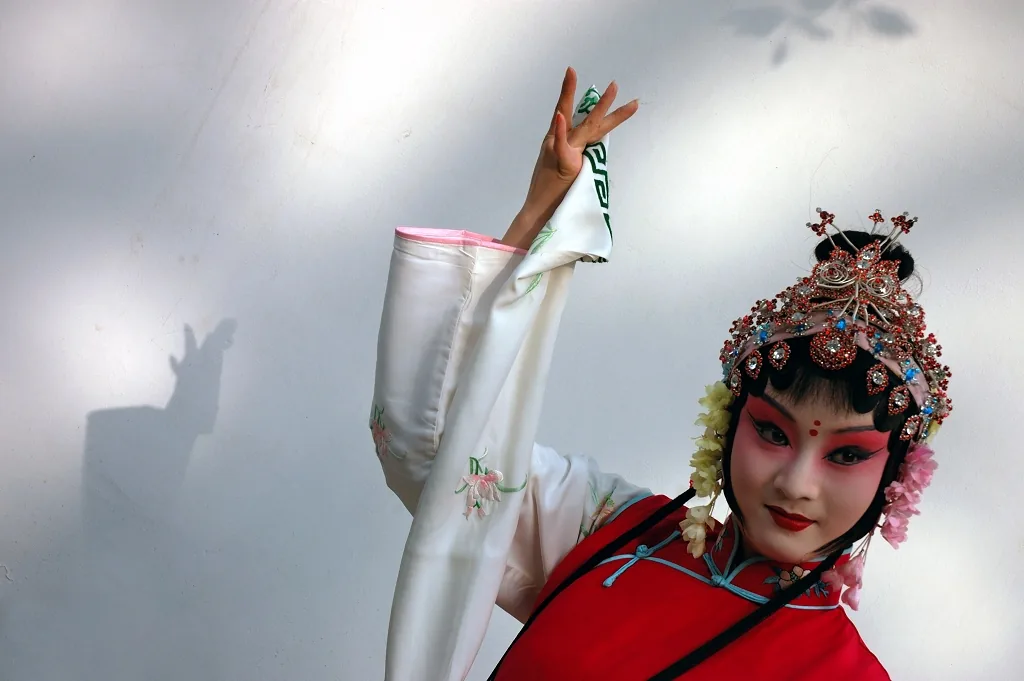
Kunqu Opera: UNESCO Intangible Cultural Heritage, the Peony Pavilion, and China’s Oldest Opera
Kunqu opera (昆曲, also called Kunju or Kun opera) is China’s oldest surviving theatrical form — a performing art from the Suzhou region of Jiangsu Province that combines song, speech, dance, and acrobatics into a classical dramatic tradition with over 600 years of continuous history. On May 18, 2001, UNESCO proclaimed Kunqu one of the first 19 Masterpieces of the Oral and Intangible Heritage of Humanity — the inaugural recognition that preceded the formal 2003 Convention framework. In 2008, it was inscribed on the Representative List of the Intangible Cultural Heritage of Humanity (File 00004) when the Masterpieces list was formally transferred. Known as the “ancestor of a hundred operas” in China, Kunqu influenced every major regional opera tradition including Beijing opera (Peking opera), Sichuan opera, and hundreds of others — making its UNESCO inscription a recognition of the root tradition from which China’s entire operatic culture descends.
- Kunqu opera was proclaimed one of UNESCO’s first 19 Masterpieces of the Oral and Intangible Heritage on May 18, 2001 — before the 2003 Convention existed — and formally inscribed on the Representative List in 2008 (File 00004).
- Kunqu originated in Kunshan, Suzhou in the late Yuan/early Ming dynasty (14th century), with Wei Liangfu’s Ming-dynasty reforms transforming it into the classical form recognized today.
- The most celebrated Kunqu work is Tang Xianzu’s The Peony Pavilion (1598) — a 55-scene tragic comedy requiring over 22 hours to perform in full — alongside Hong Sheng’s The Palace of Eternal Life and Kong Shangren’s The Peach Blossom Fan.
- Kunqu is known as the “ancestor and teacher of a hundred operas” in China — Beijing opera, Sichuan opera, and virtually every regional operatic tradition derives from or was shaped by Kunqu’s musical and dramaturgical innovations.
- By the mid-20th century, only a few dozen of the 400+ traditional arias were regularly performed. UNESCO’s 2001 recognition catalyzed a government-led revival, with Kunqu experiencing a resurgence of interest by 2004.
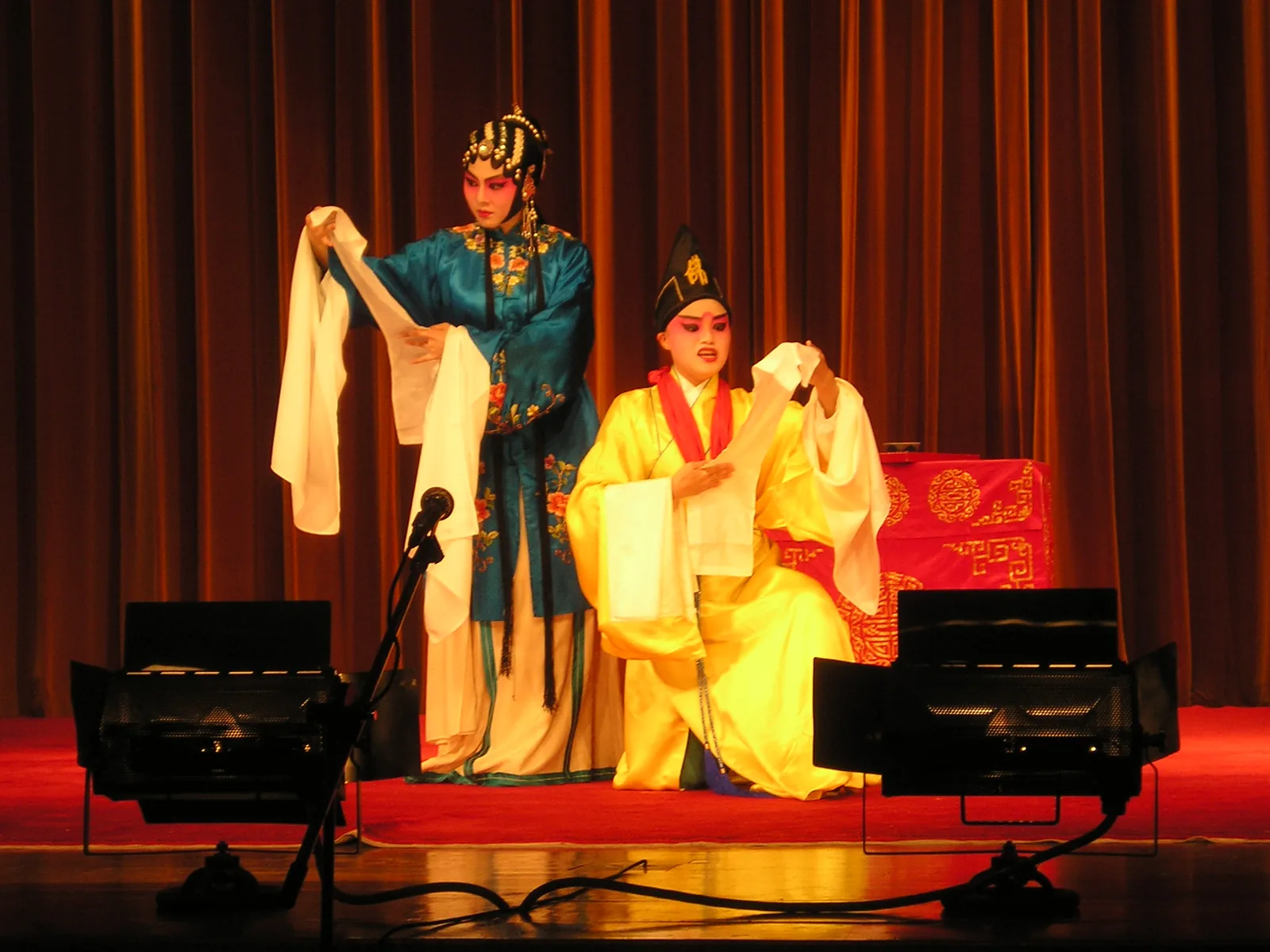
Kunqu Opera: Origins, History, and UNESCO Inscription
Kunqu traces its origins to Kunshan (昆山), a county of the Suzhou prefecture in Jiangsu Province, during the late Yuan dynasty (mid-14th century). The early Kunshan tune (Kunshan qiang) was a regional theatrical style associated with scholar Gu Jian and local musicians. The decisive transformation came in the Ming dynasty, when Wei Liangfu — a music theorist working in Suzhou in the 1540s–1550s — assembled a team of musicians and performers to refine the Kunshan tune into a fully elaborated art music system. Wei’s reforms created the characteristic shuimo qiang (“water-mill melody”) style: a slow, ornate vocal line accompanied primarily by the bamboo flute (dizi), with complex melismatic ornamentation and precise tonal control.
The theatrical form reached its first peak with Liang Chenyu’s Washing Silken Gauze (Huansha Ji, 1574) — generally recognized as the first complete Kunqu opera — followed by the works that defined the genre’s classical repertoire:
- The Peony Pavilion (Mudan Ting, Tang Xianzu, 1598): The most celebrated work of the Kunqu canon, and one of the great works of world drama — a 55-scene tragic comedy in which a young woman dies of love for a man she has only encountered in a dream, then returns from death to be reunited with him. The full performance requires more than 22 hours; theatrical convention evolved the zhézixì (折子戲) system of performing selected scenes as self-contained excerpts, which became the standard mode of Kunqu performance by the 1760s.
- The Palace of Eternal Life (Changsheng Dian, Hong Sheng, 1688): A romantic tragedy dramatizing the ill-fated love of Tang dynasty Emperor Xuanzong and his consort Yang Guifei — one of the most beloved stories in Chinese literature and a showcase for the Sheng (male lead) and Dan (female lead) roles.
- The Peach Blossom Fan (Taohua Shan, Kong Shangren, 1699): A historical drama of the fall of the Ming dynasty, centering on the love story of poet Hou Fangyu and singer Li Xiangjun, renowned for its sophisticated political allegory and tragic elegiac tone.
Kunqu flourished among the educated elite from the Ming dynasty through the early Qing, reaching the height of its social prestige in the 17th and early 18th centuries. From the mid-18th century, the rise of regional opera forms — particularly the more accessible and emotionally direct styles that eventually coalesced into Beijing opera — drew audiences away from Kunqu’s demanding aesthetic. By the early 20th century, the tradition survived in only a handful of professional troupes and scholarly practitioners. The Cultural Revolution (1966–1976) further disrupted transmission, banning traditional performance arts. UNESCO’s proclamation in May 2001 — announcing Kunqu as one of 19 Masterpieces of Oral and Intangible Heritage globally, and China’s only entry in the inaugural list — catalyzed significant government investment in Kunqu revival, and by 2004 the form had experienced a marked increase in public attention and institutional support. In 2008, when UNESCO transferred all Masterpieces to the Representative List under the 2003 Convention framework, Kunqu was inscribed as File 00004.
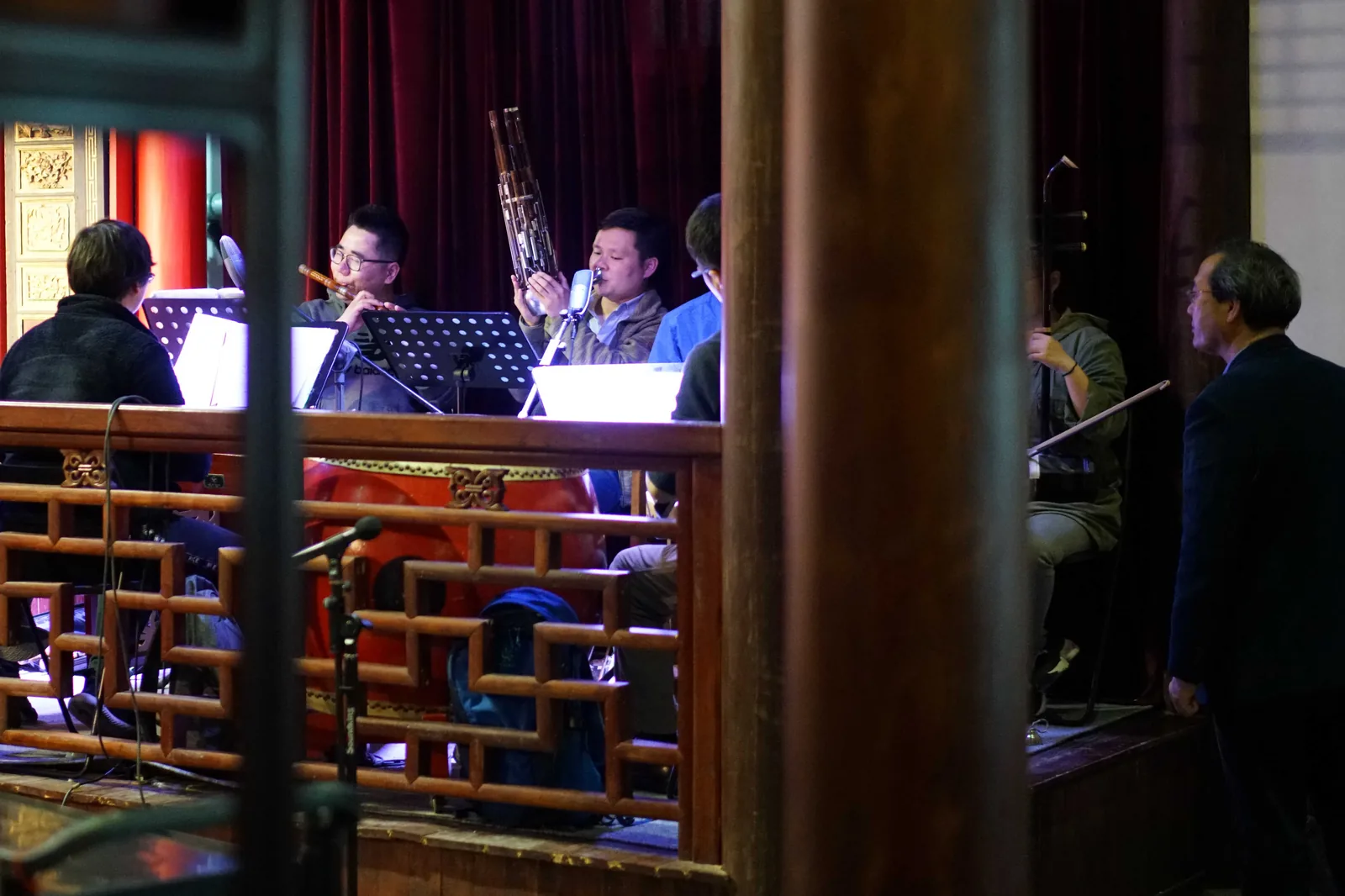
Performance Practice and Influence on Chinese Opera
Kunqu’s performing style is defined by a distinctive integration of four arts: song (chang), speech (nian), movement (zuo), and acrobatics (da). The vocal technique requires the use of Zhongzhou rhyme — a classical pronunciation standard derived from Central Plains Chinese rather than any contemporary dialect — sung in a slow, sustained melodic style with elaborate ornamentation. The principal accompanying instrument is the dizi (bamboo transverse flute), whose breathy, flexible tone is inseparable from the Kunqu sound; secondary instruments include the sanxian (three-string plucked lute), drum, wooden clappers, and gongs that provide rhythmic structure.
Kunqu performance is organized around a system of stock character roles (hangdang) that define not only the performer’s vocal range and physical style but their costume, makeup, and movement vocabulary:
- Sheng (生): Male roles, subdivided into the young scholar-romantic lead (xiaosheng), mature official (laosheng), and other types. The xiaosheng is central to the most celebrated plays.
- Dan (旦): Female roles, with the young woman (zhengdan or guimen dan) as the lead type — always performed by men in the classical tradition, now performed by women.
- Jing (净): Painted-face characters representing generals, heroes, or supernatural beings — identified by elaborate face-painting in red, white, and black patterns that encode the character’s personality.
- Mo (末): Middle-aged and older male characters, wearing artificial whiskers.
- Chou (丑): Comic characters — the court jester, cunning servant, or foolish official — who use humor and acrobatic exaggeration to provide comic relief.
Kunqu’s influence on subsequent Chinese theatrical culture is pervasive and foundational. Beijing opera (Peking opera, jingju) — which emerged as a composite form in the late 18th century from several regional styles that converged in the capital — incorporates significant elements of the Kunqu repertoire, stock character system, and musical conventions. Sichuan opera, Huangmei opera, and hundreds of other regional forms similarly derive their dramaturgical and musical frameworks from Kunqu. Chinese theatrical scholarship describes Kunqu as “the ancestor of a hundred operas” (baixi zhi zu) — a recognition that every tradition in China’s vast operatic landscape connects back to the refined system developed in Suzhou five centuries ago. The UNESCO inscription of File 00004 thus recognized not only a specific performing art but the root tradition of an entire civilization’s theatrical culture.
For official documentation including the full nomination file and Committee decision, ich.unesco.org/en/RL/kun-qu-opera-00004 is the authoritative source. For how Kunqu fits within China’s complete UNESCO ICH portfolio — which has grown to 44 inscriptions as of 2024 — see the UNESCO intangible cultural heritage China list, and for the global context of the ICH system and Representative List, the UNESCO intangible cultural heritage overview traces the full 2003 Convention framework.
Frequently Asked Questions
Is Kunqu opera a UNESCO intangible cultural heritage?
Yes. Kunqu opera is inscribed on UNESCO’s Representative List of the Intangible Cultural Heritage of Humanity under File 00004. It was first proclaimed one of the inaugural 19 UNESCO Masterpieces of the Oral and Intangible Heritage of Humanity on May 18, 2001 — the first-ever proclamation of this kind, predating the 2003 Convention. In 2008, when all Masterpieces were transferred to the new Representative List established by the 2003 Convention, Kunqu was formally inscribed as a Chinese element.
What is Kunqu opera and where does it come from?
Kunqu opera (昆曲, also called Kunju or Kun opera) is China’s oldest surviving theatrical form, combining song, speech, dance, and acrobatics in a classical dramatic tradition. It originated in Kunshan, Suzhou, Jiangsu Province, in the late Yuan dynasty (mid-14th century). In the Ming dynasty, musician Wei Liangfu refined the regional Kunshan tune into the distinctive slow, ornate vocal style accompanied by the bamboo flute (dizi) that defines Kunqu today. Its most celebrated work is Tang Xianzu’s The Peony Pavilion (1598).
What is the relationship between Kunqu and Peking Opera?
Kunqu is the ancestral tradition from which Peking opera (Beijing opera, jingju) and virtually all other Chinese regional opera forms derive. Peking opera emerged in the late 18th century as a composite form incorporating Kunqu’s stock character system (Sheng, Dan, Jing, Mo, Chou roles), elements of its repertoire, and core dramaturgical conventions, combined with other regional styles. Chinese theatrical scholarship describes Kunqu as “the ancestor of a hundred operas” (baixi zhi zu) — a phrase recognizing Kunqu’s foundational influence on China’s entire operatic culture.
What is the most famous Kunqu opera?
The most famous Kunqu opera is The Peony Pavilion (Mudan Ting), written by Tang Xianzu in 1598 during the Ming dynasty. It is a 55-scene tragic comedy in which a young woman named Du Liniang dies of love for a man she encounters only in a dream, then is brought back to life to be reunited with him. The complete work requires over 22 hours to perform; theatrical convention has long favored the zhézixì (折子戲) system of performing highlights as independent excerpts. The Peony Pavilion has been performed continuously for over 400 years and remains the centerpiece of the Kunqu repertoire.
When was Kunqu opera inscribed on the UNESCO list?
Kunqu opera was proclaimed one of UNESCO’s first 19 Masterpieces of the Oral and Intangible Heritage of Humanity on May 18, 2001 — the inaugural batch of recognitions in this pre-Convention category. It was formally inscribed on the Representative List of the Intangible Cultural Heritage of Humanity in 2008 (File 00004), when UNESCO transferred all Masterpieces to the new Representative List established under the 2003 Convention on the Safeguarding of the Intangible Cultural Heritage.