Moroccan Caftan: UNESCO Intangible Cultural Heritage (File 02077) — Art, Traditions, and Skills
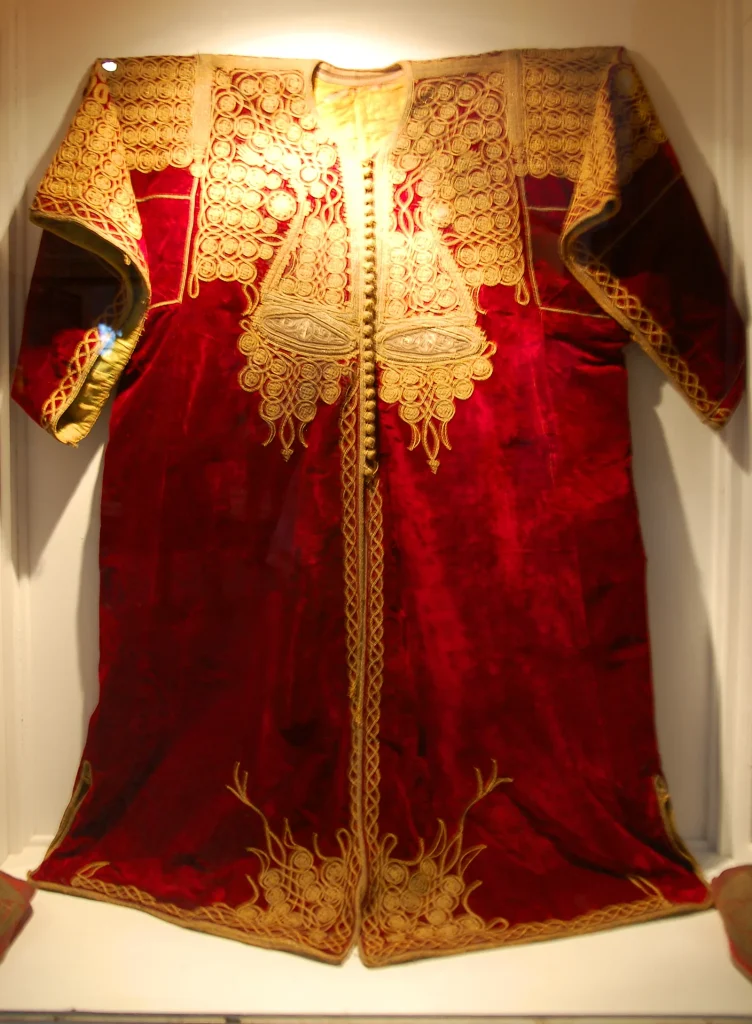
The Moroccan caftan (qaftan) — a long tunic garment with a central opening, hand-braided buttons, and elaborately embroidered or brocaded decoration, worn across genders and generations at weddings, baptisms, religious ceremonies, and festive occasions — was inscribed on UNESCO’s Representative List of the Intangible Cultural Heritage of Humanity on December 10, 2025, at the 20th session of the Intergovernmental Committee (20.COM), held in New Delhi, India. The inscription registered the element under the official designation Moroccan Caftan: art, traditions and skills (File 02077), recognizing the caftan as a living expression of Morocco’s artisanal knowledge — a tradition maintained by tailors, embroiderers, weavers, and textile finishing specialists whose skills are transmitted through family apprenticeship, craft workshops, and fashion training programs.
- The Moroccan caftan is inscribed on UNESCO’s Representative List as Moroccan Caftan: art, traditions and skills (File 02077), inscribed at 20.COM in New Delhi on December 10, 2025.
- The caftan is a ceremonial garment central to Moroccan social life — worn at weddings, baptisms, coming-of-age rituals, and religious festivals — and serves as a marker of social status and community identity.
- Moroccan caftan production involves a collaborative network of tailors, embroiderers, weavers, and textile finishing masters — each piece requiring weeks or months of hand-crafting — with regional schools of embroidery in Fez, Rabat, Tetouan, and Azemmour.
- Two elements are the signature of the Moroccan caftan’s finishing: the sfifa (ornamental edge band sewn along seams and openings) and the aqad (hand-braided buttons with complex closures) — both requiring specialist artisans.
- Morocco’s caftan tradition evolved from royal court attire — with production concentrated in Fez, Rabat, Salé, and Tetouan — into a broad ceremonial and popular tradition that contemporary designers continue to reinterpret while maintaining traditional techniques.
The Moroccan Caftan: History, Regional Traditions, and UNESCO Inscription
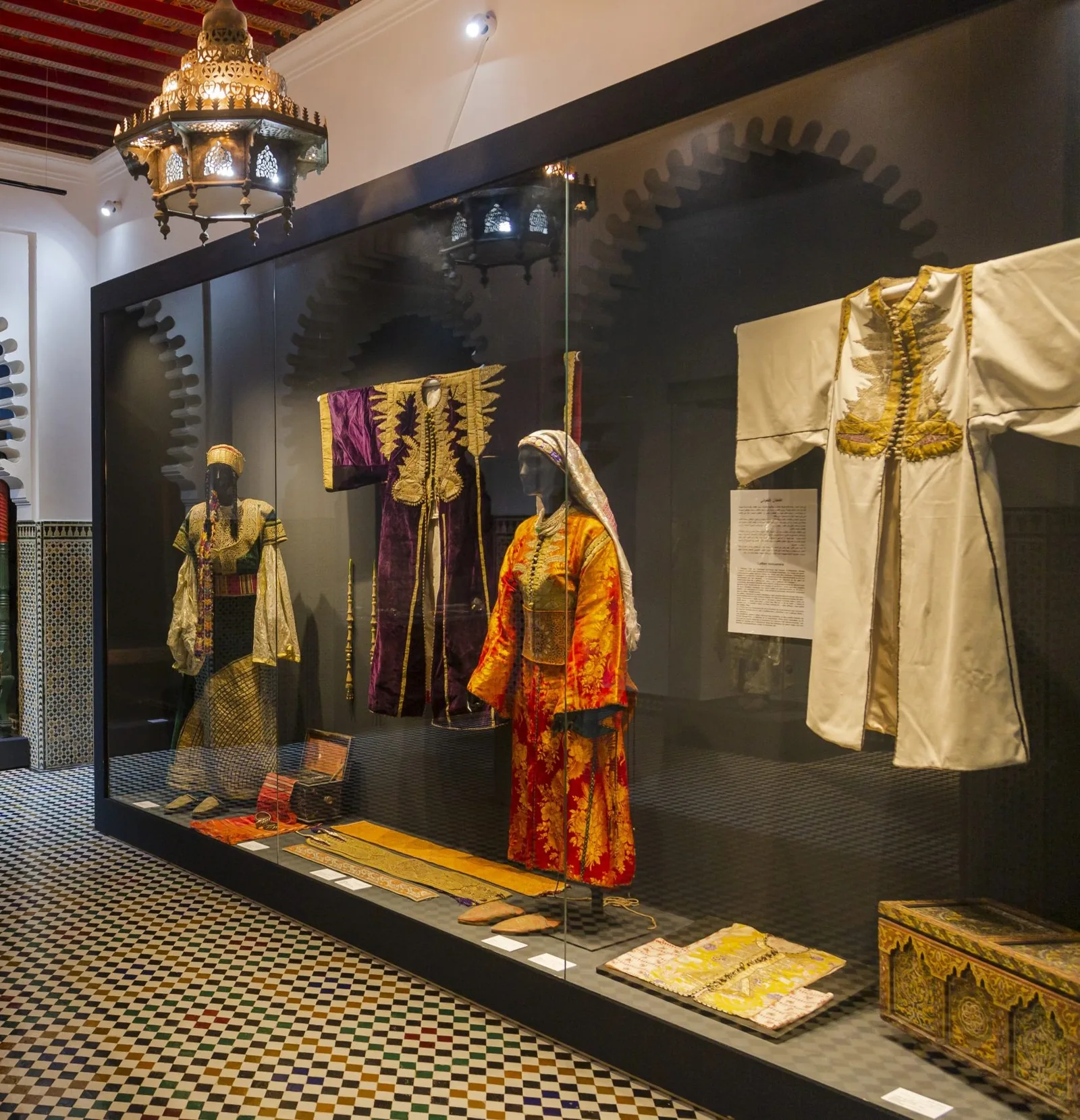
The word caftan — from Persian qaftan, designating a long-sleeved tunic in silk or cotton — traveled with trade and court culture across the Middle East, Central Asia, and North Africa over centuries. Morocco developed a distinctive regional tradition of caftan-making centered in its imperial cities: Fez, Rabat, Salé, and Tetouan became the principal production centers, each developing characteristic embroidery styles tied to local textile workshops and guild traditions. The Moroccan caftan evolved from elite and royal court dress — associated with the Makhzen (Moroccan royal court) and the Andalusian-influenced culture of the northern urban centers — into a ceremonial garment worn across social classes for the major events of family and community life.
Each of Morocco’s principal caftan cities developed a characteristic regional school of embroidery that constitutes a distinct strand of the intangible heritage recognized in UNESCO’s inscription:
- Fez: The ntaâ technique employs gold and silver thread embroidery in intricate patterns, most famously peacock and floral motifs used in bridal trousseau caftans and henna ceremony garments. Fez is considered the center of Morocco’s most prestigious caftan tradition.
- Rabat: The tarz rbati school combines dense floral embroidery on luxurious silk and velvet ground fabrics, with motifs influenced by the city’s architectural decoration.
- Tetouan: The taajira embroidery tradition features floral patterns inspired by traditional zellige (geometric tilework) color palettes, reflecting the city’s Andalusian heritage.
- Azemmour: The tarz azemmouri tradition is unusual for its zoomorphic designs — dragons and lions — motifs rare in Moroccan textile arts.
- Oujda, Tiznit, Meknes: Regional traditions employing passementerie, silk button-making, and pearl embellishment complete the geographic spectrum of caftan artisanship.
UNESCO’s 20.COM inscription (File 02077) recognized this constellation of regional crafts as a unified intangible heritage — the knowledge, skills, and social practices that together constitute the Moroccan caftan tradition. The inscription was Decision 20.COM 7.B.33, at the session held in New Delhi, India, in December 2025. For the full context of UNESCO intangible cultural heritage inscriptions across the globe, the UNESCO intangible cultural heritage examples article surveys the breadth of the Representative List.
Caftan-Making: Craft Process, Transmission, and Social Significance
The production of a Moroccan caftan is inherently collaborative, requiring the sequential work of multiple specialist artisans. A complete caftan involves: a fabric weaver producing the ground textile (typically brocade silk, velvet, or taffeta); a tailor who cuts and constructs the garment to the wearer’s measurements; an embroiderer (working in one of the regional traditions described above); a specialist in sfifa — the ornamental edge band sewn along the neckline, central opening, cuffs, and hem; and an aqad maker who produces the hand-braided button-and-loop closures. For particularly elaborate pieces — a bridal caftan or a caftan for a formal ceremony — the combined labor may span weeks or months, with each artisan applying skills passed down through generations of workshop and family training.
The sfifa and aqad are the signature finishing elements that distinguish the Moroccan caftan from related garments in neighboring traditions. The sfifa is produced by specialist sfifiya artisans who braid and apply decorative band trims in silk, metallic thread, or mixed fibers along every seam and opening edge; the quality and complexity of the sfifa is a primary indicator of a caftan’s prestige. The aqad buttons are hand-produced through a complex braiding technique that creates both the button and its loop closure as a unified decorative element — each button set requiring individual craft work rather than industrial production.
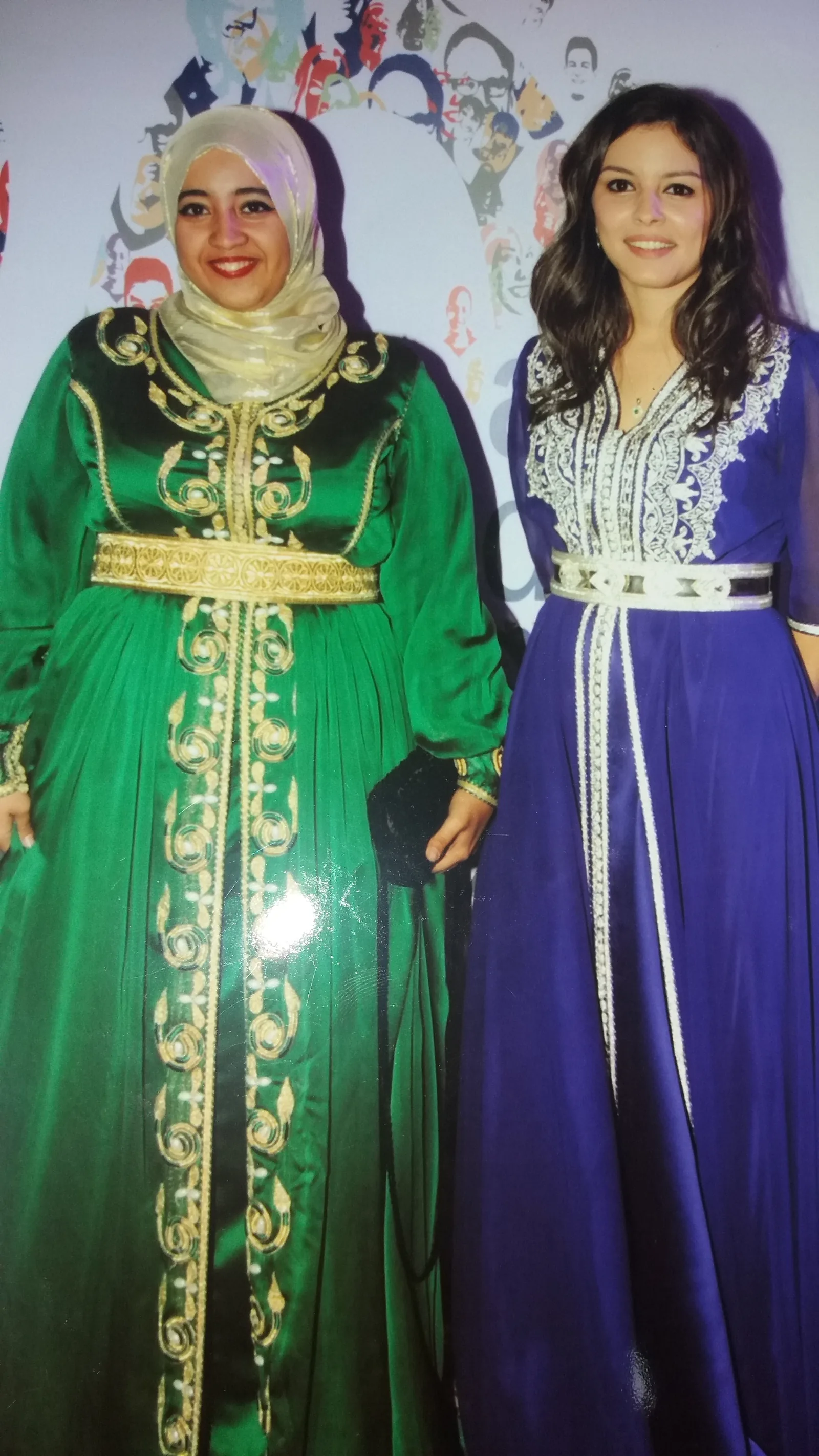
The caftan’s social function is inseparable from its cultural significance. It is the ceremonial dress of Moroccan women at weddings — where the bride changes into a succession of caftans throughout the celebration — and is worn by both men and women for religious holidays, baptisms, and coming-of-age events. Wearing a caftan signals not only celebration but community belonging and cultural identity. UNESCO’s inscription specifically noted the caftan’s role as “a marker of social status and community belonging” while also recognizing its economic significance: the caftan production chain generates income across the full network of artisans, vendors, and retailers involved in its making and sale.
Transmission of caftan-making skills occurs through three parallel channels: informal family apprenticeship, in which daughters or sons learn from parents or relatives within the household; formal craft workshop apprenticeship, in which young practitioners train under a master artisan (maâlem); and institutional training in fashion and craft schools. The Moroccan government has supported the latter through programs such as “Treasures of Moroccan Traditional Arts,” which formally trains students in traditional techniques. Contemporary Moroccan fashion designers reinterpret caftan aesthetics for international markets while maintaining signature elements — the sfifa, aqad, and embroidery traditions — as markers of authenticity. For official documentation, ich.unesco.org/en/RL/moroccan-caftan-art-traditions-and-skills-02077 is the authoritative source.
Frequently Asked Questions
Is the Moroccan caftan a UNESCO intangible cultural heritage?
Yes. The Moroccan caftan is inscribed on UNESCO’s Representative List of the Intangible Cultural Heritage of Humanity under the official designation Moroccan Caftan: art, traditions and skills (File 02077). It was inscribed on December 10, 2025, at the 20th session of the Intergovernmental Committee (20.COM), held in New Delhi, India, under Decision 20.COM 7.B.33. The inscription recognized the caftan as a living expression of Morocco’s artisanal knowledge and its role in social and ceremonial life.
When was the Moroccan caftan added to the UNESCO list?
The Moroccan caftan was inscribed on UNESCO’s Representative List of the Intangible Cultural Heritage of Humanity on December 10, 2025, at the 20th session of the Intergovernmental Committee (20.COM) in New Delhi, India. This was Morocco’s inscription under File 02077, specifically covering the Moroccan tradition of caftan-making as distinct from caftan traditions in other countries.
What makes the Moroccan caftan distinctive?
The Moroccan caftan is distinguished by its characteristic finishing elements — the sfifa (hand-braided ornamental edge band sewn along all openings and seams) and the aqad (hand-braided button-and-loop closures) — and by Morocco’s regional schools of embroidery: the gold-thread ntaâ of Fez, the floral tarz rbati of Rabat, the zellige-inspired taajira of Tetouan, and the zoomorphic tarz azemmouri of Azemmour. Its production requires a collaborative network of specialized artisans including weavers, tailors, embroiderers, sfifiya craftspeople, and aqad button-makers.
What occasions is the Moroccan caftan worn for?
The Moroccan caftan is the ceremonial dress of choice for weddings (where brides traditionally wear a succession of caftans), baptisms, coming-of-age rituals, religious holidays, and official festive events. It is worn by both men and women, and functions as a social signal of celebration and community identity. A bridal caftan from one of Morocco’s major craft cities — particularly Fez or Rabat — may require weeks of artisanal work and represent a significant family investment.
How is caftan-making transmitted in Morocco?
Caftan-making skills are transmitted through three channels: informal family apprenticeship (learning within the household from parents or relatives); formal craft workshop apprenticeship under a master artisan (maâlem); and institutional training in fashion and craft schools, supported by government programs such as “Treasures of Moroccan Traditional Arts.” Contemporary Moroccan designers continue to reinterpret traditional caftan aesthetics for international markets while maintaining the core finishing techniques — sfifa, aqad, and regional embroidery traditions — as cultural identifiers.