Peru UNESCO Intangible Cultural Heritage: Complete List of 15 Elements
Peru’s UNESCO intangible cultural heritage comprises 15 elements — 13 on the Representative List of the Intangible Cultural Heritage of Humanity, 1 on the Urgent Safeguarding List, and 1 on the Register of Good Safeguarding Practices. The portfolio spans the full depth of Peru’s Andean, Amazonian, and coastal traditions: the Taquile Island textile tradition (Masterpiece 2005), the acrobatic ritual Scissors dance, the Andean rope bridge renewal ceremony (Q’eswachaka), the largest Andean festival of faith (Virgen de la Candelaria in Puno), an Indigenous endangered sung prayer tradition (Esuwa/Harakbut, Urgent Safeguarding List), the Colca Valley dance (Wititi), a unique water governance system (Corongo water judges), a ceviche preparation tradition (2023), and most recently the Aimara music and dance of Moquegua (Sarawja, 2025). Peru ratified the 2003 Convention for the Safeguarding of the Intangible Cultural Heritage on 23 September 2005. Its first inscriptions came at the 3rd session in 2008: the Oral heritage and cultural manifestations of the Zápara people (originally proclaimed a Masterpiece in 2001, joint with Ecuador) and Taquile and its textile art (originally proclaimed a Masterpiece in 2005). For the complete official record, ich.unesco.org/en/state/peru-PE is the authoritative source.
- Peru has 15 UNESCO ICH elements as of 2025 — 13 on the Representative List, 1 on the Urgent Safeguarding List, and 1 on the Register of Good Safeguarding Practices. Peru ratified the 2003 Convention on 23 September 2005.
- Peru’s first inscriptions (2008, 3rd session) were the Oral heritage of the Zápara people (joint with Ecuador, originally Masterpiece 2001) and Taquile and its textile art (originally Masterpiece 2005) — an intricate backstrap-loom textile tradition of Taquile Island on Lake Titicaca.
- Esuwa (Urgent Safeguarding List, 6.COM, 2011) — the sung prayers of the Harakbut-speaking Wachiperi people of the Madre de Dios region — is Peru’s only element on the Urgent Safeguarding List, inscribed due to the critically endangered status of the Harakbut language and its few remaining elder practitioners.
- Peru holds notable unique inscriptions: the Traditional system of Corongo’s water judges (2017) — a living pre-Hispanic communal irrigation governance system — and the Knowledge, skills and rituals of Q’eswachaka bridge annual renewal (2013), recognizing the Inca engineering tradition of hand-weaving a grass rope suspension bridge renewed annually by four Quechua communities.
- Peru’s most recent inscription is Sarawja, Aimara music and dance of Moquegua (Representative List, 20.COM, 2025), inscribed at the 20th session in New Delhi — alongside the earlier Practices and meanings associated with ceviche preparation and consumption (2023).
Taquile Textiles, Scissors Dance, and Peru’s Founding UNESCO ICH Inscriptions (2008–2013)
The Oral heritage and cultural manifestations of the Zápara people (Representative List, 3.COM, 2008; Masterpiece 2001) — jointly inscribed with Ecuador — recognized the language, oral literature, and ritual and healing practices of the Zápara, one of the smallest Indigenous nations of the Amazon whose language is spoken by fewer than 10 individuals; the Zápara oral tradition encompasses cosmological narratives, shamanic healing practices, and ecological knowledge transmitted through storytelling and song. Taquile and its textile art (Representative List, 3.COM, 2008; Masterpiece 2005) recognized the hand-weaving tradition of the Quechua-speaking Taquile Island community on Lake Titicaca (at 3,800m elevation), where men and boys knit highly complex traditional garments on the island’s roads and paths using backstrap looms, producing hats, belts, and chullo caps whose color sequences, patterns, and motif combinations encode the wearer’s marital status, community rank, and calendar information; the Taquile weaving style is ranked by the community as a technical practice requiring approximately ten years to master at the highest level. The Safeguarding intangible cultural heritage of Aymara communities in Bolivia, Chile and Peru (Register of Good Safeguarding Practices, 4.COM, 2009) — a trinational inscription — was recognized on the Good Practices Register rather than the Representative List as a model of community-led safeguarding by Aymara communities of the southern Andes.
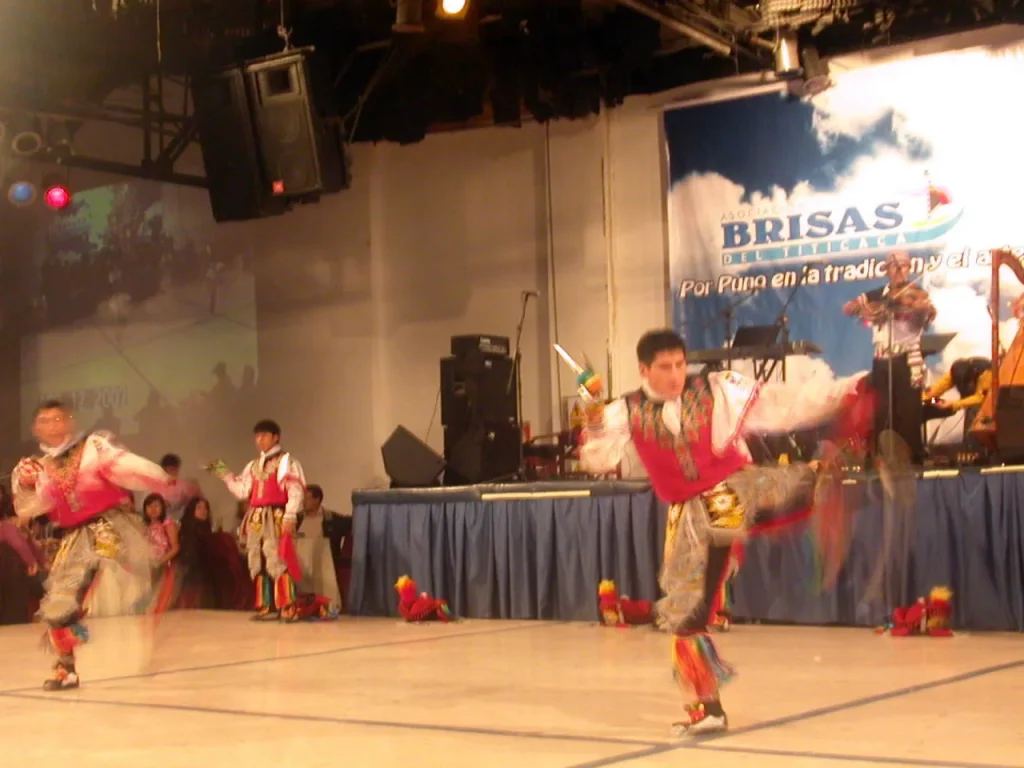
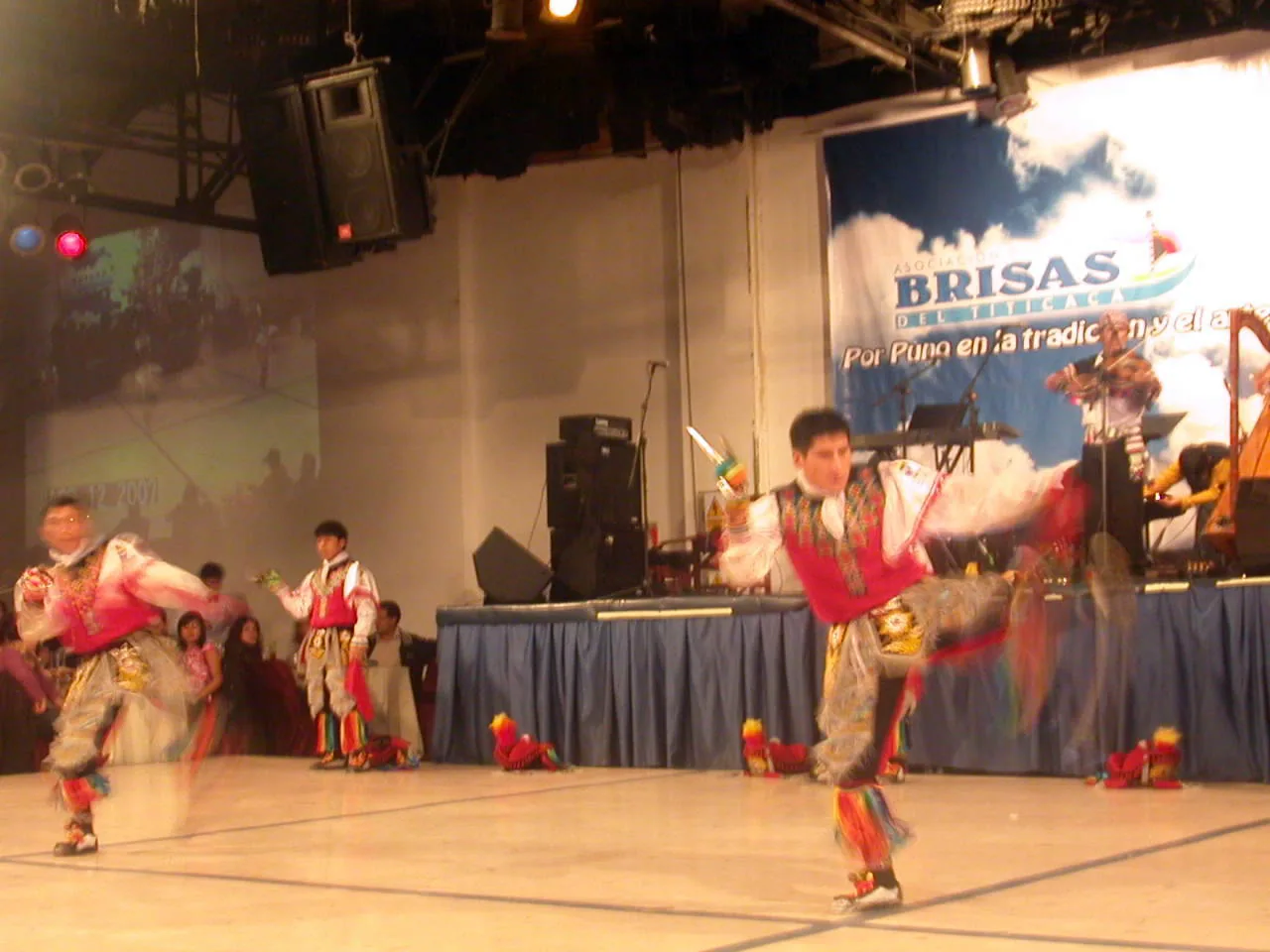
The Huaconada: ritual dance of Mito (Representative List, 5.COM, 2010) recognized the ancient masked dance of the village of Mito in the Junín region — performed at the New Year celebrations of January 1-3, in which male dancers (Huacones) wearing enormous grotesque wooden masks with exaggerated noses and dressed in llama-wool cloaks dance in procession, wielding plaited-leather whips (huaracas) to maintain social order and publicly enact moral community values. The masks are carved with specific expressions conveying authority, and the dance serves as a vehicle for community justice. The Scissors dance (Representative List, 5.COM, 2010) — Danza de tijeras — recognized the spectacular acrobatic ritual dance of the Ayacucho, Apurímac, Arequipa, and Huancavelica highland communities: male dancers (dansaq) in elaborate embroidered costumes perform competitive improvisational routines of acrobatics, contortionism, and rhythm challenges, each holding a pair of steel scissors (two loose blades) in one hand whose clattering rhythm accompanies the violin and harp ensemble — with each dansaq competing in virtuosic feats of endurance and improvisation that can include firewalking and self-flagellation. The Pilgrimage to the sanctuary of the Lord of Qoyllurit’i (Representative List, 6.COM, 2011) recognized the massive Andean Catholic pilgrimage to the Sinakara Valley glacier sanctuary in Cusco — one of the largest in South America — gathering more than 100,000 faithful each year in May or June for a multi-day ceremonial climb combining Catholic veneration of the miraculous image of Christ with Andean cosmological practices, including the ritual carrying of ice blocks from the glacier by Ukuku (bear-human mythological figures) in a tradition of ecological and spiritual relation with the mountain. Esuwa, Harakbut sung prayers of the Wachiperi people (Urgent Safeguarding List, 6.COM, 2011) — Peru’s only element on the Urgent Safeguarding List — recognized the sacred sung prayer repertoire of the Wachiperi, a Harakbut-speaking community of the Madre de Dios Amazonian region, with fewer than 3 elder practitioners capable of performing the full esuwa tradition; the songs encode medicinal plant knowledge, cosmological narratives, and spiritual healing practices in the Harakbut language, itself critically endangered. The Q’eswachaka bridge annual renewal (Representative List, 8.COM, 2013) recognized the extraordinary Inca engineering and community practice of four Quechua communities (Huinchiri, Chaupibanda, Choccayhua, and Qquehue) who each June collectively weave a 28-meter grass-rope suspension bridge over the Apurímac River using the same Inca fiber-engineering techniques unchanged for 500 years — harvesting queua grass, spinning it into ropes of increasing diameter, and plaiting the ropes into cables that are lashed to stone abutments over three days of communal ceremony and collective labor. For context on the UNESCO ICH framework, the UNESCO intangible cultural heritage overview explains the 2003 Convention structure.
Virgen de Candelaria, Wititi, Ceviche, and Peru’s Recent UNESCO ICH Inscriptions (2014–2025)
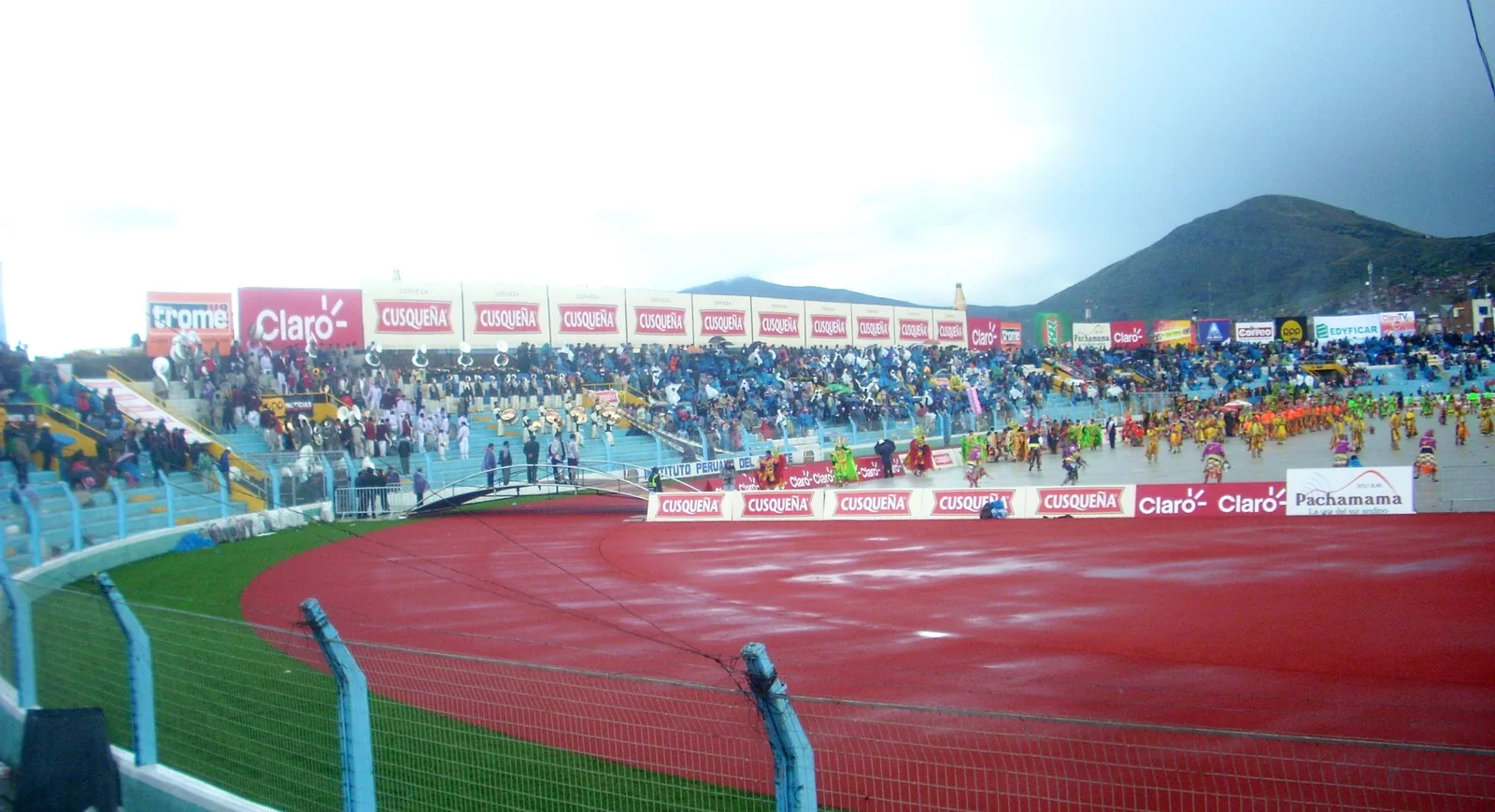
The Festivity of the Virgin of Candelaria of Puno (Representative List, 9.COM, 2014) — the largest Andean religious festival in the Americas — recognized the two-week celebration in the city of Puno on Lake Titicaca each February, in which more than 200 dance troupes representing Andean, coastal, and Amazonian traditions perform in processions before the miraculous image of the Virgin of Candelaria: the Diablada (Devil Dance), Morenada, Caporales, and dozens of other masked and costumed dances are performed by thousands of dancers in an event that UNESCO recognized as representing the fusion of pre-Columbian Andean ritual calendar traditions with Catholic liturgical festival structure. The Wititi dance of the Colca Valley (Representative List, 10.COM, 2015) recognized the courting dance of young people in the Colca Valley Andean communities — a dance in which young men dress in women’s skirts and blouses to playfully court young women dressed in elaborate traditional attire, performed at Christmas, Carnival, and patron saint celebrations in a tradition associated with fertility, romantic pursuit, and community belonging. The Traditional system of Corongo’s water judges (Representative List, 12.COM, 2017) recognized a living communal irrigation governance institution of the town of Corongo in the Ancash region — a pre-Hispanic water management system in which community-elected water judges (jueces de agua) administer irrigation rights, allocate water turns (mitas), adjudicate disputes, and organize collective canal maintenance through a system of rotating authority, ceremonial oaths, and communal labor obligations that has functioned continuously from before the Inca period through the present day. The Hatajo de Negritos and Hatajo de Pallitas (Representative List, 14.COM, 2019) recognized two complementary Afro-Peruvian dance and music traditions of the El Carmen district of Ica and the south-central coast: the Hatajo de Negritos (male dancers playing string instruments and singing in honor of the Christ Child during Christmas celebrations) and the Hatajo de Pallitas (young girls in white dresses performing parallel dances) — traditions tracing their origins to enslaved African communities brought to coastal Peru in the colonial period.
The Pottery-related values, knowledge, lore and practices of the Awajún people (Representative List, 16.COM, 2021) recognized the ceramic tradition of the Awajún Indigenous people of the Amazonas and San Martín regions of Peruvian Amazonia — in which women potters hand-build vessels without a wheel, using the coiling technique and local clay with organic temper, decorating pots with geometric designs using tree resin and paint from natural pigments; the practice encompasses the cosmological narratives, plant-knowledge songs, and gendered spiritual authority surrounding the ceramic tradition. The Practices and meanings associated with ceviche preparation and consumption (Representative List, 18.COM, 2023) recognized ceviche — raw fish marinated in citrus juice with chili peppers, onion, and salt — as a Peruvian cultural heritage: encompassing the sourcing of fresh fish from coastal markets, the knowledge of different citrus acids and their effects on proteins, the regional variations across Peruvian coastal cities and highland communities, and the social role of cevicherías as communal spaces for daily dining and cultural identity. Peru’s most recent inscription is Sarawja, Aimara music and dance of Moquegua (Representative List, 20.COM, 2025) — inscribed at the 20th session in New Delhi — recognizing the festive musical and dance tradition of the Aimara communities of the Moquegua region in southern Peru: a tradition combining pan-pipes (zampoñas), drums, and brass instruments in collective performances at agricultural festivals, patron saint celebrations, and life-cycle ceremonies. With 15 UNESCO ICH inscriptions, Peru holds one of the most extensive portfolios in the Americas, reflecting the country’s extraordinary cultural diversity from the Amazon basin through the Andes to the Pacific coast. For the full comparative list worldwide, the full UNESCO ICH list covers all global elements. Food traditions including Peruvian ceviche are covered in the UNESCO ICH gastronomy guide.
Frequently Asked Questions
How many UNESCO intangible cultural heritage elements does Peru have?
Peru has 15 elements on UNESCO’s intangible cultural heritage lists as of 2025 — 13 on the Representative List, 1 on the Urgent Safeguarding List (Esuwa/Harakbut, 2011), and 1 on the Register of Good Safeguarding Practices (Aymara communities safeguarding, 2009). Peru ratified the 2003 Convention on September 23, 2005. The most recent inscription is Sarawja, Aimara music and dance of Moquegua (2025, 20th session, New Delhi).
What was Peru’s first UNESCO intangible cultural heritage?
Peru’s first UNESCO ICH inscriptions at the 3rd session in 2008 were: the Oral heritage and cultural manifestations of the Zápara people (jointly with Ecuador, originally proclaimed a UNESCO Masterpiece in 2001) and Taquile and its textile art (originally proclaimed a UNESCO Masterpiece in 2005). Taquile is the Quechua island community on Lake Titicaca whose men and boys knit complex patterned textiles encoding social information.
Is the Scissors dance (Danza de tijeras) a UNESCO intangible cultural heritage?
Yes. The Scissors dance — Danza de tijeras — is inscribed on UNESCO’s Representative List (5th session, 2010). UNESCO recognized the acrobatic ritual dance of highland Andean communities in which male dancers (dansaq) in embroidered costumes perform competitive improvisational acrobatics while rhythmically clashing two steel scissor blades in one hand, accompanied by violin and harp. The tradition is practiced in Ayacucho, Apurímac, Arequipa, and Huancavelica regions.
Is Peruvian ceviche a UNESCO intangible cultural heritage?
Yes. Practices and meanings associated with ceviche preparation and consumption is inscribed on UNESCO’s Representative List (18th session, 2023). UNESCO recognized ceviche as a Peruvian cultural heritage encompassing the knowledge of fresh fish sourcing, citrus marinating technique, regional variations across coastal cities, and the social role of cevicherías as communal dining and identity spaces along Peru’s Pacific coast.
What is Peru’s most recent UNESCO ICH inscription?
Peru’s most recent UNESCO ICH inscription is Sarawja, Aimara music and dance of Moquegua — inscribed at the 20th session of the Intergovernmental Committee in New Delhi (December 2025). The inscription recognized the festive music and dance tradition of the Aimara communities of the Moquegua region in southern Peru, combining pan-pipes, drums, and brass instruments in collective performances at agricultural festivals and patron saint celebrations.