South Korea UNESCO Intangible Cultural Heritage: Complete List of 23 Elements
South Korea’s UNESCO intangible cultural heritage comprises 23 elements, all inscribed on the Representative List of the Intangible Cultural Heritage of Humanity — the Republic of Korea has no elements on the Urgent Safeguarding List. The portfolio spans the full range of Korea’s classical and folk traditions: ancient court ritual (the Royal ancestral ritual at Jongmyo Shrine), epic vocal performance (Pansori), women’s communal dance (Ganggangsullae), martial arts (Taekkyeon — the first martial art ever inscribed on the UNESCO ICH list), traditional agriculture and food culture (Kimjang, Jang-making), textile arts (Mosi weaving), Buddhist ceremony (Yeongsanjae, Yeondeunghoe), mask dance drama (Talchum), and island culture (Jeju Haenyeo). The Republic of Korea ratified the 2003 Convention for the Safeguarding of the Intangible Cultural Heritage on February 9, 2005. Its first three inscriptions came at the founding 3rd session in 2008: Pansori epic chant (File 00070), Gangneung Danoje festival (File 00114), and the Royal ancestral ritual in the Jongmyo shrine and its music (File 00016) — all practices with documented histories spanning centuries of continuous transmission. For the complete official record, ich.unesco.org/en/state/republic-of-korea-KR is the authoritative source.
- South Korea has 23 UNESCO ICH elements as of 2024, all on the Representative List. South Korea ratified the 2003 Convention on February 9, 2005. All 23 are on the Representative List; South Korea has no elements on the Urgent Safeguarding List.
- South Korea’s first three inscriptions (2008, 3rd session) were: Royal ancestral ritual at Jongmyo (File 00016), Pansori (File 00070), and the Gangneung Danoje festival (File 00114). Both Pansori and the Gangneung Danoje had previously been proclaimed UNESCO Masterpieces of the Oral and Intangible Heritage of Humanity.
- Taekkyeon (File 00452, 2011) was the first martial art ever inscribed on UNESCO’s Representative List of the Intangible Cultural Heritage of Humanity — inscribed the same year as Jultagi (tightrope walking) and Mosi (fine ramie) weaving.
- South Korea’s most internationally recognized inscriptions include Arirang (File 00445, 2012) — the lyrical folk song considered a symbol of Korean identity — and Kimjang (File 00881, 2013) — the communal kimchi-making practice that embodies Korean collective food culture.
- South Korea’s most recent inscription is Jang-making practices (File 01975, 2024) — the knowledge and practices of producing fermented soybean condiments (doenjang, ganjang, gochujang). South Korea also participated in the joint inscription of Falconry (File 01708, 2021, 25 nations) and a rare joint inscription with North Korea: Ssireum/Ssirum (File 01533, 2018).
Royal Ritual, Pansori, and Korea’s Founding UNESCO ICH Inscriptions (2008–2014)
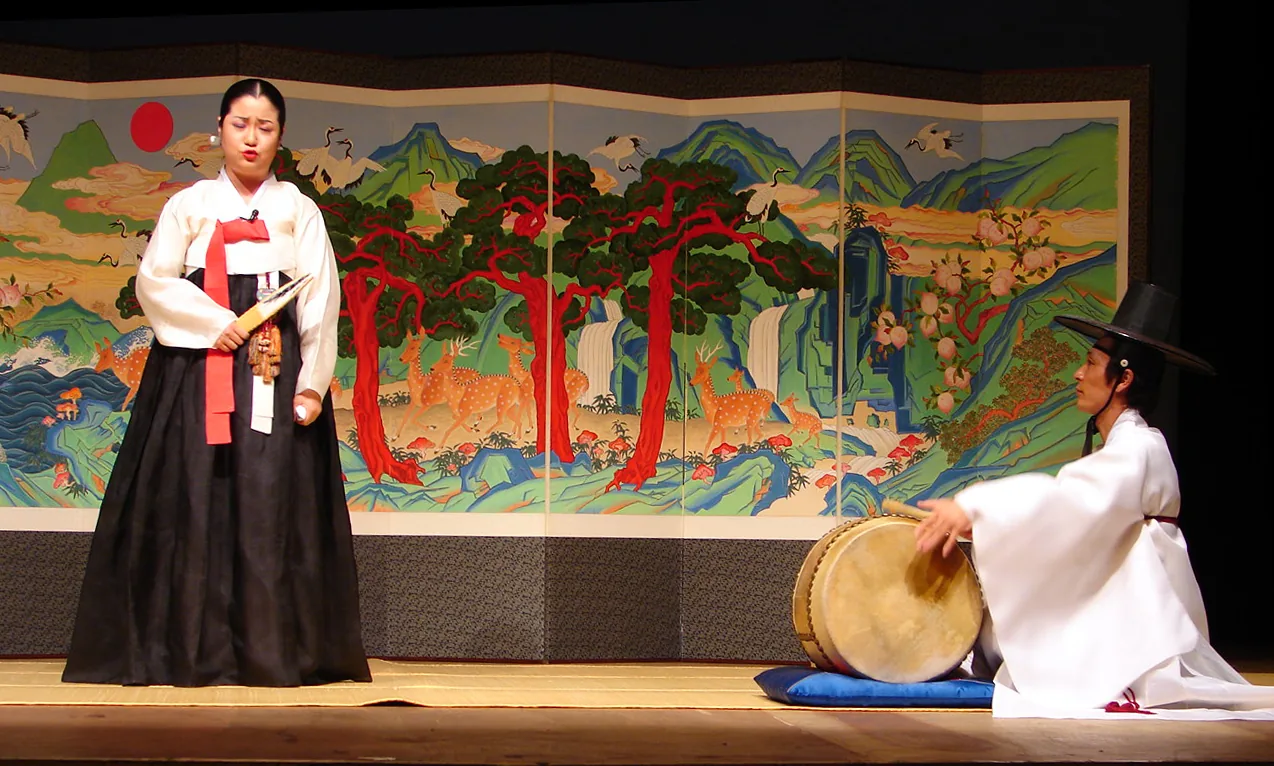
The Royal ancestral ritual in the Jongmyo shrine and its music (File 00016, Representative List, 3.COM, 2008; Masterpiece 2001) is the oldest of Korea’s UNESCO ICH elements — a solemn Confucian ritual performed at the Jongmyo shrine in Seoul to honor the spirits of the kings and queens of the Joseon dynasty (1392–1897), accompanied by the Jongmyo Jeryeak ritual court music and dance. The Pansori epic chant (File 00070, Representative List, 3.COM, 2008; Masterpiece 2003) is a genre of musical storytelling in which a solo vocalist (sorist) accompanied by a single drummer (gosu) performs a long dramatic narrative — the five surviving madang (scenes) draw on repertoire dealing with loyalty, filial piety, love, and social conflict. The Gangneung Danoje festival (File 00114, Representative List, 3.COM, 2008; Masterpiece 2005) is a spring harvest festival in Gangwon Province combining shamanistic rites, Confucian ceremonies, community performances (Gwanno mask play, Sirutteok ritual), and a marketplace gathering — one of Korea’s largest traditional community festivals.
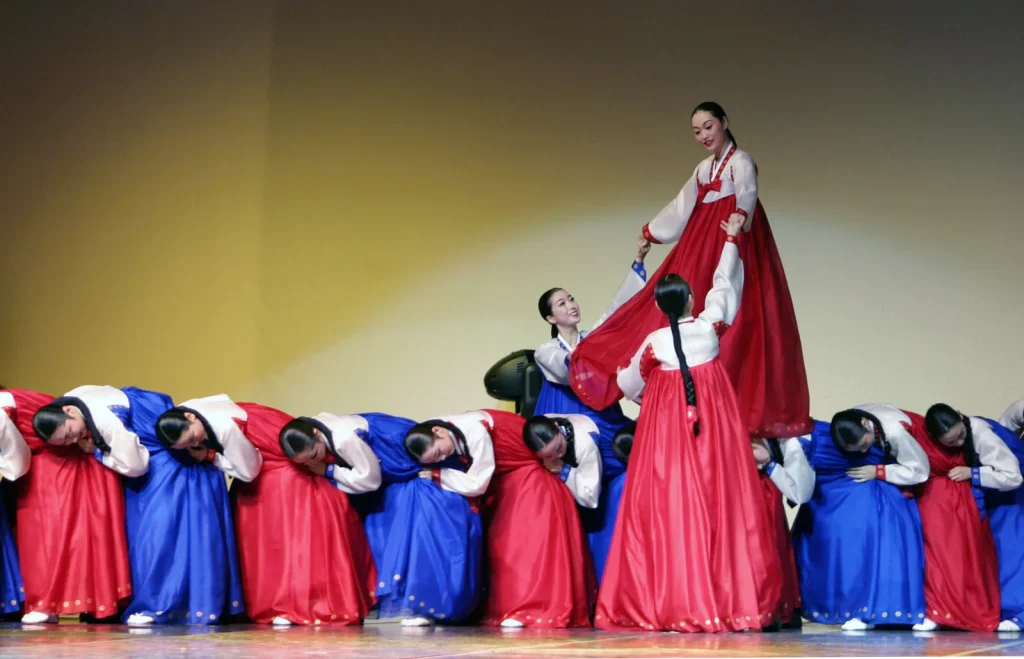
The 2009 inscriptions added five Confucian, Buddhist, and folk ritual traditions: Ganggangsullae (File 00188, 5.COM, 2009) — women’s circle dance performed on full moon nights during the Chuseok harvest festival, traditionally by communities in South Jeolla Province, combining call-and-response singing with accelerating spiral formations; Namsadang Nori (File 00184, 2009) — the performance tradition of itinerant all-male troupes combining music, tightrope walking, acrobatics, puppet theater, and mask dance; Yeongsanjae (File 00186, 2009) — a Buddhist ceremony commemorating the Buddha’s sermon on Vulture Peak Mountain, combining music, ritual dance, masked performance, and pageantry; Jeju Chilmeoridang Yeongdeunggut (File 00187, 2009) — a shamanistic wind goddess ritual practiced in Jeju Island’s coastal communities during the second lunar month; and Cheoyongmu (File 00189, 2009) — a court mask dance from the Silla dynasty tradition, performed to ward off evil spirits. The 2010 inscriptions added Gagok (File 00444) — classical lyric vocal cycles accompanied by a chamber ensemble of string and wind instruments — and Daemokjang (File 00461) — the architectural knowledge and craft of traditional wooden construction masters. In 2011, Taekkyeon (File 00452) — a fluid, rhythmic martial art using circular movements, balance shifts, and leg techniques rather than rigid strikes — became the first martial art ever recognized on UNESCO’s Representative List; the same year saw the inscription of Jultagi (File 00448, tightrope performance combining acrobatics and comic patter) and Weaving of Mosi in the Hansan region (File 00453, the production of fine ramie textile using traditional handloom techniques passed down in South Chungcheong Province). For the ICH framework, the UNESCO intangible cultural heritage overview explains the 2003 Convention.
Arirang (File 00445, Representative List, 7.COM, 2012) — Korea’s iconic lyrical folk song, characterized by the refrain “arirang, arirang, arariyo” and regional melodic variations across the Korean Peninsula — was inscribed as a living musical tradition expressing the full range of Korean emotions and serving as a unifying symbol of national cultural identity. UNESCO characterized Arirang as a practice that “promotes respect for cultural diversity and human creativity.” Kimjang (File 00881, Representative List, 8.COM, 2013) — the communal autumn practice of making large quantities of kimchi before winter — was recognized for its role in Korean community solidarity, intergenerational transmission of fermentation knowledge, and the seasonal ecological knowledge embedded in the selection of ingredients. Nongak (File 00717, Representative List, 9.COM, 2014) — community band music, dance, and rituals associated with Korean farming communities — recognized the percussive music ensemble tradition (using kkwaenggwari, janggu, buk, jing) that coordinates collective agricultural labor, celebrates harvests, and expels negative spirits.
Haenyeo, Ssireum, Yeondeunghoe, and Talchum: South Korea’s UNESCO ICH Inscriptions 2015–2024
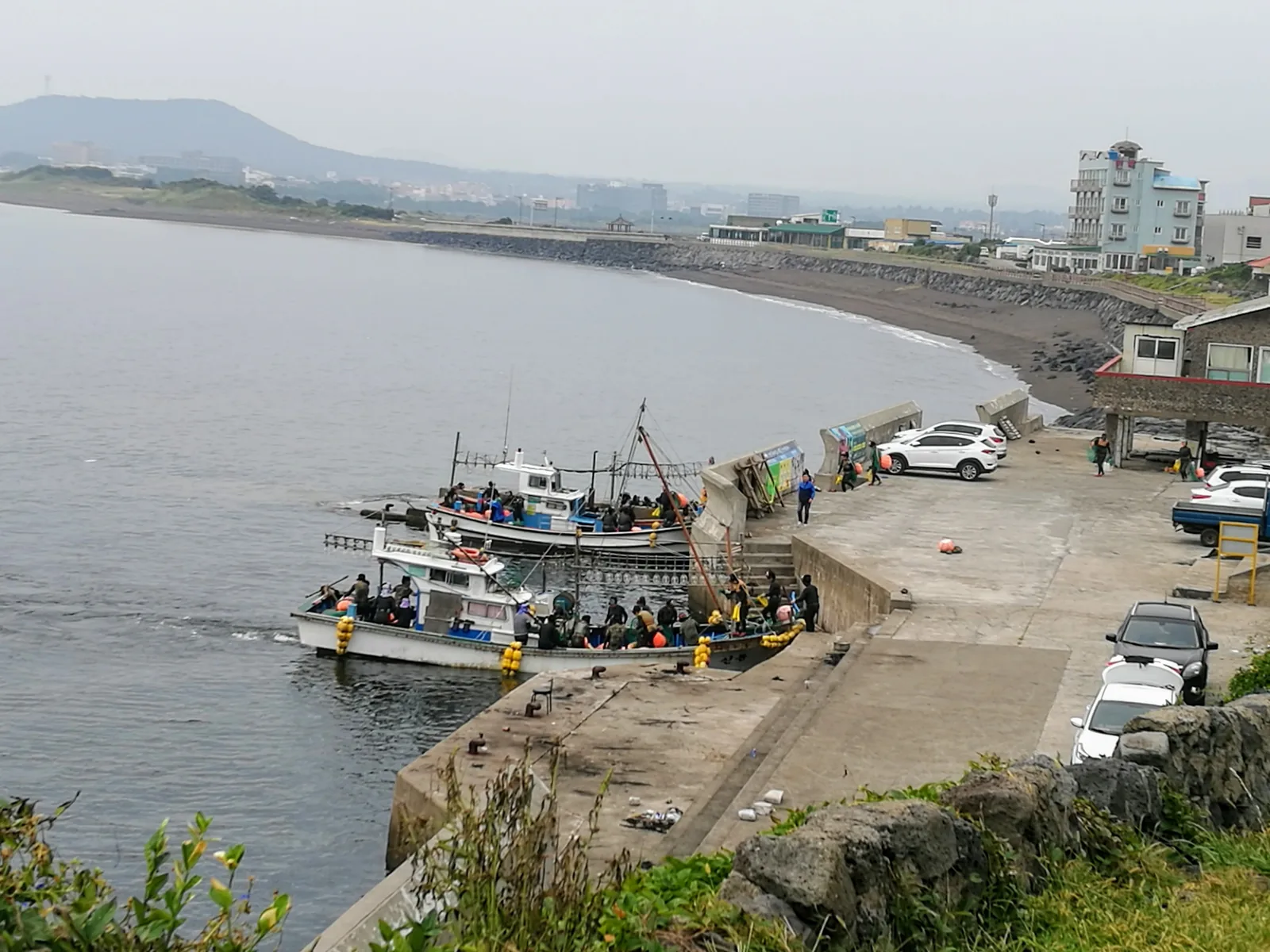
Tugging rituals and games (File 01080, Representative List, 10.COM, 2015) — jointly inscribed by Cambodia, Philippines, Vietnam, and the Republic of Korea — recognized the tradition of community tug-of-war events associated with harvest rituals and collective labor organization across East and Southeast Asia. Culture of Jeju Haenyeo (File 01068, Representative List, 11.COM, 2016) recognized the tradition of Jeju Island’s female free-divers — women who dive up to 10 meters without breathing apparatus to harvest abalone, sea cucumber, and shellfish — for up to seven hours per day across approximately 90 days per year, carrying and transmitting the ecological knowledge of marine cycles, weather reading, and diving techniques through female lineages. The Haenyeo practice represents one of UNESCO’s few inscriptions centered on a distinctly female occupational knowledge system. Traditional Korean wrestling — Ssirum/Ssireum (File 01533, Representative List, 13.COM, 2018) — jointly inscribed by the Republic of Korea and the Democratic People’s Republic of Korea — is a rare instance of a UNESCO ICH inscription co-submitted by North and South Korea, recognizing a traditional wrestling practice (performers grip the satba cloth band around the opponent’s waist and attempt to throw them) as shared heritage across the divided peninsula.
Yeondeunghoe (File 00882, Representative List, 15.COM, 2020) — the lantern lighting festival held on the lunar calendar’s fourth month fifteenth day to celebrate the Buddha’s birthday — has a history of over 1,200 years in Korea, tracing its practice to the Silla period. The festival involves the communal making of lanterns in symbolic shapes (lotus, fish, turtle, watermelon), carrying them in procession, and setting them afloat or releasing them as prayers for individuals, families, and the nation. Talchum (File 01742, Representative List, 17.COM, 2022) — mask dance drama performed across Korea in distinct regional styles (Bongsan, Yangju, Hahoe, Tongyeong, and others) — combines dance, music, acrobatic movement, and improvisational satirical dialogue to critique hypocrisy in the ruling class and Confucian social hierarchy; masks are carved from wood or crafted from paper and gourd. Knowledge, beliefs, and practices related to jang making in the Republic of Korea (File 01975, Representative List, 19.COM, 2024) — Korea’s 23rd and most recent inscription — recognized the centuries-old practice of producing fermented soybean condiments (doenjang soybean paste, ganjang soy sauce, gochujang chili paste) through a months-long process involving meju block fermentation, seasonal timing, and the management of onggi clay fermentation jars. UNESCO noted that jang-making has been practiced on the Korean Peninsula since the Three Kingdoms period (57 BCE–668 CE). The UNESCO ICH gastronomy guide covers jang-making and other food inscriptions in detail. South Korea also holds the joint inscription of Falconry (File 01708, 2021, 25 nations) — recognized alongside 24 other countries for the tradition of training raptors for hunting.
Frequently Asked Questions
How many UNESCO intangible cultural heritage elements does South Korea have?
South Korea (the Republic of Korea) has 23 elements on UNESCO’s Representative List of the Intangible Cultural Heritage of Humanity as of 2024. All 23 are on the Representative List — South Korea has no elements on the Urgent Safeguarding List. South Korea ratified the 2003 Convention on February 9, 2005. The most recent inscription is Jang-making practices (File 01975, 2024).
What was South Korea’s first UNESCO intangible cultural heritage?
South Korea’s first UNESCO ICH inscriptions at the 3rd session (2008) were: the Royal ancestral ritual in the Jongmyo shrine and its music (File 00016), Pansori epic chant (File 00070), and the Gangneung Danoje festival (File 00114). Both Pansori and the Gangneung Danoje had been proclaimed UNESCO Masterpieces of the Oral and Intangible Heritage of Humanity before the 2003 Convention came into force — Pansori in 2003 and the Gangneung Danoje in 2005.
Is Taekkyeon UNESCO intangible cultural heritage?
Yes. Taekkyeon — the traditional Korean martial art using fluid, rhythmic circular movements and leg techniques — is inscribed on UNESCO’s Representative List as File 00452 (7th session, 2011). Taekkyeon was the first martial art ever inscribed on UNESCO’s Representative List of the Intangible Cultural Heritage of Humanity. Note that Taekkyeon is distinct from Taekwondo; UNESCO has inscribed Taekkyeon, not Taekwondo.
Is Arirang a UNESCO intangible cultural heritage?
Yes. Arirang — the lyrical folk song characterized by the refrain “arirang, arirang, arariyo” and regional melodic variations — is inscribed on UNESCO’s Representative List as File 00445 (7th session, 2012). UNESCO recognized Arirang as a living tradition expressing Korean emotions and cultural identity, widely sung across the Korean Peninsula in diverse regional styles.
What is the most recent South Korean UNESCO ICH inscription?
South Korea’s most recent UNESCO ICH inscription is Knowledge, beliefs, and practices related to jang making (File 01975, 2024) — the 23rd element on South Korea’s list, inscribed at the 19th session of the Intergovernmental Committee in Asunción, Paraguay. Jang-making covers the production of doenjang (soybean paste), ganjang (soy sauce), and gochujang (chili paste) through fermented meju blocks and seasonal clay jar fermentation, practiced since the Three Kingdoms period.