Morocco UNESCO Intangible Cultural Heritage: Complete List of 16 Elements
Morocco’s UNESCO intangible cultural heritage comprises 16 elements — 15 on the Representative List of the Intangible Cultural Heritage of Humanity and 1 on the Urgent Safeguarding List. Morocco is among the countries with the largest UNESCO ICH portfolios globally, with inscriptions spanning ancient market culture (the cultural space of Jemaa el-Fna), music of healing and trance (Gnawa), equestrian martial art (Tbourida), nomadic tribal gathering (Moussem of Tan-Tan), argan tree practices (Argan), and major multinational inscriptions including Couscous (shared with four Maghreb nations), the Mediterranean diet, Falconry, and Arabic calligraphy. Morocco ratified the 2003 Convention for the Safeguarding of the Intangible Cultural Heritage on 6 July 2006. Its first inscriptions came at the 3rd session in 2008: the Cultural space of Jemaa el-Fna Square in Marrakech and the Moussem of Tan-Tan. For the complete official record, ich.unesco.org/en/state/morocco-MA is the authoritative source.
- Morocco has 16 UNESCO ICH elements as of 2025 — 15 on the Representative List and 1 on the Urgent Safeguarding List. Morocco ratified the 2003 Convention on 6 July 2006.
- Morocco’s first two inscriptions (2008, 3rd session) were the Cultural space of Jemaa el-Fna Square in Marrakech — the ancient open-air storytelling and performance market — and the Moussem of Tan-Tan, the biennial tribal gathering of nomadic Sahrawi-Berber communities of the sub-Saharan regions.
- Gnawa (2019, Representative List) — the music of the Gnawa brotherhood combining Sufi-influenced ceremony, trance healing ritual (lila), and ancestral African musical traditions — is one of Morocco’s most internationally recognized UNESCO ICH elements, rooted in the experience of enslaved African communities brought to Morocco from the 16th century.
- Taskiwin (Urgent Safeguarding List, 12.COM, 2017) — the martial dance of the western High Atlas Tachelhit communities — is Morocco’s only element on the Urgent Safeguarding List, recognized as facing viability threats from declining knowledge transmission and practitioner numbers.
- Morocco holds multiple major multinational inscriptions: Couscous (2020, joint with Algeria, Mauritania, Niger, and Tunisia), the Mediterranean diet (2013, joint with six Mediterranean nations), Falconry (2021, 25 nations), Arabic calligraphy (2021, multiple Arab states), Date palm (2022), and Henna (2024).
Jemaa el-Fna, Gnawa, and Morocco’s UNESCO ICH Inscriptions (2008–2019)
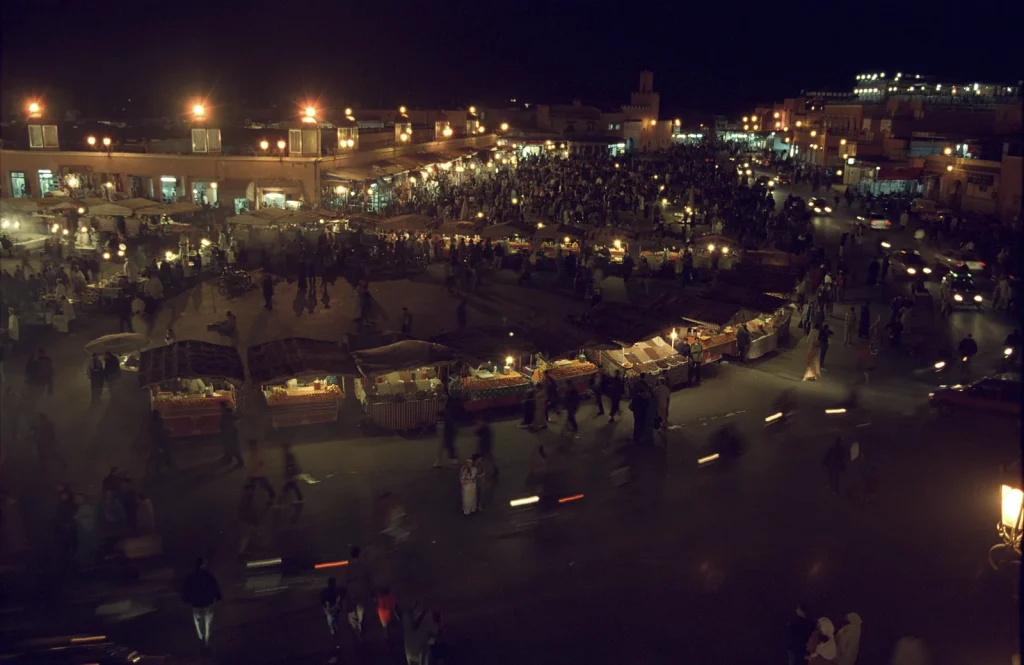
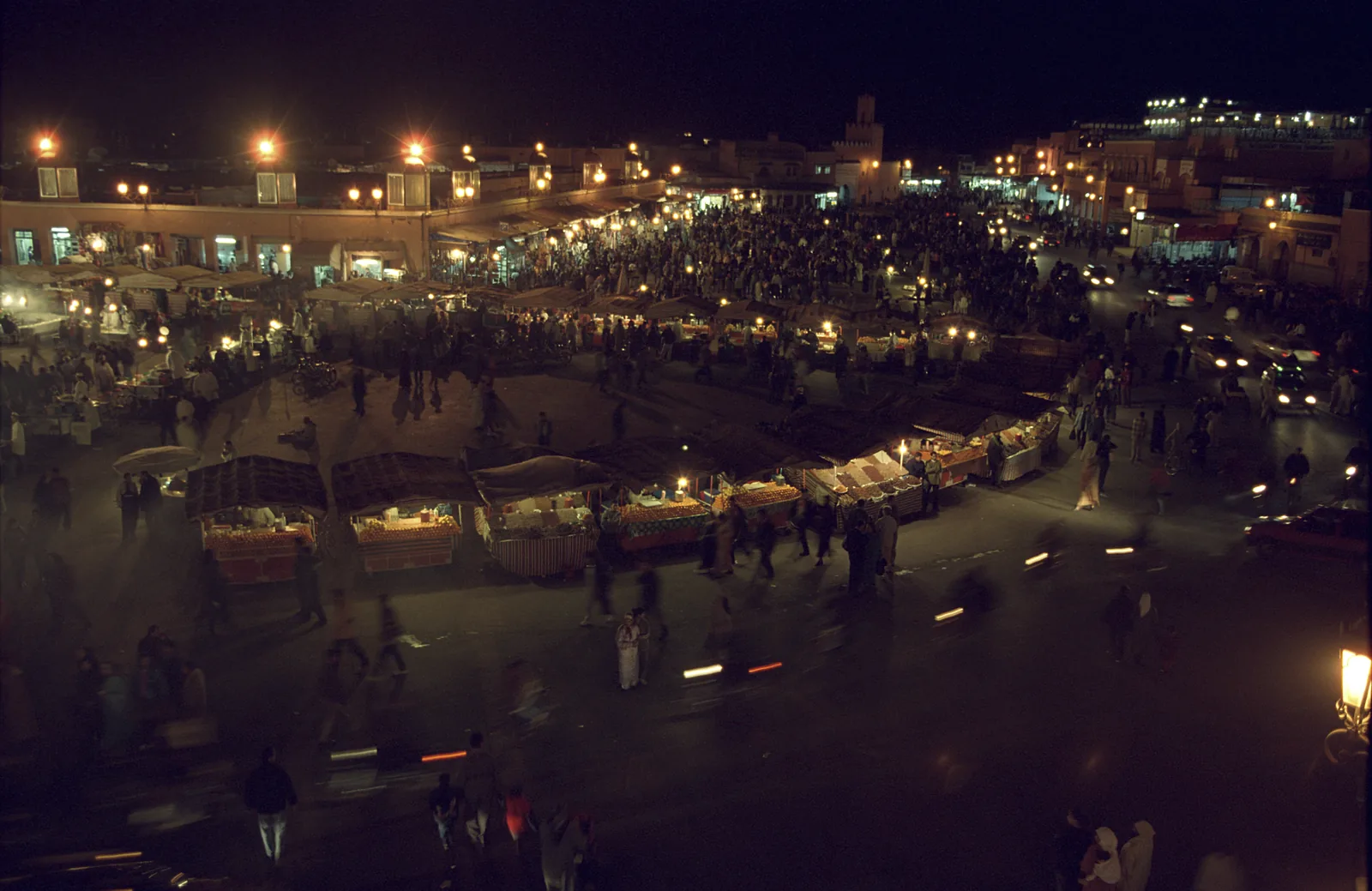
The Cultural space of Jemaa el-Fna Square (Representative List, 3.COM, 2008; Masterpiece 2001) — the ancient open-air performance space at the heart of the medina of Marrakech — is Morocco’s oldest UNESCO ICH recognition (originally proclaimed a Masterpiece of the Oral and Intangible Heritage in 2001). The square functions as a living stage for oral and performing arts traditions: storytellers (halqa), snake charmers, acrobats, musicians, Gnawa performers, water sellers (guerrab), herbalists, fortune-tellers, and food vendors gather daily, and the cultural space transforms from a daytime market into an evening performance arena in which multiple simultaneous performance circles operate throughout the night. The Moussem of Tan-Tan (Representative List, 3.COM, 2008; Masterpiece 2005) recognized the biennial tribal gathering of the nomadic Sahrawi-Berber communities of the Saharan and sub-Saharan regions around the town of Tan-Tan in southern Morocco — a multi-day gathering combining camel racing, equestrian competitions, traditional music, poetry recitation, oral genealogy performance, and trade. The Cherry festival in Sefrou (Representative List, 7.COM, 2012) recognizes a multi-day cultural festival in the town of Sefrou in the Middle Atlas, combining folk arts, music, beauty pageant traditions, and communal celebration of the annual cherry harvest. The Mediterranean diet (Representative List, 8.COM, 2013) — jointly inscribed by Morocco, Cyprus, Croatia, Spain, Greece, Italy, and Portugal — recognized the dietary culture, agricultural practices, and social dimensions of Mediterranean food traditions including olive oil cultivation, communal table practices, and seasonal ingredient knowledge.
The Argan: practices and know-how concerning the argan tree (Representative List, 9.COM, 2014) recognized the ecological knowledge, traditional agricultural techniques, and cooperative social practices associated with the argan tree (Argania spinosa) — endemic to Morocco’s southwestern Souss region — encompassing the collection of argan fruits, extraction of oil through stone-grinding and hand-pressing in Amazigh women’s cooperatives (known as arganières), the grafting and cultivation of new argan groves, and the use of argan oil in cooking, cosmetics, and ceremonies. The Taskiwin (Urgent Safeguarding List, 12.COM, 2017) — the martial warrior dance of the western High Atlas Tachelhit Amazigh communities — is Morocco’s only element on the Urgent Safeguarding List: a rhythmic masculine dance in which lines of performers wearing traditional white djellabas wave their shoulders in synchronized movements, accompanied by flutes (tifounasse) and bendir frame drums, performed at weddings and community gatherings in the High Atlas valleys; declining youth interest and transmission challenges prompted its inscription on the Urgent Safeguarding List. Gnawa (Representative List, 14.COM, 2019) recognized the musical and spiritual traditions of the Gnawa brotherhood — communities historically descended from enslaved sub-Saharan Africans brought to Morocco from the 16th century onward, who developed a syncretic spiritual practice combining West African animist religion, Islamic Sufi mysticism, and Moroccan Amazigh cultural elements. The central Gnawa ceremony is the lila — an all-night healing ritual in which a maâlem (master) plays the guembri (three-stringed bass lute) while assistants play krakeb (heavy iron castanets) in polyrhythmic patterns; the ritual moves through a sequence of color-coded spiritual invocations (mluk) associated with different saints and spirits, guiding participants through states of trance (jedba) for therapeutic and spiritual purposes. For context on UNESCO’s ICH framework, the UNESCO intangible cultural heritage overview explains the 2003 Convention structure.
Couscous, Tbourida, Malhun, and Morocco’s Recent UNESCO ICH Inscriptions (2020–2025)
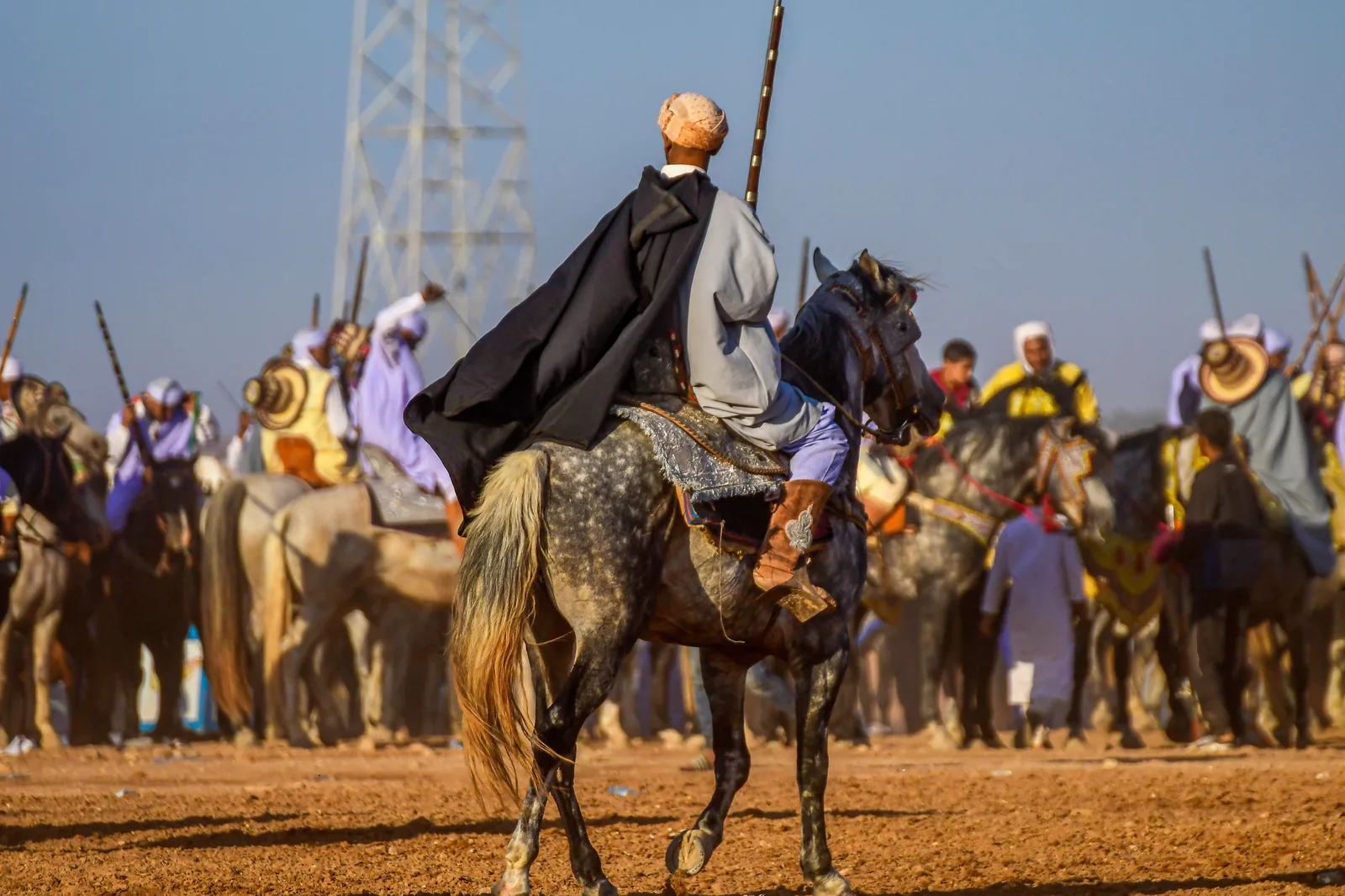
The Knowledge, know-how and practices pertaining to couscous production and consumption (Representative List, 15.COM, 2020) — jointly inscribed by Algeria, Mauritania, Morocco, Niger, and Tunisia — recognized the complete cultural complex of couscous production: hand-rolling steamed semolina durum wheat into tiny granules, drying, sieving, communal cooking in a couscoussier over slow-simmered vegetable or meat broth, and the social practices of communal couscous meals at celebrations, family gatherings, and Friday prayers that make couscous a shared identity food of Maghreb culture. Tbourida (Representative List, 16.COM, 2021) — also known as Fantasia — recognized Morocco’s traditional equestrian art dating to the 15th century, rooted in Arab-Amazigh martial conventions: a Sorba (troop) of 15 to 25 riders dressed in traditional white djellabas and turbans mounts Arab-Barb horses and executes a synchronized gallop charge across a course of 100 meters, culminating in all riders simultaneously firing muzzle-loading rifles into the air — the baroud (gunpowder salute) — whose thunderclap must be singular and unanimous as the supreme mark of coordination and unity. Tbourida is performed at moussems, weddings, and national celebrations throughout Morocco. Also inscribed in 2021 were Arabic calligraphy (joint multinational inscription including Morocco and multiple Arab states) and Falconry (File 01708, joint with 24 other nations). The Date palm: knowledge, skills, traditions and practices was inscribed in 2022 as a joint multinational element encompassing Morocco alongside other date-producing nations.
At the 18th session in 2023, Morocco received two inscriptions: Malhun, a popular poetic and musical art (Representative List, 18.COM, 2023), recognizing the classical urban music and oral poetry tradition of the major Moroccan medinas (Fez, Marrakech, Meknès, Rabat, Salé, Oujda) — a tradition of composed verse (qasida) sung to traditional Moroccan instruments (guembri, violin, oud, darbouka, bendir) by the maâlem and his choral ensemble (sanaa), transmitting a repertoire of religious, lyrical, and epic poetry; and Arts, skills and practices associated with engraving on metals (2023, joint with several countries), recognizing the craft of decorative metal engraving. At the 19th session in Asunción (2024), Morocco received the joint inscription of Henna: rituals, aesthetic and social practices (Representative List, 19.COM, 2024). Morocco’s most recent inscription is the Moroccan Caftan: art, traditions and skills (Representative List, 20.COM, 2025) — inscribed at the 20th session in New Delhi — recognizing the traditional embroidered robe worn by Moroccan women at weddings, engagement ceremonies, and religious celebrations, encompassing the craft knowledge of embroiderers (a’alame) who work in silk, gold, and silver threads using needle techniques (terz) on brocade, velvet, and other luxury fabrics, transmitted through master-apprentice systems in the historic craft workshops (haouma) of Morocco’s imperial cities. With 16 UNESCO ICH inscriptions, Morocco holds one of the most extensive portfolios in the Arab world and Africa. For the full comparative list worldwide, the full UNESCO ICH list covers all global elements. Food traditions including Moroccan couscous are covered in the UNESCO ICH gastronomy guide.
Frequently Asked Questions
How many UNESCO intangible cultural heritage elements does Morocco have?
Morocco has 16 elements on UNESCO’s intangible cultural heritage lists as of 2025 — 15 on the Representative List and 1 on the Urgent Safeguarding List (Taskiwin, 2017). Morocco ratified the 2003 Convention on July 6, 2006. The most recent inscription is the Moroccan Caftan (2025, 20th session, New Delhi).
What was Morocco’s first UNESCO intangible cultural heritage?
Morocco’s first UNESCO ICH inscriptions were at the 3rd session in 2008: the Cultural space of Jemaa el-Fna Square in Marrakech (originally a UNESCO Masterpiece of Oral Heritage, 2001) and the Moussem of Tan-Tan, the biennial tribal gathering of Sahrawi-Berber nomadic communities of south Morocco.
Is Gnawa music a UNESCO intangible cultural heritage?
Yes. Gnawa is inscribed on UNESCO’s Representative List (14th session, 2019). UNESCO recognized Gnawa as a syncretic spiritual and musical tradition of Morocco, encompassing the lila all-night healing ceremony, guembri bass lute playing by the maâlem, krakeb iron castanets, and the tradition of trance (jedba) in which participants enter states of spiritual healing through music. Gnawa developed from the spiritual practices of enslaved sub-Saharan Africans brought to Morocco from the 16th century.
Is Moroccan couscous a UNESCO intangible cultural heritage?
Yes. Knowledge, know-how and practices pertaining to couscous production and consumption is inscribed on UNESCO’s Representative List (15th session, 2020) as a joint nomination by Algeria, Mauritania, Morocco, Niger, and Tunisia. UNESCO recognized the full cultural complex: hand-rolling semolina into granules, communal cooking, and the social role of couscous at Friday meals, celebrations, and community gatherings across Maghreb culture.
What is Morocco’s most recent UNESCO ICH inscription?
Morocco’s most recent UNESCO ICH inscription is the Moroccan Caftan: art, traditions and skills — inscribed at the 20th session of the Intergovernmental Committee in New Delhi (December 2025). The Caftan inscription recognized the traditional embroidered robe worn by Moroccan women at weddings and celebrations, encompassing the craft knowledge of embroiderers who work in silk and metallic threads using the terz needle technique in Morocco’s imperial city workshops.