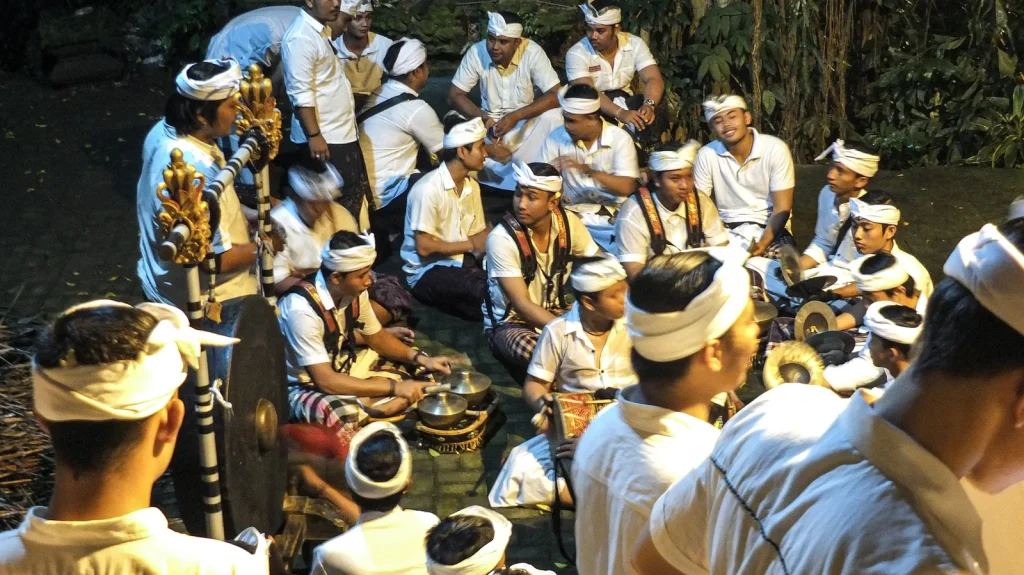
Gamelan: UNESCO Intangible Cultural Heritage of Indonesia (File 01607)
Gamelan — the traditional Indonesian percussion ensemble comprising hand-forged bronze metallophones, gongs, gong-chimes, drums, and string instruments — was inscribed on UNESCO’s Representative List of the Intangible Cultural Heritage of Humanity on December 15, 2021, at the 16th session of the Intergovernmental Committee (16.COM), registered as File 01607, Decision 16.COM 8.b.16. The inscription recognized eight regional variants of the gamelan tradition across Indonesia — encompassing the stately Javanese court gamelan of Surakarta and Yogyakarta, the dynamic and rhythmically intricate Balinese gamelan, and the flute-dominated Sundanese tradition — as a unified, multidimensional expression of Indonesian cultural identity that UNESCO traced back to bas-relief images on the walls of the 8th-century Borobudur temple.
- Gamelan is inscribed on UNESCO’s Representative List as File 01607, inscribed December 15, 2021, at the 16th session of the Intergovernmental Committee (16.COM, Decision 16.COM 8.b.16) — covering eight regional variants across Indonesia.
- Archaeological evidence of gamelan appears in bas-relief sculptures on the 8th-century Borobudur temple; the Majapahit Empire (13th–15th centuries) maintained a government office specifically charged with supervising the performing arts, including gamelan.
- A complete Javanese gamelan ageng comprises approximately 30 instruments: multiple sets of bronze metallophones (saron, bonang, gendèr), gongs (gong ageng, kempul, kenong), kendang drums, bamboo flutes (suling), bowed strings (rebab), and xylophones (gambang).
- Gamelan uses two primary tuning systems: slendro (five notes per octave with wide intervals) and pélog (seven notes, typically played in five-note subsets) — producing scales unlike Western equal temperament; Balinese instruments are tuned in pairs to produce characteristic interference beats.
- Sacred court gamelan ensembles including gamelan Munggang and gamelan Kodok Ngorek date to the 12th century in Javanese court tradition and are sounded only for specific royal ceremonies — never for public performance.
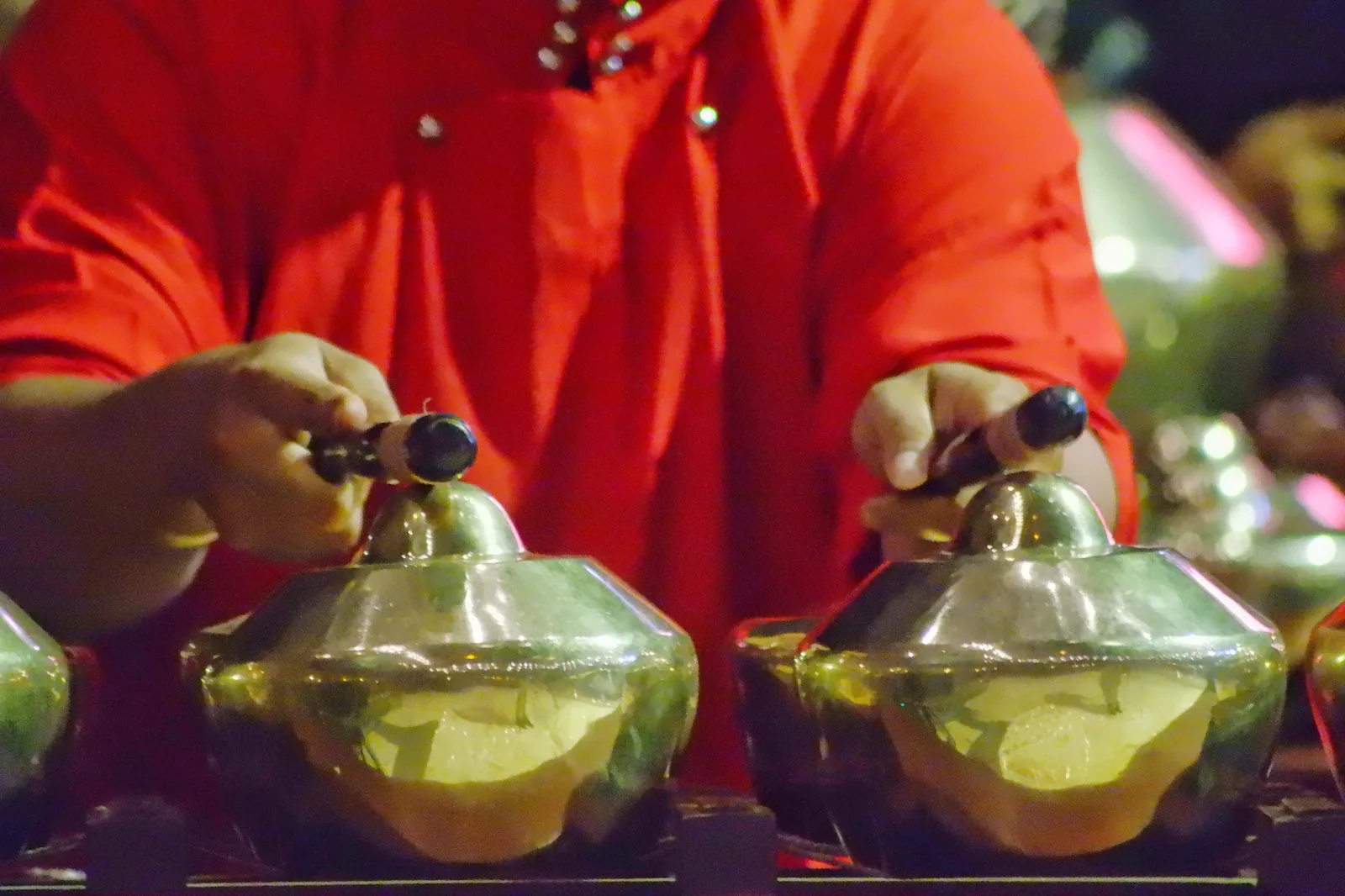
Gamelan: Indonesian Origins, Court Culture, and UNESCO Inscription
The earliest evidence of gamelan instrumentation appears in the bas-relief carvings on the Borobudur temple in Central Java, constructed in the 8th century CE — images of musicians playing instruments recognizable as ancestors of the saron, bonang, and kendang survive in stone. In Balinese tradition, the mythological origin of the sacred gamelan selonding (iron gamelan) is placed in the 9th century. The instruments developed into their current forms primarily during the Majapahit Empire (13th–15th centuries), which ruled most of maritime Southeast Asia and maintained a formal government bureau responsible for overseeing the performing arts — including the organization of gamelan ensembles at court. The association between gamelan and royal authority remained central through the sultanates of Central Java: in Surakarta and Yogyakarta, specific gamelan ensembles were sacred possessions of the palace, never performed in public. The most sacred of these — gamelan Munggang and gamelan Kodok Ngorek, dating to the 12th century — are performed only for specific royal ceremonies and carry a direct connection to the supernatural authority of the sovereign.
The Javanese court tradition produced the most elaborated formal gamelan system. The complete gamelan ageng — the “great gamelan” of the Javanese court tradition — includes approximately 30 instruments arranged in a specific spatial configuration, performing in interlocking parts that create a unified melodic and rhythmic texture. The musical structure distributes roles hierarchically: skeletal melody instruments (balungan) state the core melodic line, while elaborating instruments (bonang, gendèr, gambang) fill in the between-beat spaces with faster patterns. The kendang (double-headed drum) controls tempo and transitions. Two sacred ceremonial gamelan categories (pakurmatan) are kept at the Yogyakarta and Surakarta palaces and performed exclusively for specific royal rituals. The Balinese gamelan tradition diverges significantly: ensembles produce louder, more dynamic sound with faster tempos, and instruments are tuned in pairs (ombak, “wave”) so that the two versions of each instrument sound at slightly different pitches, creating a shimmering interference beat that is characteristic of Balinese gamelan sound. The Sundanese tradition of West Java, by contrast, emphasizes the bamboo flute (suling) as the lead melodic voice, giving the ensemble a softer, more intimate character.
UNESCO inscribed gamelan on December 15, 2021, at 16.COM under Decision 16.COM 8.b.16. The inscription recognized eight regional variants as collectively constituting a unified heritage element — joining Indonesian batik (2009), kris (2008), and wayang (2003) on the UNESCO ICH list. UNESCO’s documentation noted that gamelan “constitutes an integral part of Indonesian identity” and that it spans all five ICH domains: performing arts (as primary), oral traditions, social practices and rituals, traditional craftsmanship (the production of instruments), and knowledge concerning nature and the universe (the cosmological dimensions of the music). For context on the full UNESCO ICH framework, the UNESCO intangible cultural heritage overview explains the 2003 Convention.
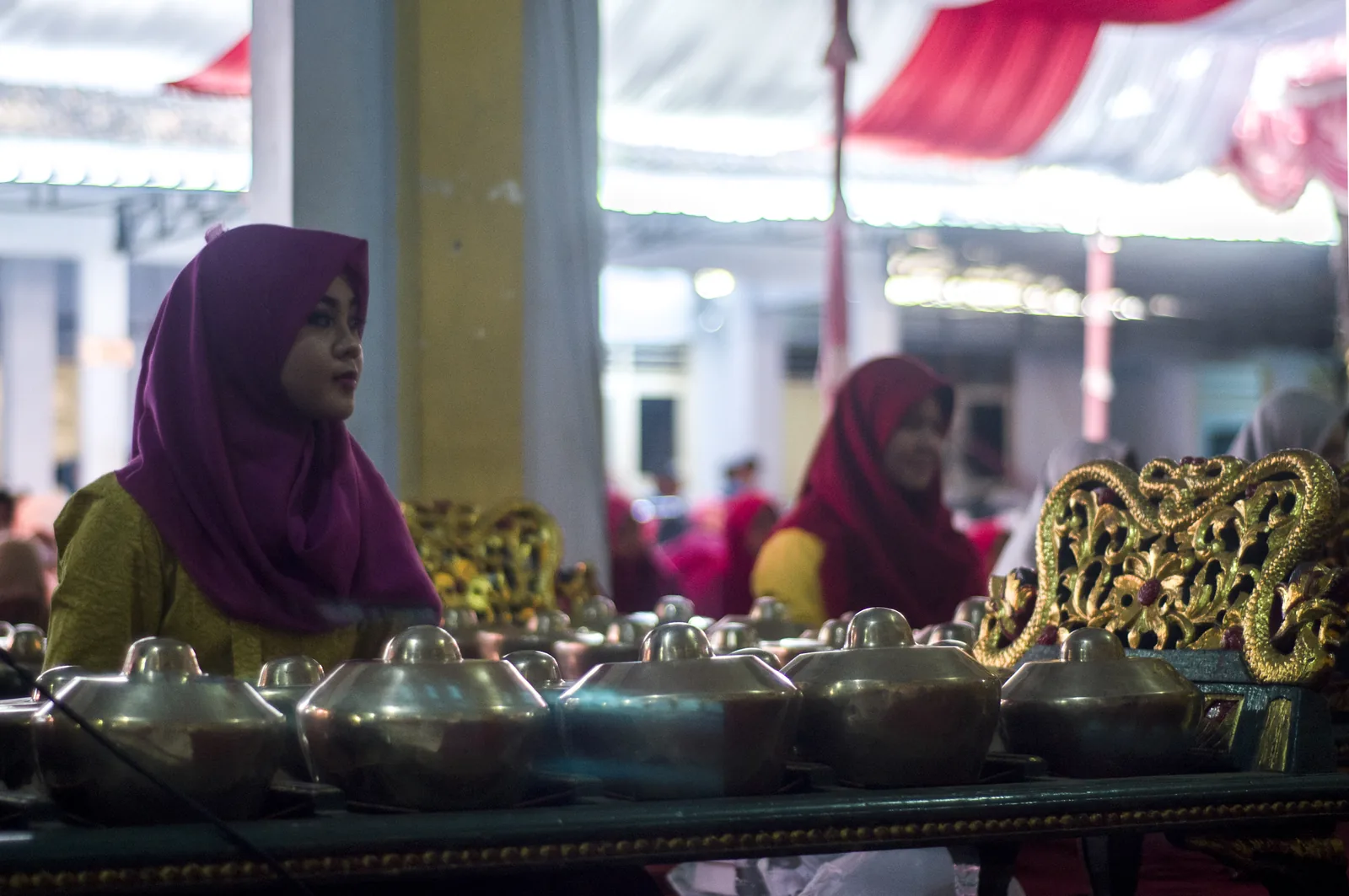
Instruments, Tuning Systems, Performance Contexts, and Transmission of Gamelan
The bronze instruments of gamelan are cast or forged by specialist smiths using a specific alloy composition that determines the instrument’s tone quality — a knowledge system that constitutes its own transmission lineage. The primary instruments of a Javanese gamelan ageng include: the saron (metallophone with keys on a trough resonator, played with a mallet), which forms the melodic backbone; the bonang (a rack of small gongs, played with two padded sticks), which elaborates the melody; the gendèr (a suspended metallophone with resonators beneath each key), which provides the most melodically complex elaboration; the gong ageng (the large hanging gong, typically 90 cm or more in diameter), which marks the largest structural divisions; and the kenong, kethuk, and kempul, which mark progressively smaller divisions. All these instruments are tuned to two primary scales: slendro, which divides the octave into five roughly equal tones (unlike any Western scale), and pélog, a seven-tone system from which five-tone subsets are selected for specific compositions — the same piece performed in pélog and slendro sounds entirely different in character.
Gamelan accompanies the full cycle of Indonesian performing arts and ritual life. The most historically significant context is wayang kulit (shadow puppet theater), in which the dalang (puppet master) performs all-night performances narrating stories from the Mahabharata and Ramayana, with the gamelan providing continuous musical accompaniment responsive to the dalang’s cues. Wayang wong (human dance-drama) and classical court dances — bedhaya, srimpi, and gambyong — are performed exclusively with gamelan. Festivals, circumcisions, weddings, and religious ceremonies across Java and Bali regularly include gamelan performance. Female vocalists (sindhen) and male chorus (gerong) add textual content to the instrumental music. Transmission was historically oral — teachers playing and students imitating — but the Javanese courts developed notational systems in the 19th century. The modern kepatihan notation system, developed around 1900 using numbered pitches, enabled formal music education. Today gamelan is taught in conservatories, universities, and school programs across Indonesia, and has spread internationally — hundreds of gamelan ensembles are active in universities and cultural institutions in North America, Europe, and Australia. For the official inscription documentation, ich.unesco.org/en/RL/gamelan-01607 is the authoritative source.
Frequently Asked Questions
Is gamelan a UNESCO intangible cultural heritage?
Yes. Gamelan is inscribed on UNESCO’s Representative List of the Intangible Cultural Heritage of Humanity as File 01607. It was inscribed on December 15, 2021, at the 16th session of the Intergovernmental Committee (16.COM, Decision 16.COM 8.b.16), covering eight regional variants of the gamelan tradition across Indonesia. UNESCO recognized gamelan as “an integral part of Indonesian identity dating back centuries” with archaeological evidence from the 8th-century Borobudur temple.
What is gamelan?
Gamelan is the traditional percussion ensemble of Java, Bali, and other Indonesian regions, comprising hand-forged bronze metallophones (saron, bonang, gendèr), gongs (gong ageng, kenong, kempul), kendang drums, bamboo flutes (suling), bowed strings (rebab), and xylophones (gambang). A complete Javanese gamelan ageng has approximately 30 instruments. The ensemble uses two tuning systems — slendro (five tones) and pélog (seven tones played in five-note subsets) — producing scales unlike Western equal temperament.
What is the difference between Javanese and Balinese gamelan?
Javanese gamelan (particularly the court traditions of Surakarta and Yogyakarta) is characterized by slower, stately tempos, a hierarchical instrument structure, and a meditative, refined aesthetic. Balinese gamelan is louder, more dynamic, and rhythmically faster, with instruments tuned in pairs (ombak) to produce a characteristic shimmering interference beat. Sundanese gamelan (West Java) emphasizes the bamboo flute (suling) and produces a softer, more intimate sound. All are recognized under the 2021 UNESCO inscription as regional variants of a shared heritage.
What are slendro and pélog in gamelan?
Slendro and pélog are the two tuning systems of Javanese gamelan. Slendro divides the octave into five roughly equal intervals, producing a scale unlike any Western mode. Pélog has seven tones but is typically performed using five-tone subsets, producing different melodic characters depending on which tones are selected. The two scales have distinct expressive characters: slendro is generally associated with lively, straightforward moods; pélog with more refined or sacred atmospheres. A complete Javanese gamelan ageng typically includes two sets of instruments, one tuned to each system.
What performance contexts does gamelan serve?
Gamelan accompanies wayang kulit (shadow puppet theater), wayang wong (human dance-drama), court dances (bedhaya, srimpi, gambyong), religious ceremonies, festivals, circumcisions, and weddings. Sacred court gamelan ensembles (pakurmatan) at Surakarta and Yogyakarta palaces are performed only for specific royal rituals. Gamelan also accompanies sindhen (female vocalists) and gerong (male chorus). It has spread internationally: hundreds of gamelan ensembles operate in universities in North America, Europe, and Australia.