Malaysia UNESCO Intangible Cultural Heritage: Complete List of 9 Elements
Malaysia’s UNESCO intangible cultural heritage comprises 9 elements — 8 on the Representative List of the Intangible Cultural Heritage of Humanity and 1 on the Urgent Safeguarding List. The portfolio spans the full breadth of Malaysia’s multicultural heritage: an ancient Kelantan theatre tradition (Mak Yong), the love ballads of multicultural Melaka (Dondang Sayang), a martial and performing art rooted in the Malay Archipelago (Silat), a Fujian Chinese maritime ceremony shared with China (Ong Chun/Wangchuan), a gold-threaded handwoven fabric tradition (Songket), an endangered theatre from Kedah (Mek Mulung, on the Urgent Safeguarding List), the traditional fitted blouse-dress shared with four Southeast Asian nations (Kebaya), the multiethnic morning dining culture of Nasi Lemak and Roti Canai (Breakfast culture in Malaysia), and the oral Malay poetry tradition (Pantun). Malaysia ratified the 2003 Convention for the Safeguarding of the Intangible Cultural Heritage on 27 July 2013. Its first inscription came at the 3rd session in 2008 with Mak Yong theatre (File 00167). For the complete official record, ich.unesco.org/en/state/malaysia-MY is the authoritative source.
- Malaysia has 9 UNESCO ICH elements as of 2025 — 8 on the Representative List and 1 on the Urgent Safeguarding List. Malaysia ratified the 2003 Convention on 27 July 2013.
- Malaysia’s first inscription (2008, 3rd session) was Mak Yong theatre (File 00167) — the ancient performing art of the Kelantan Malay community, combining acting, vocal and instrumental music, elaborate costumes, and healing ritual practice.
- Mek Mulung (File 01610, Urgent Safeguarding List, 18.COM, 2023) is Malaysia’s only element on the Urgent Safeguarding List — the traditional theatre of Wang Tepus village in Kedah, facing viability threats from aged practitioners and declining youth transmission.
- At the 2024 session, Malaysia received two simultaneous inscriptions: the Kebaya (File 02090, joint nomination with Brunei, Indonesia, Singapore, and Thailand) and Breakfast culture in Malaysia (File 02113) — the multiethnic morning dining tradition encompassing Nasi Lemak, Roti Canai, and Teh Tarik.
- Malaysia’s most recent inscription is Pantun (File 02274, Representative List, 20.COM, 2025) — the traditional Malay oral poetry form structured in four-line quatrains with an a-b-a-b rhyme pattern, used in ceremonies, conflict resolution, and intergenerational cultural transmission.
Mak Yong, Dondang Sayang, and Malaysia’s UNESCO ICH Inscriptions (2008–2021)
Mak Yong theatre (File 00167, Representative List, 3.COM, 2008) is Malaysia’s oldest and first UNESCO ICH inscription — an ancient theatre form created by the Malay communities of Kelantan, combining acting, vocal and instrumental music, gestures, and elaborate costumes. A Mak Yong performance opens with a ritual offering (buka panggung) to summon protective spirits, followed by dances, improvised dialogue, and dramatic storytelling drawn from ancient Malay folklore featuring royal characters, divine figures, and comedic roles — with each performance spanning multiple consecutive nights in three-hour segments. The musical ensemble comprises a three-stringed fiddle (rebab), paired drums (gendang), and hanging gongs; the cast is predominantly female. Mak Yong pre-dates the Islamization of the region and was historically performed under royal patronage until the 1920s; it also encompasses a healing tradition (main peteri) in which practitioners enter trance states to address spiritual ailments. The Dondang Sayang (File 01410, Representative List, 13.COM, 2018) — the love ballads of Melaka — recognized a courtly singing tradition practiced since the 15th-century Melaka Sultanate era by four distinct communities: Malay, Baba Nyonya, Chitty, and Portuguese. Performances feature two singers of opposite sexes who alternate singing improvised quatrains expressing affection, moral wisdom, and social commentary, accompanied by violins, gongs, and tambourines. The practice serves as a socially mediated form of emotional expression — with both the lyrics and their exchange carrying cultural protocols of restraint and indirection.
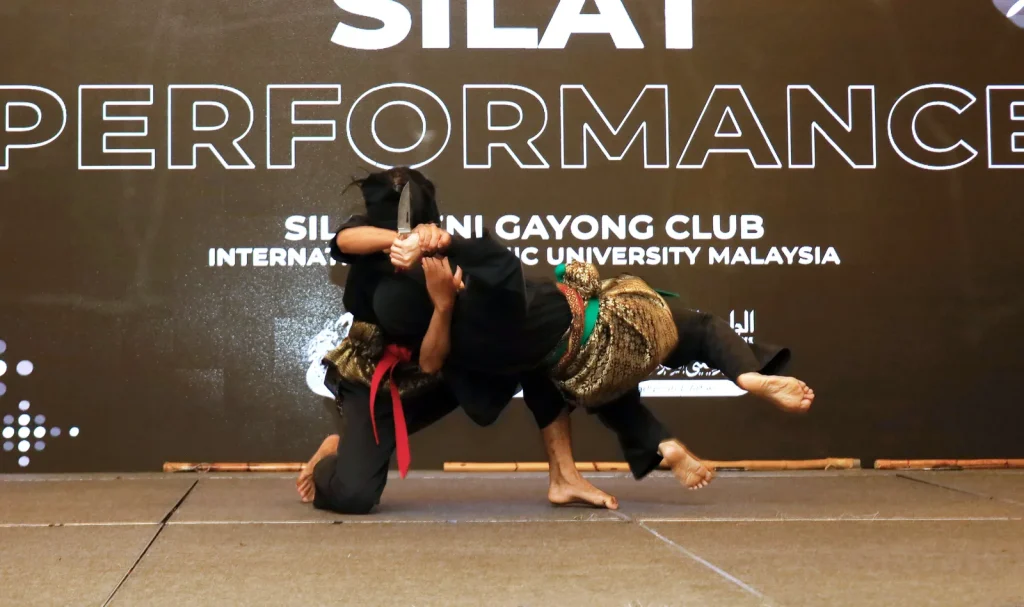
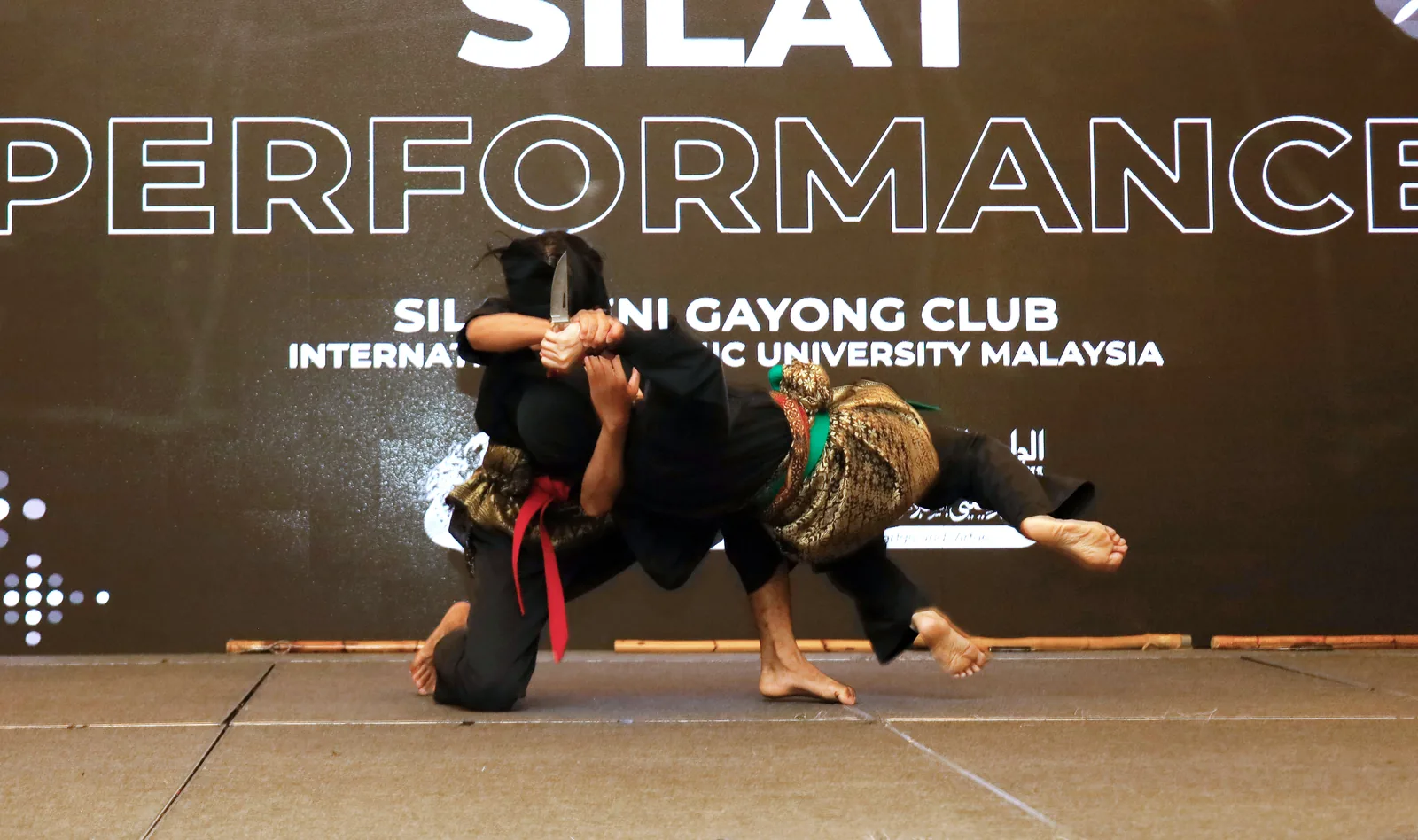
Silat (File 01504, Representative List, 14.COM, 2019) recognized the Malaysian martial art of self-defence rooted in the Malay Archipelago and tracing its origins to the Langkasuka Kingdom — encompassing over 150 distinct styles in Malaysia alone, many drawing movement inspiration from animals (including Silat Harimau, which mimics tiger movements). Training takes place in evening sessions in open courtyards under the guidance of masters (guru silat) and combines physical skill, spiritual discipline, moral values, and traditional Malay attire and music; Silat also functions as a performing art at weddings, state ceremonies, and cultural festivals. The Ong Chun/Wangchuan/Wangkang ceremony (File 01608, Representative List, 15.COM, 2020) — jointly inscribed by Malaysia and China — recognizes a maritime ritual of the Fujian Chinese communities in Melaka (Malaysia) and Fujian and Guangdong provinces (China): a ceremony honoring the deity Ong Chun (Wang Ye) who safeguards the connection between humans and the ocean, culminating in the sending of a large paper boat (Wangkang) out to sea laden with offerings as a ritual dispatch of pestilence and misfortune. Songket (File 01505, Representative List, 16.COM, 2021) recognized the traditional Malaysian handwoven fabric in which gold or silver thread is inserted between base threads on a kek floor loom to create geometric patterns of flowers, birds, and insects that appear to float above the fabric — a weaving tradition traced to the 16th century, predominantly practiced by women in Malay communities on the Malay Peninsula and in Sarawak, and used at royal installations, weddings, and formal state occasions. For context on the ICH framework, the UNESCO intangible cultural heritage overview explains the 2003 Convention structure.
Mek Mulung, Kebaya, Breakfast Culture, and Pantun: Malaysia’s UNESCO ICH Inscriptions (2023–2025)
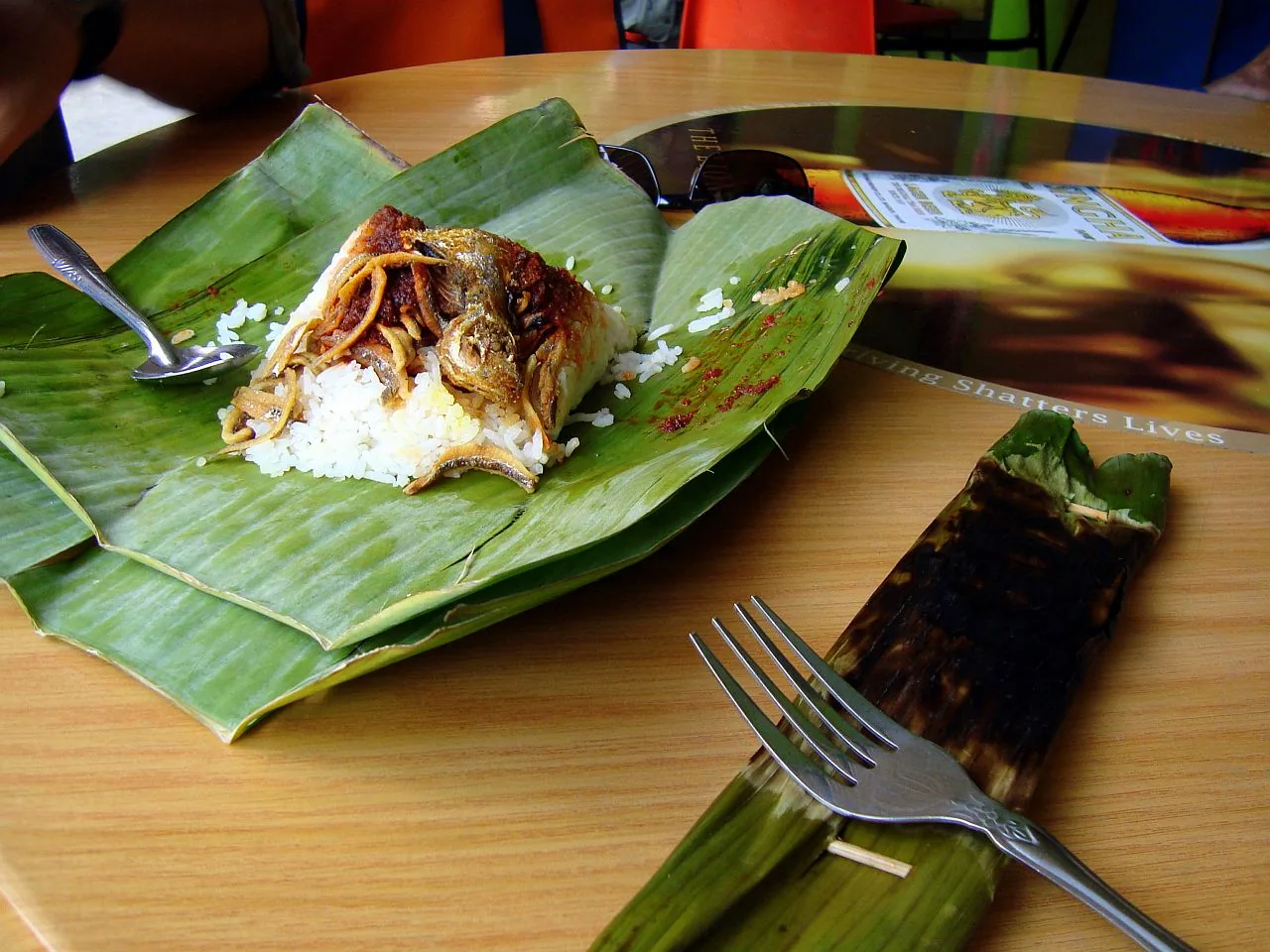
Mek Mulung (File 01610, Urgent Safeguarding List, 18.COM, 2023) — Malaysia’s only element on the Urgent Safeguarding List — is the traditional theatre of Wang Tepus village in Kedah, combining acting, dialogue, singing, and dancing for an ensemble of approximately 15–20 performers in traditional attire, with a music ensemble of drums, clappers, and gongs. Key characters include a king, princess, shaman, and maids in narratives rooted in local oral tradition; performances traditionally take place in open barns following a communal feast. Mek Mulung faces viability threats from aged practitioners with limited successors, declining youth interest, and the demands of its complex oral training system — prompting its inscription on the Urgent Safeguarding List rather than the Representative List. Safeguarding measures include its inclusion in school and university curricula. At the 19th session in Asunción (December 2024), Malaysia received two simultaneous inscriptions: the Kebaya (File 02090, Representative List, jointly inscribed by Brunei Darussalam, Indonesia, Malaysia, Singapore, and Thailand) — the traditional fitted blouse-dress representing centuries of textile craft, tailoring knowledge, and ceremonial and social practice across Southeast Asia — and Breakfast culture in Malaysia: dining experience in a multi-ethnic society (File 02113, Representative List, 19.COM, 2024), recognizing the everyday morning dining culture of Nasi Lemak (rice cooked in coconut milk with sambal, anchovies, boiled egg, and peanuts), Roti Canai (flaky flatbread of Indian influence), and Teh Tarik (pulled tea), shared across Malay, Chinese, Indian, and other ethnic communities as a unifying daily practice. For the full record of 2024 inscriptions including the Kebaya, see the UNESCO ICH 2024 session overview. The UNESCO ICH gastronomy guide covers the Breakfast culture inscription alongside other global food heritage traditions.
Malaysia’s most recent inscription is Pantun (File 02274, Representative List, 20.COM, 2025) — the traditional Malay oral poetry form inscribed at the 20th session of the Intergovernmental Committee in New Delhi. Pantun is structured in four-line quatrains with an a-b-a-b rhyme pattern, in which the first two lines (pembayang, the evocation) present an image from the natural world while the second two lines (maksud, the meaning) convey the actual message — creating an indirect, politely encoded form of expression for emotions, moral values, and social commentary. The practice functions at weddings, customary ceremonies, official state functions, and conflict resolution contexts, with a pemantun (narrator) facilitating its recitation alongside singers and customary chiefs. UNESCO recognized Pantun as a form of intangible heritage that allows communities to express sensitive thoughts and address disagreements through gentle, indirect language — embedding diplomacy, restraint, and relationship-preserving protocols into the fabric of oral communication. Knowledge is transmitted both formally through schools and workshops, and informally through community competitions and cultural gatherings. Malaysia’s 9 UNESCO ICH elements reflect a heritage portfolio spanning the country’s four major cultural communities and eight centuries of Malay Archipelago civilization. For the full comparative view, the full UNESCO ICH list covers all elements globally.
Frequently Asked Questions
How many UNESCO intangible cultural heritage elements does Malaysia have?
Malaysia has 9 elements on UNESCO’s intangible cultural heritage lists as of 2025 — 8 on the Representative List and 1 on the Urgent Safeguarding List (Mek Mulung). Malaysia ratified the 2003 Convention on July 27, 2013. The most recent inscription is Pantun (File 02274, 2025, 20th session, New Delhi).
What was Malaysia’s first UNESCO intangible cultural heritage?
Malaysia’s first UNESCO ICH inscription was Mak Yong theatre (File 00167) — inscribed at the 3rd session in 2008. Mak Yong is the ancient theatre form of the Malay communities of Kelantan, combining acting, music, dance, royal folklore, and healing practice, with a predominantly female cast and oral transmission through long years of apprenticeship training.
Is Silat a UNESCO intangible cultural heritage?
Yes. Silat — the Malaysian martial and performing art rooted in the Malay Archipelago — is inscribed on UNESCO’s Representative List as File 01504 (14th session, 2019). UNESCO recognized Silat’s over 150 distinct styles, its origins in the Langkasuka Kingdom, its role as a martial art and cultural performing art at ceremonies and festivals, and its system of transmitting physical skill, spiritual discipline, and Malay cultural values through master-apprentice training.
Is the Kebaya a Malaysian UNESCO intangible cultural heritage?
Yes. The Kebaya — knowledge, skills, traditions and practices — was inscribed on UNESCO’s Representative List (File 02090, 19th session, December 2024) by a joint nomination from Brunei Darussalam, Indonesia, Malaysia, Singapore, and Thailand. The inscription recognized the traditional blouse-dress as a shared feminine heritage and living textile craft tradition across five Southeast Asian nations.
What is Malaysia’s most recent UNESCO ICH inscription?
Malaysia’s most recent UNESCO ICH inscription is Pantun (File 02274, 2025) — the traditional Malay oral poetry form inscribed at the 20th session of the Intergovernmental Committee in New Delhi. Pantun uses four-line quatrains (a-b-a-b rhyme) in which natural imagery encodes social and emotional messages, used at ceremonies, weddings, and conflict resolution contexts across Malay-speaking communities.