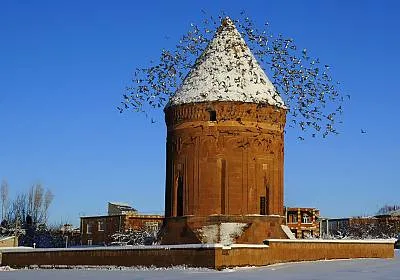
 Urgent Safeguarding ListInscribed 2022
Description
Traditional Ahlat stonework refers to the knowledge, methods, skills and aesthetic understanding surrounding the extraction of volcanic Ahlat stones, shaping and ornamenting the stones, and then using them to create structures and artefacts. Ahlat stone is a volcanic stone extracted by miners from the foothills of the Mountain Nemrut in Türkiye. The extracted stone is cut and shaped, then ornamented by stone carvers with hand-held tools. The ornamentation on the Ahlat stone is formed by scraping, relief and carving techniques, generally using organic, geometric and calligraphic shapes. Building a structure with Ahlat stone requires specific techniques and knowledge. Folk calendars and traditional knowledge of nature play important roles in the extraction of the stone by the miners as well as in construction. In addition to architectural works such as houses, mosques, mausoleums and bridges, the stones are also used in tombstones, inscriptions, fountains and other artefacts. The practice has been transmitted from generation to generation for centuries, but its viability has faced serious threats in the last decades, including demographic changes (difficulty finding new apprentices due to the sharp decline in population and migration to big cities) and the widespread use of modern building techniques and materials in the region.
Country
TurkeyOther heritage elements in Turkey
Representative List · Inscribed 2025Antep İşi, drawn thread embroidery of GaziantepRepresentative List · Inscribed 2024Nawrouz, Novruz, Nowrouz, Nowrouz, Nawrouz, Nauryz, Nooruz, Nowruz, Navruz, Nevruz, Nowruz, NavruzRepresentative List · Inscribed 2024Traditional bagpipe (Gayda/Tulum) making and performingRepresentative List · Inscribed 2023Craftsmanship and performing art of balaban/meyRepresentative List · Inscribed 2023Iftar/Eftari/Iftar/Iftor and its socio-cultural traditionsRepresentative List · Inscribed 2023Art of illumination: Təzhib/Tazhib/Zarhalkori/Tezhip/Naqqoshlik
More Urgent Safeguarding List elements
Inscribed 2023Mek MulungInscribed 2020Handmade weaving in Upper Egypt (Sa'eed)Inscribed 2017Taskiwin, martial dance of the western High AtlasInscribed 2023Traditional Syrian glassblowingInscribed 2023Traditional knowledge, methods and practices concerning olive cultivationInscribed 2012Ala-kiyiz and Shyrdak, art of Kyrgyz traditional felt carpets
Also inscribed in 2022
- Yaldā/Chella
- Festivals related to the Journey of the Holy family in Egypt
- Al-Mansaf in Jordan, a festive banquet and its social and cultural meanings
- Harissa, knowledge, skills and culinary and social practices
- Date palm, knowledge, skills, traditions and practices
- Al-Khanjar, craft skills and social practices
Data Source: UNESCO Intangible Cultural Heritage · UNESCO listing