Qawwali: Is It a UNESCO Intangible Cultural Heritage? Origins and Status
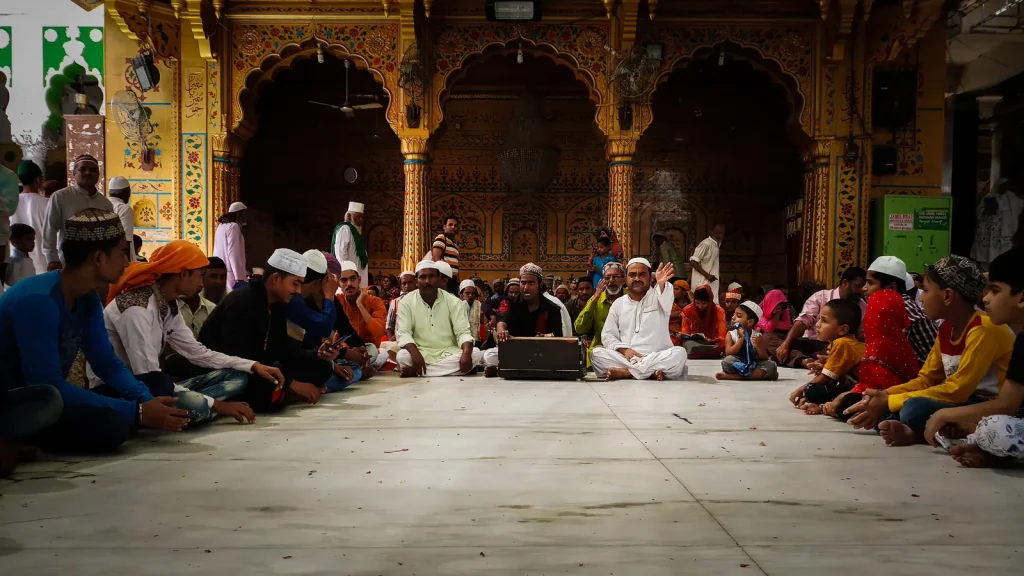
Qawwali — the Sufi Islamic devotional singing tradition of South Asia, performed at shrines (dargahs) during gatherings called mehfil-e-sama (the assembly for devotional listening), traditionally in service of the Chishti order of Sufism — is not inscribed on UNESCO’s Representative List of the Intangible Cultural Heritage of Humanity as of 2026. Pakistan, the country most closely associated with the genre’s contemporary practice, has four elements inscribed on UNESCO’s ICH lists (Nowruz, 2024; Falconry, 2021; Suri Jagek, 2018; and Boreendo, 2025), but qawwali is not among them. Qawwali is, however, recognized as national intangible cultural heritage in Pakistan and India, and its status as a living, community-maintained devotional music tradition — with documented transmission through hereditary lineages connected to specific Sufi shrines — qualifies it under the criteria of UNESCO’s 2003 Convention. The absence of a UNESCO inscription does not diminish qawwali’s cultural status; it reflects the incomplete pace of nomination rather than a judgment on significance.
- Qawwali is not inscribed on UNESCO’s Representative List as of 2026. Pakistan’s four UNESCO ICH inscriptions are Nowruz (File 02097, 2024), Falconry (File 01708, 2021), Suri Jagek (File 01381, 2018), and Boreendo (File 02328, 2025).
- Qawwali’s origins are attributed to Amir Khusrow (1253–1325) — the Sufi poet and musician of the Chishti order who synthesized Persian, Arabic, Turkic, and Indian musical traditions at the Delhi Sultanate in the late 13th century to create the qawwali form as practiced today.
- Qawwali is performed at Sufi shrines (dargahs) during mehfil-e-sama (the assembly for devotional listening) — the gathering in which music functions not as entertainment but as a spiritual technology for inducing hal (spiritual ecstasy) and wajd (mystical transport) in participants.
- The standard qawwali ensemble (humnawa) of 8–9 performers seats the lead singer, side singers, and harmonium players in the front row, with the chorus and percussionists (tabla, dholak) in the back row — the harmonium replaced the sarangi as the primary accompanying instrument in the 20th century.
- The most internationally recognized practitioner was Nusrat Fateh Ali Khan (1948–1997), whose Real World Records releases and WOMAD festival appearances from the 1980s introduced qawwali to global audiences; his disciple Rahat Fateh Ali Khan continues the hereditary tradition.
Qawwali Origins: Amir Khusrow, Sufi Context, and the Chishti Tradition
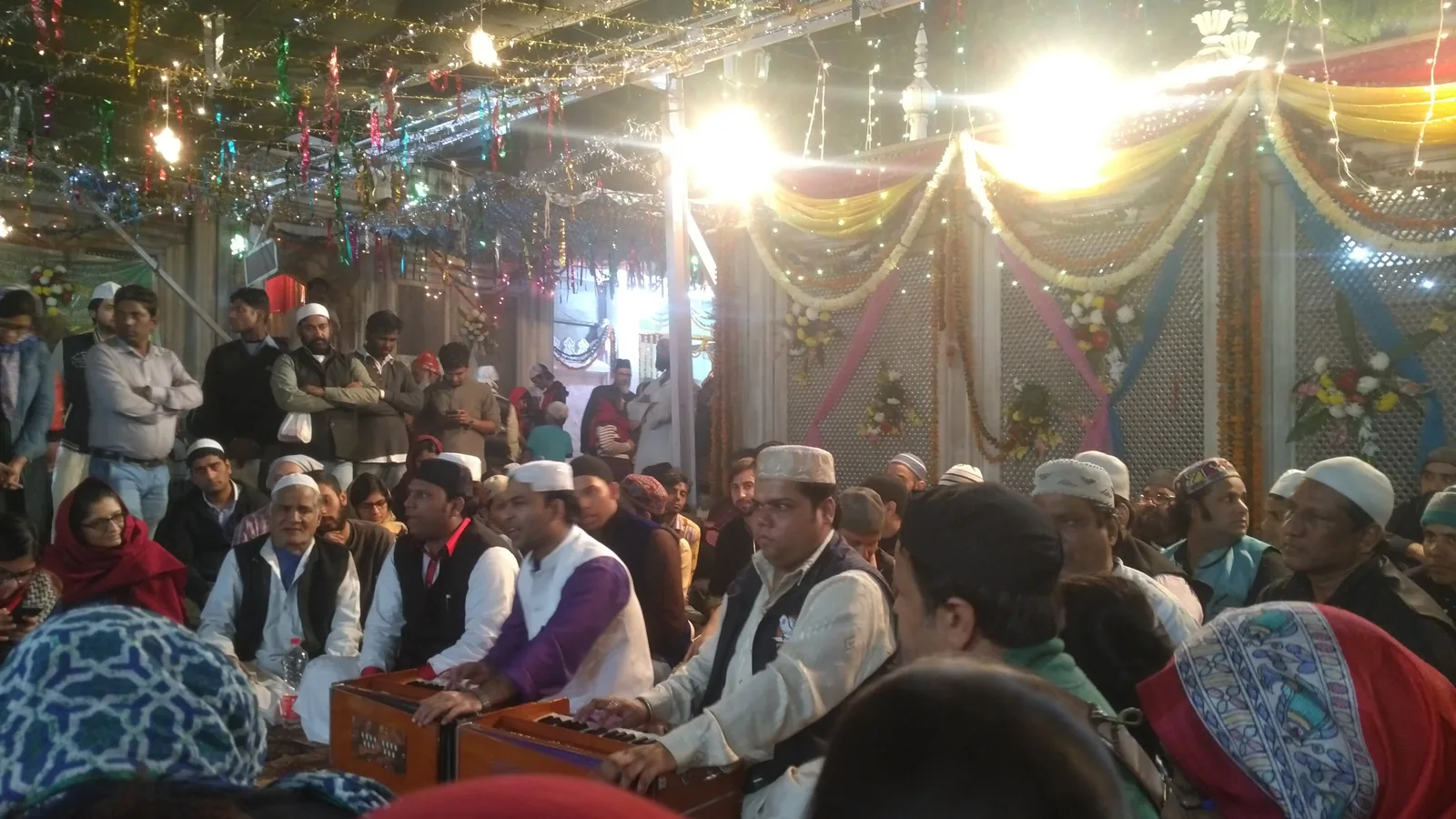
Qawwali’s origins lie in the cultural and religious milieu of the Delhi Sultanate in the late 13th century. Amir Khusrow (1253–1325) — poet, musician, and disciple of Hazrat Nizamuddin Auliya, the fourth and most influential Chishti pir of the Delhi lineage — is credited with synthesizing the multiple musical traditions of 13th-century India into the qawwali form: Persian and Arabic devotional poetry, Turkic court music brought by the Sultanate, and the melodic and rhythmic systems of Hindustani classical music. Khusrow composed in both Persian and Braj Bhasha (an early form of Hindi), creating the multilingual lyric tradition that characterizes qawwali — a single performance may move between Arabic, Persian, Urdu, Punjabi, and Hindi texts, often quoting classical poetry by Hafez, Rumi, Shah Hussain, and Bulleh Shah. The Chishti order’s theology emphasized sama’ — the devotional listening to music — as a legitimate path to divine experience, making qawwali specifically a spiritual practice rather than entertainment. Hazrat Nizamuddin Auliya (1242–1325), whose dargah in Delhi is the most visited Sufi shrine in South Asia, institutionalized the regular mehfil-e-sama through which qawwali transmission occurred: the Thursday-night gathering at his khanqah established the pattern of shrine-based performance that continues at dargahs across Pakistan, India, Bangladesh, and Afghanistan.
The hereditary transmission system of qawwali centers on the concept of the qawwal as a member of a lineage of performers (gharana) connected to a specific shrine. The most famous hereditary lineage is the Qawwal Bacchon ka Gharana — the “Children of the Qawwals” house — tracing descent from Amir Khusrow’s musical circle. Within this system, training is entirely oral and experiential: a young qawwal learns by sitting in the back row of the performance ensemble as a chorister, gradually moving forward over years as their skill develops. Repertoire is transmitted entirely through memorization. The qawwali texts (kalaam) draw on a canon of classical Sufi poetry — Rumi’s Persian ghazals, Bulleh Shah’s Punjabi kafis, Shah Hussain’s devotional verse — that the performer is expected to know in full and deploy improvisationally in response to the spiritual state of the audience during a performance. The tradition’s connection to the Pakistani state’s official cultural identity was solidified in the 1970s–1980s under Zia ul-Haq’s Islamization policies, which simultaneously suppressed secular music and promoted Sufi/devotional genres as “authentic” Pakistani culture — a paradox that shaped the contemporary institutional status of qawwali. For context on Pakistan’s UNESCO ICH inscriptions, the official UNESCO ICH record for Pakistan lists all inscribed elements.
Qawwali Musical Structure, Major Performers, and Contemporary Transmission
The standard qawwali ensemble is the humnawa — a party of eight or nine male performers seated cross-legged in two rows. The front row contains the lead singer (muqarrib), one or two side singers, and one or two harmonium players; the back row contains the chorus and percussionists playing tabla and dholak. The lead singer, the side singers, and all performers clap rhythmically throughout the performance. The harmonium — a European-origin hand-pumped free-reed keyboard brought to South Asia in the 19th century by Christian missionaries — replaced the sarangi as the primary accompanying melodic instrument in the early 20th century, because it does not require retuning between pieces. The melodic framework of qawwali is drawn from the raga system of Hindustani classical music: each performance is built on a specific raga, and the lead singer elaborates melodically within that framework while the text remains fixed. A qawwali performance typically builds in intensity through multiple rounds (dor), with the lead singer’s vocal improvisation becoming more expansive and the ensemble’s rhythmic drive intensifying until the desired spiritual state (hal) is achieved or the gathering reaches a close.
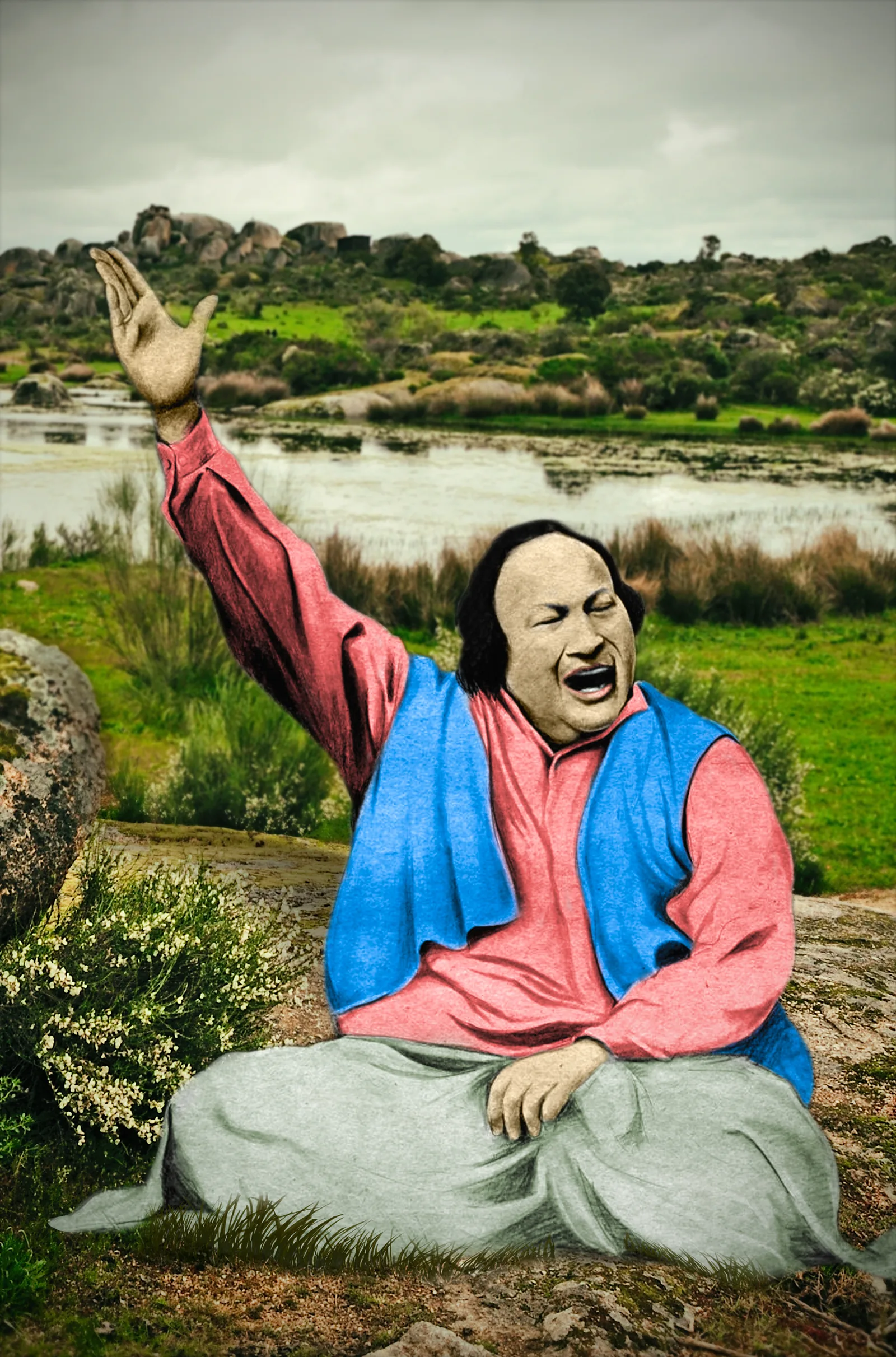
The most internationally recognized qawwali practitioner of the 20th century was Ustad Nusrat Fateh Ali Khan (1948–1997) — a member of the hereditary Qawwal Bacchon ka Gharana from Lyallpur (now Faisalabad), Pakistan. His recordings on Peter Gabriel’s Real World Records label in the late 1980s and early 1990s, combined with performances at WOMAD festivals in Europe, introduced qawwali to Western audiences; his vocal range and improvisatory technique — capable of sustaining a single note for over a minute, or ascending three octaves in a single phrase — established him as the defining interpreter of the modern tradition. The Sabri Brothers (Ghulam Farid Sabri and Maqbool Ahmed Sabri) and Aziz Mian were contemporaries whose recordings also reached international distribution. Today, Rahat Fateh Ali Khan (Nusrat’s nephew, who trained under him) continues the hereditary tradition, as do Fareed Ayaz and Abu Muhammad. Abida Parveen, though she performs in a broader Sufi musical style rather than traditional qawwali, represents the expanding presence of women in the broader field of Sufi devotional music. For the official documentation of UNESCO’s ICH framework and the criteria for inscription, the UNESCO intangible cultural heritage overview explains why qawwali meets the criteria as a living tradition actively transmitted within communities.
Frequently Asked Questions
Is qawwali a UNESCO intangible cultural heritage?
No, not as of 2026. Qawwali is not inscribed on UNESCO’s Representative List of the Intangible Cultural Heritage of Humanity. Pakistan — the country most closely associated with qawwali — has four UNESCO ICH inscriptions (Nowruz, Falconry, Suri Jagek, and Boreendo), but qawwali is not among them. Qawwali is recognized as national intangible cultural heritage in Pakistan and India. Its absence from UNESCO’s list reflects the pace of nomination rather than any judgment on its cultural significance as a living devotional tradition.
Who created qawwali?
Qawwali is attributed to Amir Khusrow (1253–1325), a Sufi poet and musician of the Chishti order who served as a disciple of Hazrat Nizamuddin Auliya in the Delhi Sultanate. Khusrow synthesized Persian, Arabic, Turkic, and Indian musical traditions in the late 13th century, composing in Persian, Braj Bhasha, and other languages to create the multilingual devotional poetry tradition that defines qawwali. The tradition was institutionalized through the regular mehfil-e-sama gatherings at Nizamuddin Auliya’s khanqah in Delhi.
What instruments are used in qawwali?
The standard qawwali ensemble uses harmonium (hand-pumped free-reed keyboard, which replaced the sarangi in the 20th century), tabla (pair of tuned hand drums), and dholak (barrel drum), alongside rhythmic clapping by all performers. The ensemble of 8–9 performers seats the lead singer, side singers, and harmonium players in the front row, with chorus and percussionists in the back row. The melodic framework is drawn from the raga system of Hindustani classical music.
What is mehfil-e-sama?
Mehfil-e-sama (the assembly for devotional listening) is the gathering in which qawwali is performed in its traditional Sufi context. It takes place at Sufi shrines (dargahs), particularly those of the Chishti order. The purpose is not entertainment but spiritual experience: the music functions to induce hal (spiritual ecstasy) and wajd (mystical transport) in participants. The mehfil-e-sama at Hazrat Nizamuddin Auliya’s dargah in Delhi — held every Thursday night — is one of the most continuous traditions of qawwali performance in South Asia.
Who is the most famous qawwali singer?
Ustad Nusrat Fateh Ali Khan (1948–1997) is the most internationally recognized qawwali performer. A hereditary member of the Qawwal Bacchon ka Gharana from Faisalabad, Pakistan, he introduced qawwali to Western audiences through Real World Records releases and WOMAD festival performances in the 1980s–1990s. His vocal range, improvisatory technique, and ability to convey spiritual intensity made him the defining interpreter of the tradition for international audiences. His nephew Rahat Fateh Ali Khan continues the hereditary lineage.