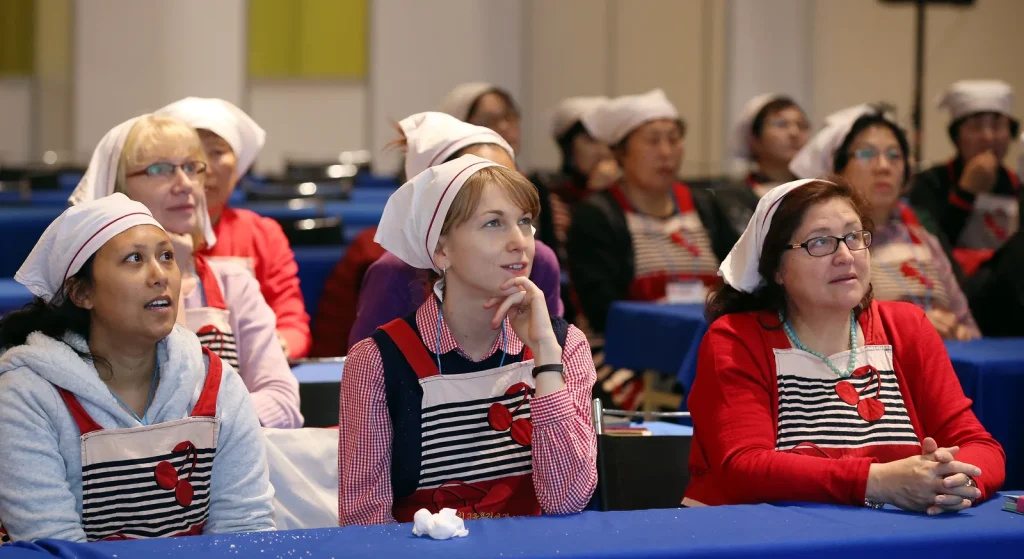
Kimjang: UNESCO Intangible Cultural Heritage of Korea (File 00881)
Kimjang — the Korean communal practice of collectively making and sharing large quantities of kimchi before winter — is inscribed on UNESCO’s Representative List of the Intangible Cultural Heritage of Humanity as File 00881, nominated by the Republic of Korea and inscribed at the 8th session of the Intergovernmental Committee (Decision 8.COM 8.23) in 2013. Kimjang (also romanized as gimjang) is the practice of preparing batches of kimchi — fermented vegetables seasoned with red chili, garlic, ginger, and salted seafood — collectively with family members, relatives, and neighbors in late autumn, producing quantities large enough to sustain each household through winter. UNESCO recognized kimjang under two domains simultaneously: Social practices, rituals and festive events; and Knowledge and practices concerning nature and the universe — a characterization that reflects both the community-bonding function of the practice and the ecological knowledge embedded in its annual seasonal cycle. The Democratic People’s Republic of Korea (North Korea) also holds a separate, distinct inscription — Tradition of kimchi-making (File 01063, 2015) — making kimchi one of the few food practices inscribed on the UNESCO ICH lists by two different countries.
- Kimjang (File 00881) is inscribed on UNESCO’s Representative List — the Republic of Korea’s nomination, inscribed at 8.COM in 2013 (Decision 8.COM 8.23). The Democratic People’s Republic of Korea holds a separate inscription: Tradition of kimchi-making (File 01063, 2015).
- Kimjang is a seasonal collective practice: households begin preparation in spring (fermenting seafood, procuring sea salt) and late summer (drying and grinding red chili peppers), and in late autumn gather with family, neighbors, and community members to collectively produce large batches of kimchi — enough to last through winter.
- UNESCO inscribed kimjang with the characterization that it “reaffirms Korean identity and is an excellent opportunity for strengthening family cooperation” — recognizing that the labor-intensive collective production event is as significant as the food itself: the sharing of kimjang labor and kimchi between households is a fundamental social practice.
- The knowledge of kimjang — specific methods, ingredient ratios, and regional variations — is transmitted primarily within the family, especially from mothers-in-law to daughters-in-law, and varies significantly by region, season, and household tradition.
- South Korea has 22 UNESCO ICH inscriptions on the Representative List as of 2024, making it one of the world’s most active ICH nomination states — ranging from Pansori (File 00070, 2008) and Arirang (File 00445, 2012) to Jeju Haenyeo women divers (File 01068, 2016) and traditional Jang-making practices (File 01975, 2024).
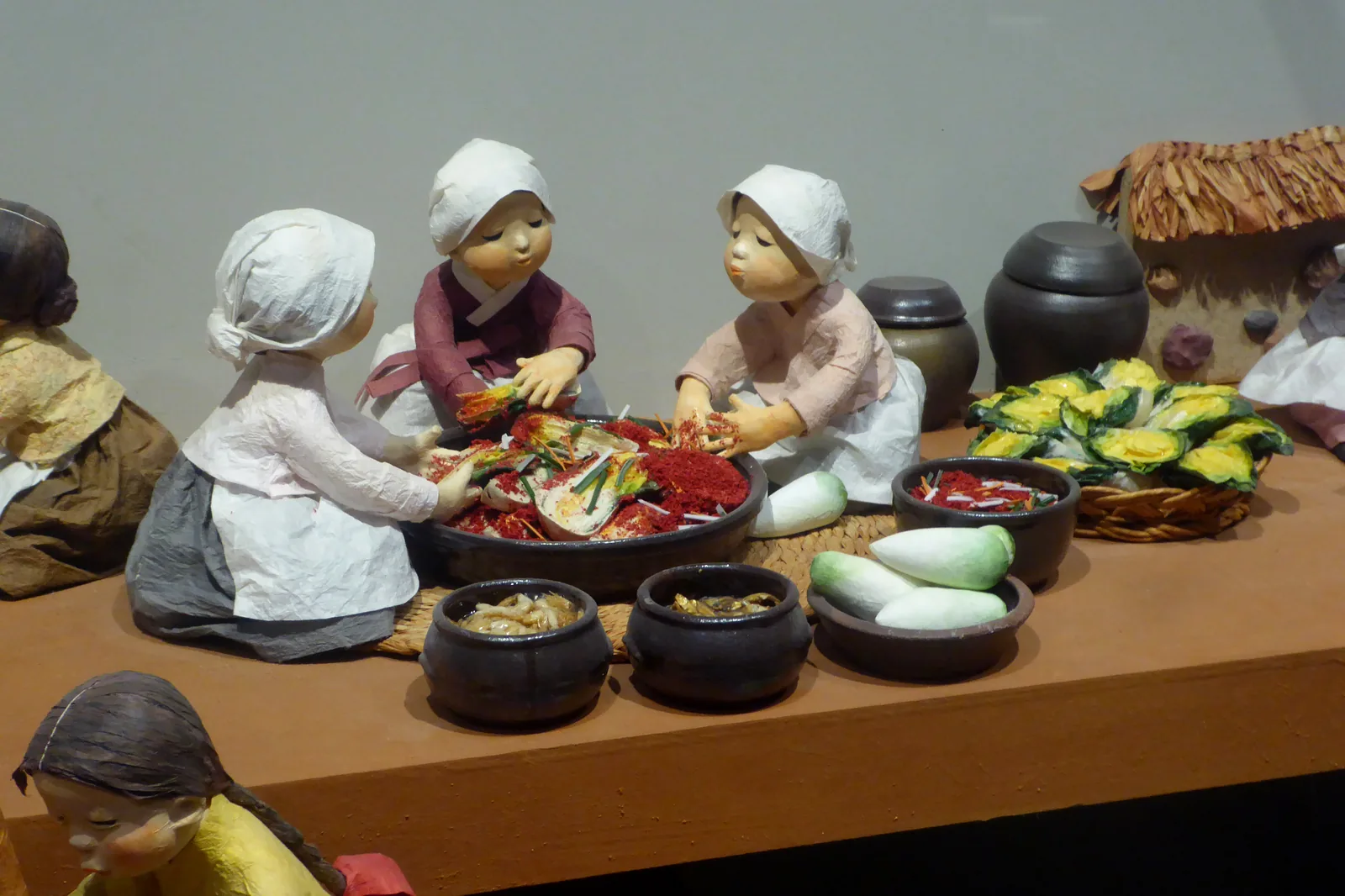
Kimjang Practice: Seasonal Cycle, Community Production, and UNESCO Recognition
Kimjang is not merely the making of kimchi: it is the annual collective ritual in which the preparation, production, and distribution of a winter food supply becomes a community event. The practice operates on an annual cycle structured by the seasons: in spring, households begin fermenting seafood — shrimp, anchovy paste, and fish sauce used as kimchi seasonings — in salt; in summer, sea salt is procured for the brine that will cure the vegetables; in late summer, red chili peppers are dried and ground into the powder that gives kimchi its characteristic color and heat. When late autumn arrives and temperatures approach freezing, households gather — bringing together family members, relatives, and neighbors — to collectively process cabbages (baechu) and radishes in large batches. The scale of kimjang production is significant: a single family’s kimjang may involve processing hundreds of heads of napa cabbage, producing enough kimchi to last through five to six months of winter. The collective labor — cutting, salting, rinsing, and applying the seasoning paste — is shared among participants, who in turn receive a portion of the finished kimchi to take home.
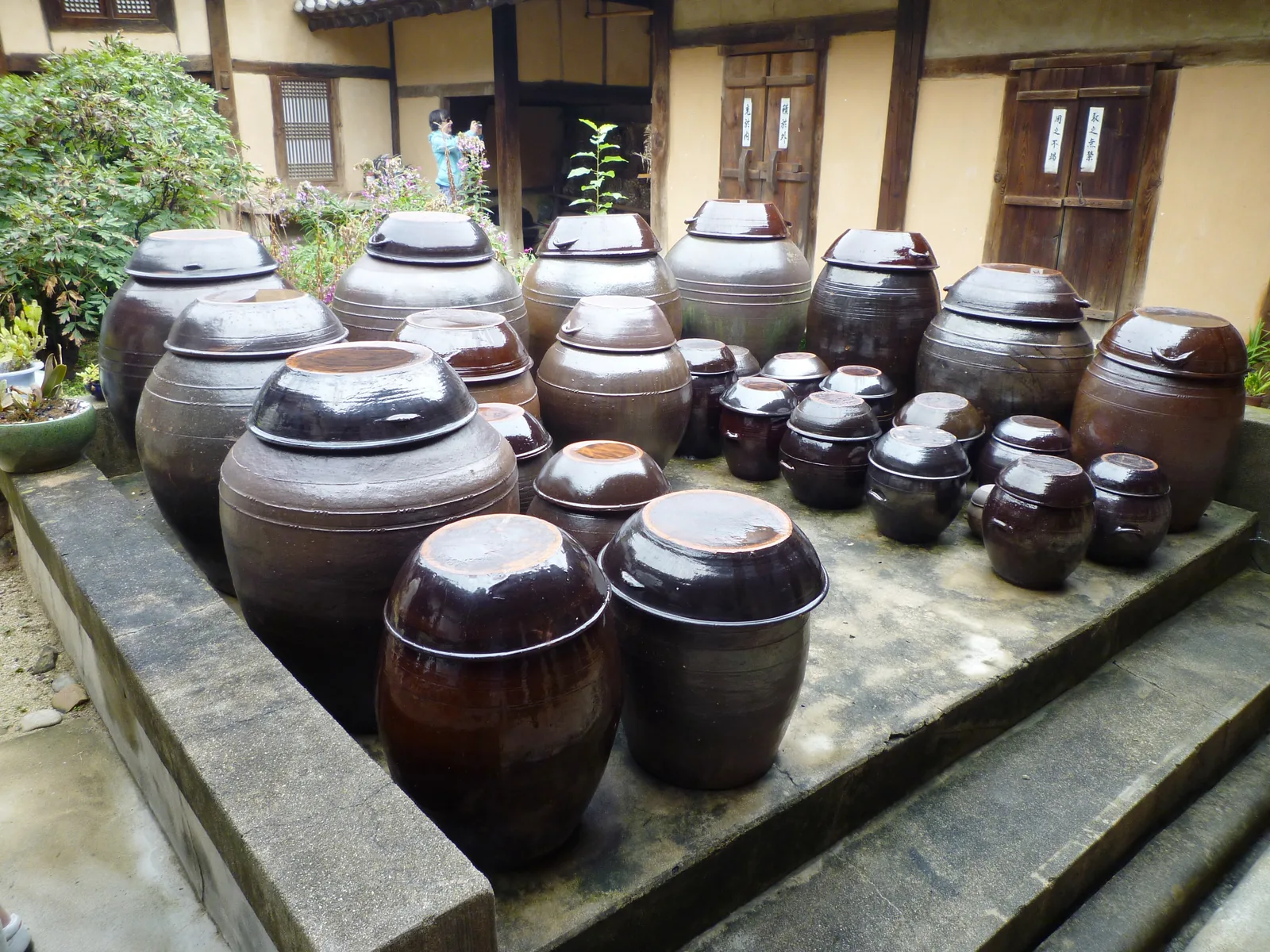
The specific technique of kimjang varies substantially by region and household tradition. Northern Korean traditions (including the DPRK inscription) tend to produce kimchi that is less spicy and less red — using less chili and salt, with less seafood, and adding sugar to facilitate fermentation in colder climates. Southern and coastal traditions use more shrimp paste and anchovy sauce; inland traditions use different vegetable combinations. The knowledge of these variations — ingredient ratios, fermentation timing, regional recipe preferences — is the “family heritage” that UNESCO specifically acknowledged in its inscription, noting it is “typically transmitted from a mother-in-law to her newly married daughter-in-law.” Traditional storage was in earthenware onggi jars buried in the ground to maintain consistent cool temperatures throughout winter; modern urban households increasingly use dedicated kimchi refrigerators that replicate the same temperature range. For the authoritative documentation, ich.unesco.org/en/RL/kimjang-making-and-sharing-kimchi-in-the-republic-of-korea-00881 is the UNESCO source. For the ICH framework, the UNESCO intangible cultural heritage overview explains the 2003 Convention.
The DPRK Kimchi Inscription and South Korea’s Complete UNESCO ICH List
The Democratic People’s Republic of Korea holds a separate UNESCO ICH inscription for the Tradition of kimchi-making in the Democratic People’s Republic of Korea (File 01063, Representative List, 10.COM, 2015) — a distinct nomination covering the DPRK’s own tradition of kimchi preparation, which UNESCO inscribed two years after the Republic of Korea’s kimjang inscription. The DPRK submission described kimchi as served daily and on special occasions (weddings, holidays, birthday parties, memorial services, and state banquets), with “hundreds of variants” across vegetables, seasonings, and preparation methods. The existence of two separate kimchi/kimjang inscriptions by two Korean states illustrates how the UNESCO ICH framework handles shared cultural traditions across political divisions: rather than requiring joint nominations, the 2003 Convention allows separate inscriptions for the same cultural practice when maintained distinctly by different communities or states. The two inscriptions have generated scholarly attention as a case study in how ICH documentation intersects with geopolitical disputes over cultural ownership.
South Korea’s kimjang inscription is one of 22 elements on UNESCO’s Representative List from the Republic of Korea as of 2024 — all on the Representative List, none on the Urgent Safeguarding List. The inscriptions span performing arts (Pansori epic chant, File 00070, 2008; Gangneung Danoje festival, File 00114, 2008; Arirang folk song, File 00445, 2012; Talchum mask dance, File 01742, 2022), traditional craft knowledge (Mosi ramie weaving, File 00453, 2011; Daemokjang wooden architecture, File 00461, 2010), social practices (Ganggangsullae, File 00188, 2009; Kimjang, 2013; Yeondeunghoe lantern festival, File 00882, 2020), martial arts (Taekkyeon, File 00452, 2011), and food knowledge (Jang-making practices, File 01975, 2024 — the knowledge and practices of making fermented soybean condiments, the most recent South Korean ICH inscription). South Korea ratified the 2003 Convention on February 9, 2005. For the authoritative list, ich.unesco.org/en/state/republic-of-korea-KR is the official source.
Frequently Asked Questions
Is kimjang a UNESCO intangible cultural heritage?
Yes. Kimjang — making and sharing kimchi in the Republic of Korea — is inscribed on UNESCO’s Representative List as File 00881, Decision 8.COM 8.23, 2013. The Democratic People’s Republic of Korea also holds a separate inscription: Tradition of kimchi-making in the Democratic People’s Republic of Korea (File 01063, 2015). South Korea has 22 UNESCO ICH inscriptions in total as of 2024.
What is kimjang?
Kimjang is the Korean communal practice of collectively making large quantities of kimchi in late autumn to sustain households through winter. The practice begins in spring (fermenting seafood, procuring sea salt) and builds through late summer (drying and grinding chili peppers) before the main collective production event in late autumn, when families, relatives, and neighbors gather to process and season hundreds of heads of cabbage together. The finished kimchi is shared among participants. UNESCO inscribed it as both a social practice and a system of ecological knowledge.
What is the difference between South Korea’s and North Korea’s kimchi UNESCO inscriptions?
The Republic of Korea (South Korea) holds File 00881 (Kimjang, 2013) — focusing on the collective seasonal production and sharing practice, emphasizing the community event and family knowledge transmission. The Democratic People’s Republic of Korea (North Korea) holds File 01063 (Tradition of kimchi-making, 2015) — covering a distinct tradition in which kimchi is described as having “hundreds of variants” and being served daily and at special occasions. North Korean kimchi generally uses less chili, less seafood, and more sugar compared to southern traditions.
How is kimjang knowledge transmitted?
Kimjang knowledge — the specific methods, ingredient ratios, fermentation timing, and regional recipe variations — is transmitted within families, traditionally from mothers-in-law to daughters-in-law at the time of marriage. UNESCO’s 2013 inscription specifically acknowledged this transmission channel. The practice also transmits through collective events: participants learn through doing, observing the techniques of experienced practitioners in the communal kimjang gathering.
How many UNESCO intangible cultural heritage elements does South Korea have?
South Korea (Republic of Korea) has 22 elements on UNESCO’s Representative List as of 2024. These include Royal ancestral ritual in Jongmyo shrine (2008), Pansori (2008), Gangneung Danoje (2008), Ganggangsullae (2009), Taekkyeon (2011), Arirang (2012), Kimjang (2013), Nongak (2014), Jeju Haenyeo (2016), Ssirum wrestling (2018), Yeondeunghoe (2020), Talchum mask dance (2022), and Jang-making (2024). South Korea ratified the 2003 Convention on February 9, 2005.