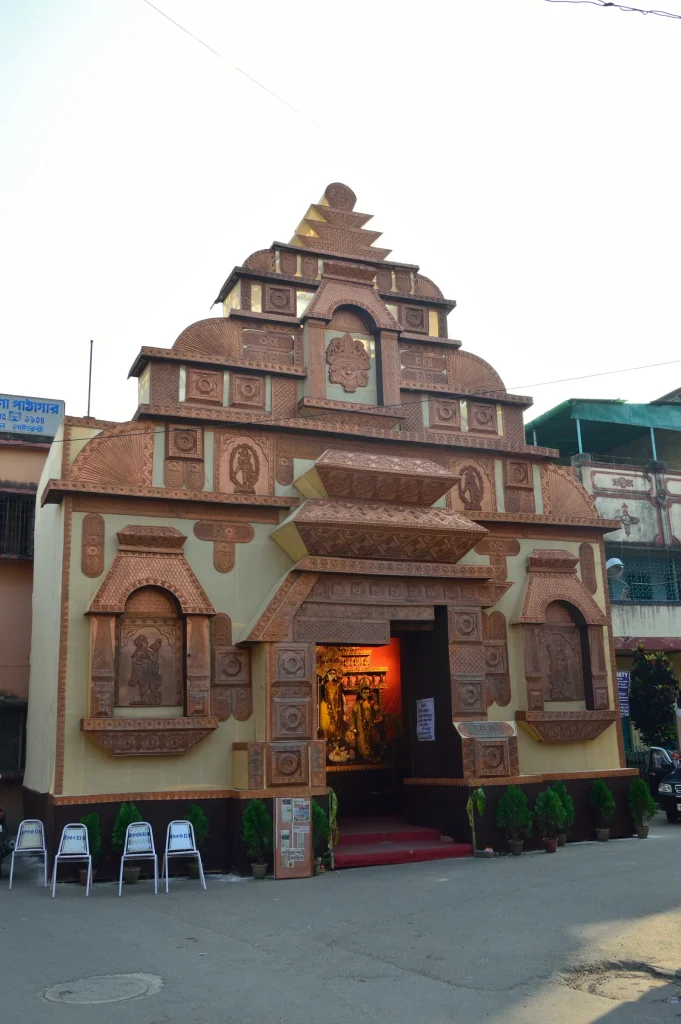
Durga Puja in Kolkata: UNESCO Intangible Cultural Heritage File 00703 (2021)
Durga Puja in Kolkata is inscribed on UNESCO’s Representative List of the Intangible Cultural Heritage of Humanity under File 00703 — inscribed in December 2021 at the 16th session of the Intergovernmental Committee (16.COM, virtual session). The inscription recognized Durga Puja as a singular form of living heritage: a domestic religious festival that transformed, over the 20th century, into one of the world’s largest public art events. Centered on Kolkata (West Bengal, India), the annual five-day festival honoring the Hindu goddess Durga now involves over 45,000 temporary pandals (elaborately constructed festival structures) housing commissioned artistic installations judged in citywide competitions, drawing more than 2.5 million visitors. UNESCO’s inscription documented this transformation — from private household worship to community-organized public art — as the living heritage practice itself.
- Durga Puja in Kolkata is inscribed as UNESCO Intangible Cultural Heritage under File 00703, inscribed in 2021 at 16.COM — recognizing Kolkata’s transformation of a religious festival into a massive public art event.
- The five-day annual festival involves over 45,000 pandals (temporary structures housing artistic installations), draws more than 2.5 million visitors, and engages the entire city of Kolkata as an open-air art museum.
- Durga Puja is organized by pujas samiti (neighborhood committees) and funded by community subscription and corporate sponsorship — leading artists are commissioned to design spectacular themed pandals competing in citywide competitions.
- The UNESCO inscription specifically recognized Kolkata’s Durga Puja as a community art tradition distinct from other regional Durga Puja celebrations — focusing on the creative and participatory dimensions of the festival’s evolution.
- Durga Puja was part of the landmark 2021 UNESCO ICH session (16.COM) held as a virtual meeting — the only fully online ICH Committee session, necessitated by COVID-19 restrictions.
Durga Puja in Kolkata: History, Transformation, and UNESCO Inscription
Durga Puja — the annual festival honoring the goddess Durga’s victory over the buffalo demon Mahishasura, celebrated across Bengal and the Bengali diaspora during autumn — has been practiced in some form for centuries, with early documented accounts of elaborate aristocratic (zamindar) Puja celebrations in Kolkata dating to the 18th century. Through the 19th century, Durga Puja in Kolkata was primarily a domestic affair: wealthy families (barir Puja) organized elaborate religious observances in their courtyards (thakur dalan), with the goddess installed in handcrafted clay idols (pratima) and worshipped over several days with music, rituals, and communal feasting.
The transformation that UNESCO’s inscription specifically documented began in the early 20th century with the emergence of sarbojanin (community/public) Durga Puja — organized not by a single family but by neighborhood committees (pujas samiti) funded by subscription from all community members. The first sarbojanin Durga Puja in Kolkata is generally attributed to the Santipur Bazar Lane celebration in 1910. By mid-century, the sarbojanin model had become dominant, gradually displacing the aristocratic household Puja as the city’s primary mode of celebration. The decisive artistic transformation came in the later 20th century when leading contemporary artists — trained in fine arts schools — began accepting commissions from pujas samiti to design the pandals and their contents as large-scale immersive art installations, rather than simply constructing traditional temporary structures. Artists including Sanatan Dinda and Bhabatosh Sutar brought contemporary sculptural and conceptual art practices into the festival, creating pandals that comment on social issues, environmental concerns, and cultural memory alongside traditional iconographic programs.
By the time of the UNESCO inscription, Durga Puja in Kolkata had become arguably the world’s largest annual outdoor art event: over 45,000 pandals are constructed each year, with the largest pujas commissioning months-long artistic projects involving teams of sculptors, painters, lighting designers, and architects. The West Bengal government and the Kolkata Municipal Corporation formally support the festival; corporate and media sponsorship underwrites the largest pandals. The five-day festival (Shashti through Dashami) transforms Kolkata into an open-air museum, with millions of visitors — pandal hopping (pujo parikrama) across the city — constituting the primary mode of popular art engagement in the region. UNESCO inscribed Durga Puja in Kolkata at the 16th session of the Intergovernmental Committee (16.COM) in December 2021, held as a fully virtual session due to COVID-19 restrictions. The inscription recognized File 00703 specifically as covering Kolkata’s distinctive community art tradition, distinct from Durga Puja celebrations elsewhere in India and the diaspora.
Festival Practice: Pandals, Idols, and the Community Art Tradition
Durga Puja is structured around the five-day sequence from Shashti (sixth lunar day) through Dashami (tenth day) of the Hindu month of Ashwin (September–October), with the most intense public activity occurring on Saptami, Ashtami, and Navami (seventh through ninth days). The core religious practice — the installation, worship, and immersion (bisarjan) of the clay goddess idol — is interwoven with the distinctly Kolkata tradition of competitive pandal artistry.
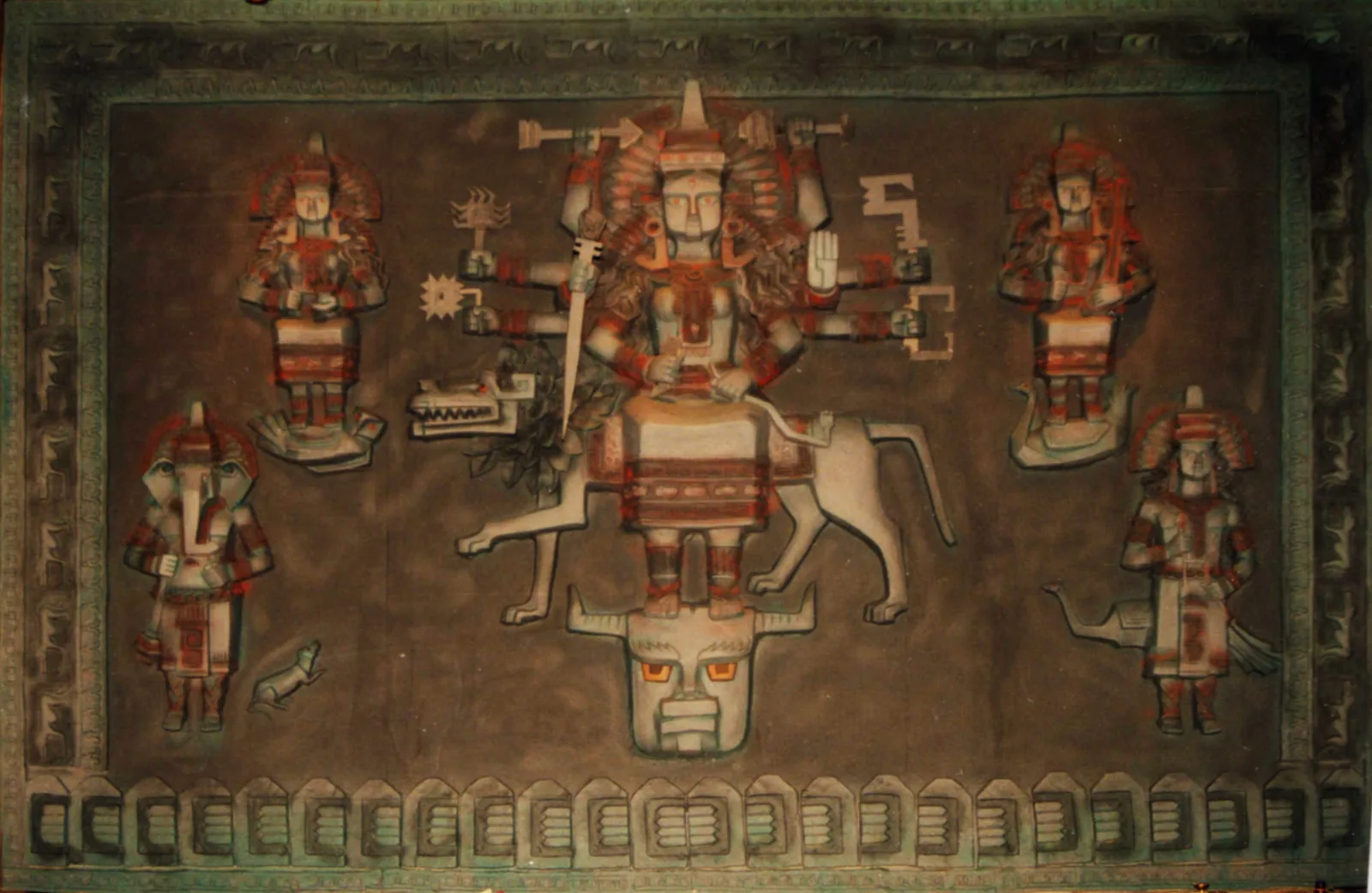
A Durga Puja pandal is a temporary structure erected in a public space — a street corner, a park, a marketplace — designed and built over weeks or months to house the Durga idol within a themed artistic environment. The largest pandals rival permanent museum installations in scale and ambition: the Deshapriya Park Puja, Mudiali Club, and Sreebhumi Sporting Club have produced pandals replicating full-scale architectural landmarks (the Vatican, the Taj Mahal, the Eiffel Tower), constructing conceptual environments responding to current events (the COVID-19 pandemic, climate change, political issues), and commissioning original large-scale sculpture and immersive spatial experiences. The pandal’s artistic concept, its idol (pratima), and its thematic coherence are judged in competitions organized by media outlets and cultural bodies, with awards generating significant prestige for the sponsoring committee.
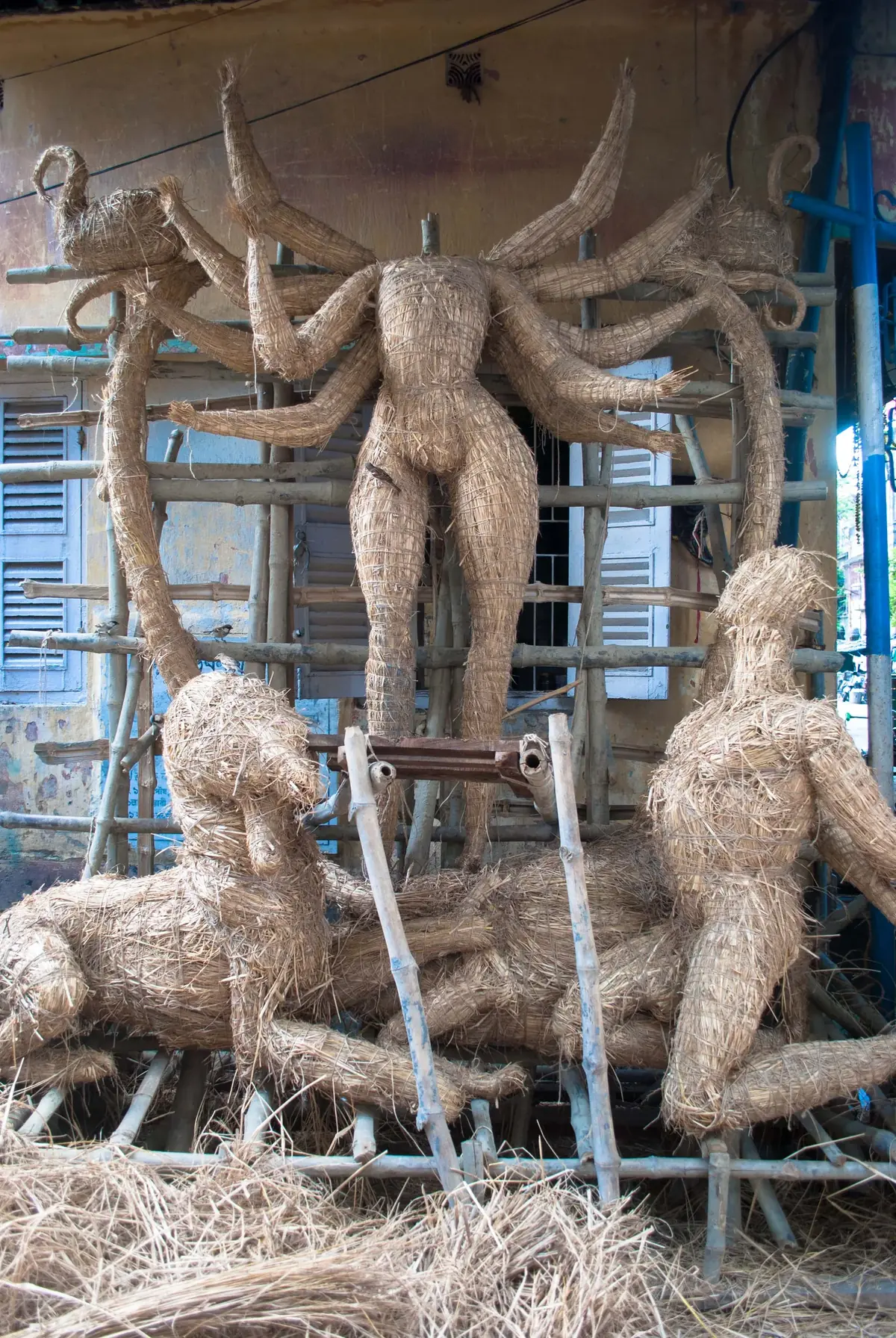
The pratima (goddess idol) at the center of each pandal is traditionally crafted in Kumortuli — Kolkata’s potter quarter — from clay taken from the Ganges and straw, molded over a bamboo armature, painted and decorated by specialist artisans. The Kumortuli tradition of idol-making is itself a distinct intangible heritage, employing hundreds of artisan families in the months before the festival. The community participation that UNESCO’s inscription emphasized extends through the entire production: the pujas samiti manages community subscription, neighborhood cultural programs, and the logistics of the five-day public event; the dhakis (hereditary drummers who travel from villages to play at Kolkata Pujas) perform throughout the celebration; and the final day’s procession and river immersion (bisarjan) is one of Kolkata’s most emotionally resonant public rituals — marking the departure of the goddess and the close of the festival year.
For official documentation including the full nomination file and Committee decision, ich.unesco.org/en/RL/durga-puja-in-kolkata-00703 is the authoritative source. For how Durga Puja fits within the full list of 2021 UNESCO ICH inscriptions at 16.COM, the 2021 UNESCO ICH list covers all 39 inscriptions, and the UNESCO ICH India list covers India’s complete portfolio.
Frequently Asked Questions
Is Durga Puja a UNESCO intangible cultural heritage?
Yes. Durga Puja in Kolkata is inscribed on UNESCO’s Representative List of the Intangible Cultural Heritage of Humanity under File 00703. It was inscribed in December 2021 at the 16th session of the Intergovernmental Committee (16.COM), held as a virtual session. The inscription specifically recognizes Kolkata’s Durga Puja — the festival’s distinctive community art tradition involving over 45,000 pandals and 2.5 million visitors annually — rather than Durga Puja celebrations in India as a whole.
What is special about Durga Puja in Kolkata compared to other Durga Puja celebrations?
Kolkata’s Durga Puja is distinguished by the sarbojanin (community/public) model that emerged in the early 20th century, in which neighborhood committees (pujas samiti) organize and fund the festival through community subscription and corporate sponsorship. This model gave rise to the distinctive pandal artistry tradition — elaborate temporary structures housing commissioned artistic installations designed by leading contemporary artists — which has transformed the festival into one of the world’s largest public art events. The pandal competition, the scale of public participation, and the integration of contemporary art practice into religious festival are unique to Kolkata.
When is Durga Puja celebrated in Kolkata?
Durga Puja is celebrated during the Hindu month of Ashwin, typically falling in September or October. The main five-day festival runs from Shashti (sixth lunar day) through Dashami (tenth day), with the most intense public celebration on Saptami, Ashtami, and Navami. The festival concludes with Bijoya Dashami — when the Durga idol is carried in procession to a river or lake for immersion (bisarjan), marking the goddess’s return to Mount Kailash. The dates change each year according to the Hindu lunar calendar.
What is a pandal in Durga Puja?
A pandal is a temporary structure erected in a public space to house the Durga idol and serve as the ceremonial venue for Puja worship during the festival. In Kolkata, pandals have evolved from simple canopied enclosures into large-scale artistic environments designed by professional artists and architects, sometimes replicating world monuments, exploring contemporary themes, or creating immersive sculptural experiences. Over 45,000 pandals are constructed across Kolkata annually, ranging from modest neighborhood installations to massive public art projects funded by corporate and community sponsorship. The design and artistic quality of pandals are judged in competitive evaluations organized by media outlets.
When was Durga Puja added to the UNESCO list?
Durga Puja in Kolkata was inscribed on UNESCO’s Representative List of the Intangible Cultural Heritage of Humanity in December 2021, at the 16th session of the Intergovernmental Committee (16.COM), held as a fully virtual session due to COVID-19 restrictions. The inscription is registered under File 00703. It was part of a landmark session that also inscribed Gamelan (Indonesia), Arabic calligraphy (16 countries), Joumou soup (Haiti), and Congolese rumba (Congo and DRC), among 39 Representative List inscriptions total.