Sichuan Opera UNESCO Intangible Cultural Heritage: Status, Face-Changing, and China’s ICH System
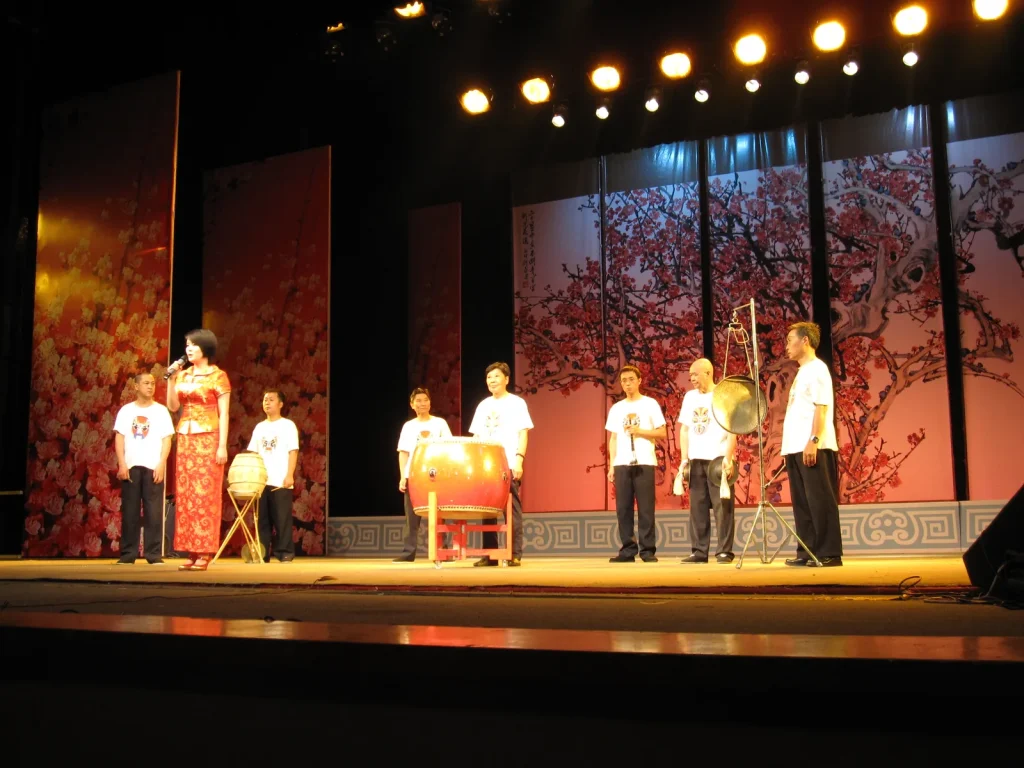
Sichuan Opera (川剧, Chuanju) is one of China’s most visually spectacular traditional performing arts — famous worldwide for its dazzling bian lian (face-changing) technique, fire-spitting, and the percussion-driven gaoqiang vocal style. But its relationship with UNESCO’s intangible cultural heritage lists requires careful clarification: Sichuan Opera is inscribed on China’s national intangible cultural heritage list (announced May 20, 2006, in the first batch of state-level recognitions), but it is not separately inscribed on UNESCO’s international Representative List. China’s 45 elements on UNESCO’s international list — the most of any country — include two operatic traditions closely related to Sichuan Opera: Kunqu opera (inscribed in 2001/2008, UNESCO File No. 00004) and Peking opera (inscribed in 2010, Decision 5.COM 6.7). Sichuan Opera’s national-level recognition places it among the most protected forms of intangible heritage within China’s domestic system.
- Sichuan Opera is inscribed on China’s national ICH list (2006, first batch) — not on UNESCO’s international Representative List.
- China has 45 elements on UNESCO’s international lists, leading all countries, including two operas: Kunqu (2001/2008) and Peking Opera (2010).
- The art form is known for bian lian (face-changing), fire-spitting, and the percussion-only gaoqiang vocal style performed without orchestral accompaniment.
- It has four regional schools: Western Sichuan, Ziyang, North Sichuan, and Xiachuandong, with Chengdu as the cultural center.
- China’s national ICH system, separate from UNESCO’s, lists over 1,500 elements across art, craft, ritual, and oral tradition categories.
Sichuan Opera’s Heritage Status: China’s National List vs. UNESCO’s International List
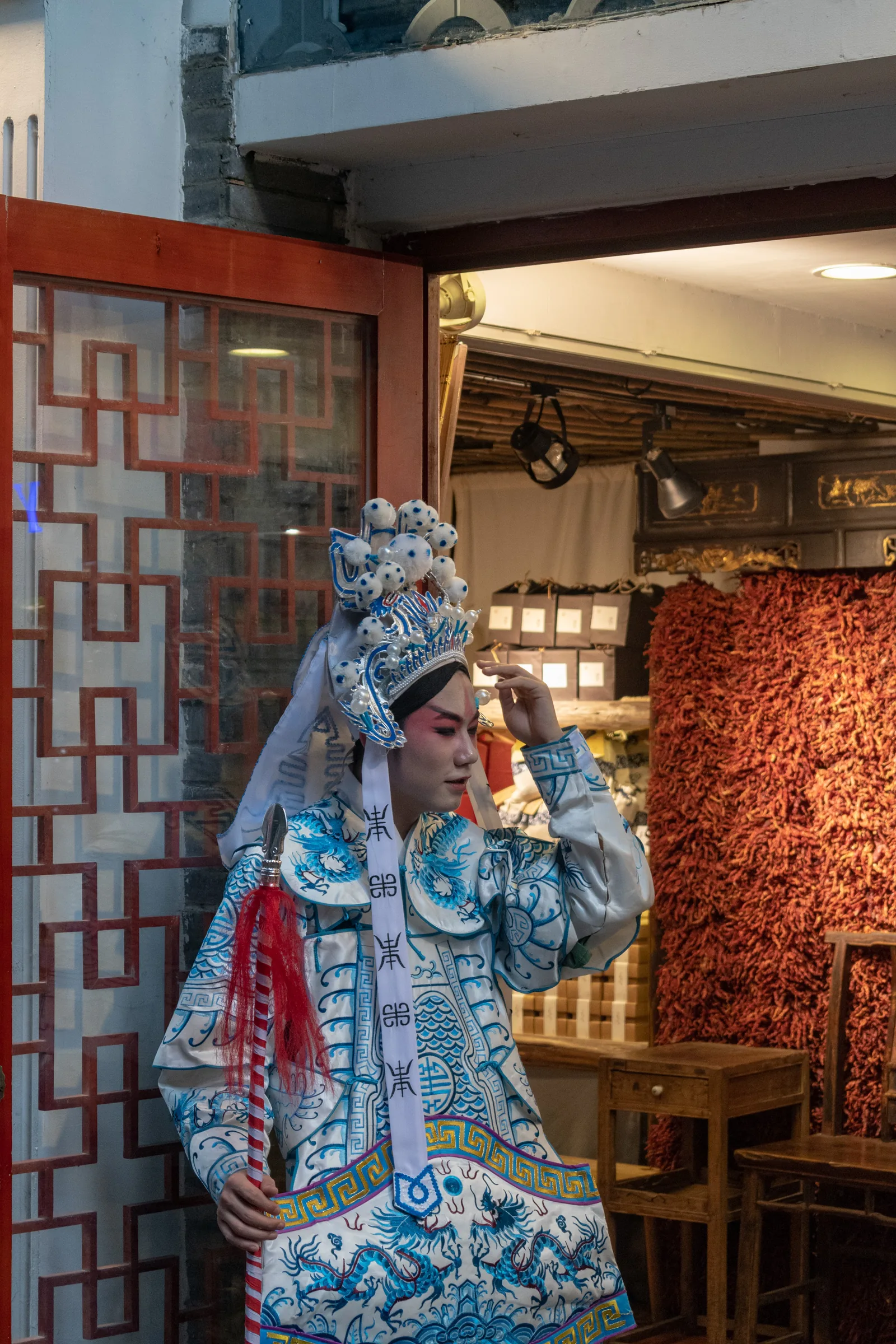
Understanding Sichuan Opera’s heritage status requires distinguishing between two separate systems that are often confused: the UNESCO international framework and China’s domestic intangible heritage system. Both are legitimate protections, but they operate differently and carry different implications.
China’s National ICH List (2006) and Sichuan Opera’s First-Batch Recognition
In May 2006, China’s Ministry of Culture announced the first batch of state-level “National Intangible Cultural Heritage” (国家级非物质文化遗产) designations. Sichuan Opera (Chuanju) was included in this inaugural recognition — placing it among the highest-protected art forms under Chinese domestic law. This list now includes more than 1,500 elements spanning oral traditions, performing arts, craftsmanship, and ritual practices from across China’s provinces and ethnic groups.
China’s national ICH system is significant in its own right. It draws on the same conceptual framework as UNESCO’s 2003 Convention — living practices transmitted across generations, maintained by identifiable communities — and uses similar criteria for evaluation. State-level designation triggers legal protections against commercial appropriation (notably relevant for bian lian, which has been subject to copyright disputes), government funding for master practitioners, and requirements for transmission documentation. Unlike UNESCO listing, which is submitted by national governments and evaluated by an international committee, China’s national list is administered domestically by the Ministry of Culture.
Why Sichuan Opera Is Not on UNESCO’s International List
China’s position on UNESCO’s international lists is extraordinary: with 45 inscribed elements, China leads all countries globally in UNESCO ICH count — ahead of France (30) and Turkey (32). But China’s national list is far larger, containing over 1,500 elements, compared to the 45 that have been nominated internationally. The gap reflects the UNESCO system’s design: each state can submit only a limited number of nominations per cycle to prevent larger nations from dominating the lists. China must therefore prioritize which of its thousands of nationally-recognized practices to put forward internationally.
Among China’s UNESCO inscriptions are two traditional operatic forms closely related to Sichuan Opera:
- Kunqu opera (昆曲, also written Kun Qu): One of the oldest surviving operatic traditions in China, inscribed as one of the 19 original UNESCO Masterpieces of Oral and Intangible Heritage in 2001, and formally incorporated into the Representative List in 2008 with File No. 00004 — one of the lowest numbers in the entire list. Kunqu is the ancestor form from which many regional Chinese operas, including elements of Sichuan Opera, historically developed.
- Peking opera (京剧, Jingju): Inscribed in 2010 at the same 5th Committee session (5.COM) that inscribed flamenco, under Decision 5.COM 6.7. Like Sichuan Opera, Peking Opera uses elaborate costume, symbolic makeup, and the interaction of song, dance, and martial movement.
Sichuan Opera’s domestic recognition and its connections to already-inscribed Chinese opera traditions suggest it could be a future UNESCO nomination. But as of 2025, it has not been submitted internationally, and the limited-nomination quota means China’s submission slots are occupied by other high-priority elements from its vast cultural inventory.
The National ICH System and Bian Lian Copyright Debates
One practical consequence of Sichuan Opera’s national-level (rather than international) protection has been ongoing tension around bian lian (face-changing) and commercial intellectual property. The technique — rapid mask changes achieved through secret mechanical methods known only to masters — has been the subject of legal disputes when practitioners have taught or demonstrated it outside authorized channels. China’s national ICH framework treats the technique as collectively owned heritage, not individual intellectual property, which creates friction with commercial performance contexts where individual performers seek to monetize the skill. This tension between collective heritage protection and individual commercial rights is one reason scholars and practitioners have advocated for stronger international recognition.
The Living Art of Sichuan Opera: Face-Changing, Gaoqiang, and Traditional Elements
Whether or not Sichuan Opera holds UNESCO international recognition, its artistic significance is not in question. The form represents one of the most technically demanding and regionally distinctive of China’s more than 300 local opera traditions, with a performance vocabulary built around five signature elements and a vocal tradition unique in Chinese music.
Bian Lian, Fire-Spitting, and Three Other Signature Stunts
Sichuan Opera is internationally recognized for five performance techniques that distinguish it from other Chinese operatic forms:
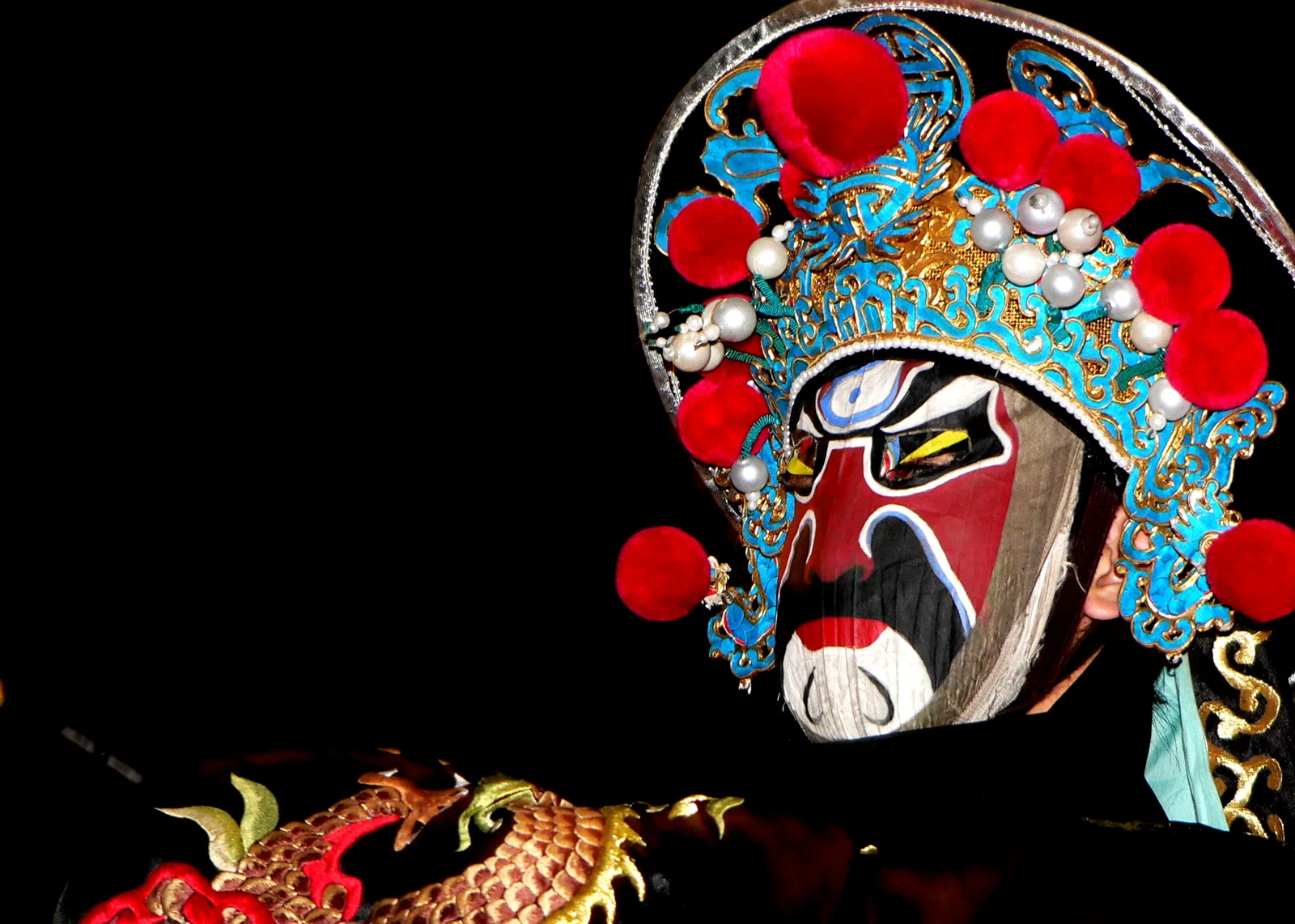
- Bian lian (face-changing, 变脸): The most famous element — performers rapidly change elaborately painted masks to express character emotions. The changes happen in fractions of a second, achieved through secret mechanical techniques passed down through master-student relationships. The masks themselves carry symbolic color codes: red for loyalty, black for bravery, white for treachery, gold for supernatural beings
- Fire-spitting (吐火, tuhuo): Performers spray fire from the mouth, creating dramatic visual effects that accompany emotional climaxes
- Tihuiyan: A technique for manipulating the eyes to create theatrical emotional effects
- Sword-hiding (藏刀, cangdao): Concealing weapons in the costume for dramatic reveals
- Beard-changing (变髯, bianlian of a different character): Rapid changes of the beard piece to convey emotional shifts, analogous to face-changing but focused on facial hair
These five elements are classified as juexue (绝学) — “skills of rare excellence” — within the Chinese ICH framework, acknowledging both their artistic value and their fragility. They are transmitted exclusively through direct oral and physical instruction from master to apprentice, with no formal written record of the techniques.
Gaoqiang: The Most Distinctive Musical Form of Sichuan Opera
Musically, Sichuan Opera is composed of five melodic systems inherited from different source traditions. Among these, gaoqiang (高腔, “high pitch”) is considered the most characteristic and irreplaceable. Gaoqiang is performed without orchestral accompaniment — using only a clapper (木鱼/梆子) and drum to control rhythm. The melody is entirely in the vocal line, supported by offstage chorus singers who elaborate the performer’s phrases. This a cappella structure is rare in Chinese opera and creates an austere, emotionally direct sound very different from the rich instrumental accompaniment of Kunqu or Peking Opera.
The four regional schools of Sichuan Opera — Western Sichuan, Ziyang, North Sichuan, and Xiachuandong — each have distinct repertoire traditions and vocal emphases, with Chengdu serving as the institutional center for preservation, training, and performance. The form also has a unique ritual dimension: in rural areas, Sichuan Opera performances are embedded within religious ceremonies in a tradition known as shengongxi (神功戏, “divine merit opera”), where performance serves as offering to local deities rather than purely as entertainment.
For anyone researching Chinese living heritage, the official entry point is ich.unesco.org/en/state/china-CN, which lists all 45 of China’s internationally inscribed elements including Kunqu and Peking Opera. Sichuan Opera’s national-level recognition makes it part of the same living heritage ecosystem — protected domestically, celebrated internationally, and potentially a future candidate for UNESCO nomination as China continues to rotate its cultural priorities through the international cycle.
Frequently Asked Questions
Is Sichuan Opera on UNESCO’s intangible cultural heritage list?
Sichuan Opera is not on UNESCO’s international Representative List of the Intangible Cultural Heritage of Humanity. It is inscribed on China’s national intangible cultural heritage list (May 2006, first batch), which is a separate domestic system. China has 45 elements on UNESCO’s international list — the most of any country — including two operatic traditions: Kunqu opera (File No. 00004) and Peking Opera (inscribed 2010).
When was Sichuan Opera recognized as cultural heritage in China?
Sichuan Opera (Chuanju) was included in China’s first batch of National Intangible Cultural Heritage designations, announced in May 2006 by the Ministry of Culture. This places it among the highest-protected art forms under Chinese domestic law, part of a list that now includes over 1,500 elements.
What is bian lian (face-changing) in Sichuan Opera?
Bian lian (变脸) is Sichuan Opera’s most famous technique — performers rapidly change elaborately painted masks to express character emotions, with changes happening in fractions of a second. The secret mechanical method is passed down exclusively through master-student relationships. Mask colors carry symbolic meaning: red for loyalty, black for bravery, white for treachery, and gold for supernatural beings.
What is gaoqiang in Sichuan Opera?
Gaoqiang (高腔, “high pitch”) is the most distinctive of Sichuan Opera’s five musical systems. It is performed without orchestral accompaniment — using only a clapper and drum for rhythm — with the melody carried entirely by the vocal line and supported by offstage chorus singers. This a cappella structure is rare in Chinese opera and gives Sichuan Opera its most characteristic sound.
How many UNESCO intangible cultural heritage elements does China have?
As of 2025, China has 45 elements inscribed on UNESCO’s international Representative List of the Intangible Cultural Heritage of Humanity — more than any other country. These include Kunqu opera (2001/2008, File No. 00004) and Peking Opera (2010, Decision 5.COM 6.7), but not Sichuan Opera, which is recognized on China’s separate national ICH list.