 Urgent Safeguarding ListInscribed 2011
Description
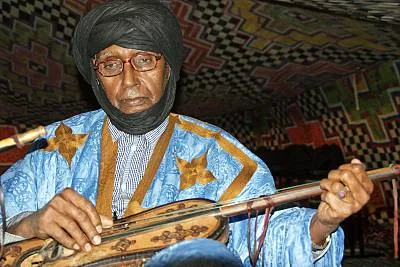
The T’heydinn epic encompasses dozens of poems lauding the glorious feats of Moorish emirs and sultans. It propounds ancestral values underpinning the way of life of the Moorish community in Mauritania, and constitutes a literary and artistic manifestation of the Hassaniya language. Griots perform the epic accompanied by traditional stringed instruments such as the lute and harp, and the kettledrum. Griots preserve the collective memory of society through the poems, passing down knowledge and skills from father to son, with young griots first learning the instrumental skills before being initiated into the poetic tradition. The T’heydinn constitutes a permanent bond between the griots and their tribe, with a particular repertoire distinguishing each griot family. The epic is performed at social events including weddings, reconciliation ceremonies and invitations. Performances are occasions for regional tribal and family reunions, strengthening social ties and promoting a culture of social peace and mutual assistance. Performance of the T’heydinn epic is, however, in decline. Griots with full knowledge of the epic are few in number and most are elderly. Moreover, demand for performance has decreased and young griots tend to perform the epic in abridged form or know only certain episodes, which threatens the viability of the T’heydinn epic.
Country
MauritaniaOther heritage elements in Mauritania
Representative List · Inscribed 2025The zaffa in the traditional weddingRepresentative List · Inscribed 2024The Epic of Samba GueladioRepresentative List · Inscribed 2024Henna: rituals, aesthetic and social practicesRepresentative List · Inscribed 2023Mahadra, a community system for transmission of traditional knowledge and oral expressionsRepresentative List · Inscribed 2023Arts, skills and practices associated with engraving on metals (gold, silver and copper)Representative List · Inscribed 2022Date palm, knowledge, skills, traditions and practices
More Urgent Safeguarding List elements
Inscribed 2025Art of crafting and playing KobyzInscribed 2023Mek MulungInscribed 2012Ala-kiyiz and Shyrdak, art of Kyrgyz traditional felt carpetsInscribed 2023Traditional knowledge, methods and practices concerning olive cultivationInscribed 2018Traditional hand puppetryInscribed 2025Boreendo, Bhorindo: ancient dying folk musical instrument, its melodies, knowledge, and skills
Also inscribed in 2011
- Traditional skills of building and sailing Iranian Lenj boats in the Persian Gulf
- Ceremonial Keşkek tradition
- Naqqāli, Iranian dramatic story-telling
Data Source: UNESCO Intangible Cultural Heritage · UNESCO listing