 Representative ListInscribed 2009
Description
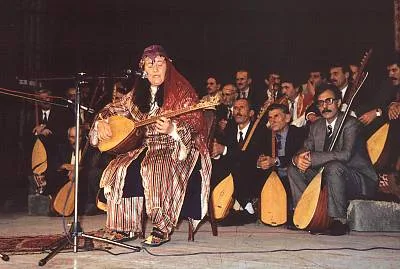
The Âşıklık (minstrelsy) tradition of Turkey is performed by wandering poet-singers known as ''âşıks.'' Dressed in traditional clothes and plucking a stringed ''saz,'' the âşık is a common performer at weddings, in coffeehouses and during public festivals of all sorts. The âşık is called in a dream to undertake a long apprenticeship in the arts of playing string and percussion instruments, singing, storytelling and repartee that form the heart of the vocation. The poems they recite, usually about love, are written in rhymed syllabic meter and end with a quatrain in which the âşık utters the ''Mâhlas,'' his pseudonym. Their improvisational performances may also include riddles, folk tales, verbal duels of wit and creativity with other âşıks, and verses sung while the minstrel holds a needle in his mouth to force him to recite poems avoiding B, P, V, M and F sounds. Because âşıks travel between communities, they help to spread cultural values and ideas and to facilitate a robust social dialogue, in part through topical poetry and social and political satire. At weddings in particular, âşıks are regarded as instructors and guides whose tradition draws on and enriches Turkish literary culture and the daily lives of communities throughout the country.
Country
TurkeyOther heritage elements in Turkey
Representative List · Inscribed 2025Antep İşi, drawn thread embroidery of GaziantepRepresentative List · Inscribed 2024Nawrouz, Novruz, Nowrouz, Nowrouz, Nawrouz, Nauryz, Nooruz, Nowruz, Navruz, Nevruz, Nowruz, NavruzRepresentative List · Inscribed 2024Traditional bagpipe (Gayda/Tulum) making and performingRepresentative List · Inscribed 2023Craftsmanship and performing art of balaban/meyRepresentative List · Inscribed 2023Iftar/Eftari/Iftar/Iftor and its socio-cultural traditionsRepresentative List · Inscribed 2023Art of illumination: Təzhib/Tazhib/Zarhalkori/Tezhip/Naqqoshlik
More Representative List elements
Inscribed 2022Turkmen-style needlework artInscribed 2023Craftsmanship and performing art of balaban/meyInscribed 2023Dabkeh, traditional dance in PalestineInscribed 2008Cultural space of the Bedu in Petra and Wadi RumInscribed 2021Traditional craftsmanship of making Dumbara Ratā KalālaInscribed 2017Chogān, a horse-riding game accompanied by music and storytelling
Also inscribed in 2009
- Art of Azerbaijani Ashiq
- Karagöz
- Katta Ashula
- Ramman, religious festival and ritual theatre of the Garhwal Himalayas, India
- Radif of Iranian music
Data Source: UNESCO Intangible Cultural Heritage · UNESCO listing