 Representative ListInscribed 2021
Description
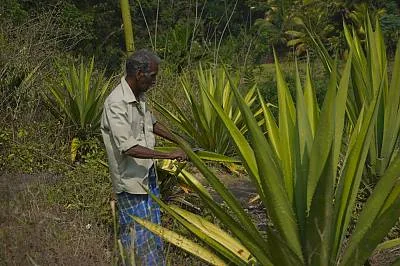
Sri Lankan Dumbara Rata Kalala, or Dumbara mats, are traditional hand-made mats used as wall hangings, tapestries or cushion covers. The mats are made in two villages (Kalasirigama and Alokagama) by a community called kinnara that traditionally supplied ornamental mats to the royal palace as part of obligatory service to the crown and to ruling elites between the fifteenth and nineteenth centuries. Today, artisans weave the mats for local buyers and tourists. Dumbara mats are made with the fibres of the hana plant and decorated with symbolic motifs and designs. The plant fibres are separated by pressing the leaf against a log with a sharp-edged piece of wood to scrape away the fleshy parts. The fibres are then washed, sun-dried, combed and dyed using traditional herbal dyes made with natural materials from the Dumbara valley. The mat is created with a loom, and motifs and designs are added using a lath, a flat, narrow strip of wood with a hole at one end. The weaver inserts strands of fibre into the hole, then pulls the lath through the yarns on the loom to create the desired motif. Dumbara mats are a traditional item of great cultural significance for Sri Lankans, and the practice is transmitted from parents to children through observation and practice.
Country
Sri LankaMore Representative List elements
Inscribed 2025DeepavaliInscribed 2022Al-Mansaf in Jordan, a festive banquet and its social and cultural meaningsInscribed 2019SilatInscribed 2012Al ‘azi, elegy, processional march and poetryInscribed 2017Kushtdepdi rite of singing and dancingInscribed 2023Elechek, Kyrgyz female headwear: traditional knowledge and rituals
Also inscribed in 2021
- Falconry, a living human heritage
- Traditional craft skills and arts of Al-Naoor
- Bakhshi art
- Nomad games, rediscovering heritage, celebrating diversity
- Fjiri
- Durga Puja in Kolkata
Data Source: UNESCO Intangible Cultural Heritage · UNESCO listing