 CulturalInscribed 1979
Syrian Arab Republic
About This Site
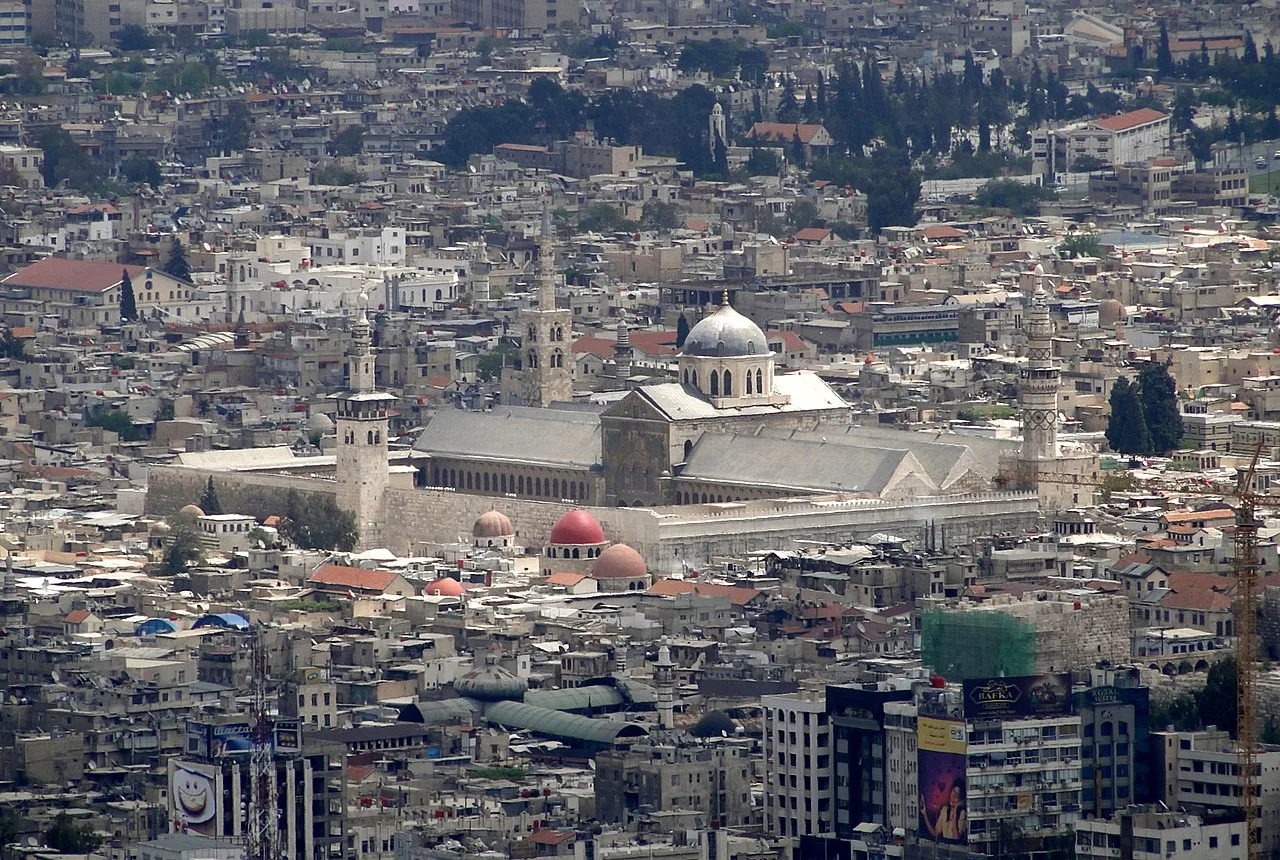
Founded in the 3rd millennium B.C., Damascus is one of the oldest cities in the Middle East. In the Middle Ages, it was the centre of a flourishing craft industry, specializing in swords and lace. The city has some 125 monuments from different periods of its history – one of the most spectacular is the 8th-century Great Mosque of the Umayyads, built on the site of an Assyrian sanctuary.
Site Details
| Category | Cultural |
| Date Inscribed | 1979 |
| Area | 86 hectares |
| Cultural Criteria | c1, c2, c3, c4 |
| Location | Syrian Arab Republic |
| Coordinates | 33.5108, 36.3097 |
Inscription Justification
Brief synthesis Founded in the 3rd millennium B.C., Damascus was an important cultural and commercial centre, by virtue of its geographical position at the crossroads of the orient and the occident, between Africa and Asia. The old city of Damascus is considered to be among the oldest continually inhabited cities in the world. Excavations at Tell Ramad on the outskirts of the city have demonstrated that Damascus was inhabited as early as 8,000 to 10,000 BC. However, it is not documented as an important city until the arrival of the Aramaeans. In the Medieval period, it was the centre of a flourishing craft industry, with different areas of the city specializing in particular trades or crafts. The city exhibits outstanding evidence of the civilizations which created it - Hellenistic, Roman, Byzantine and Islamic. In particular, the Umayyad caliphate created Damascus as its capital, setting the scene for the city's ongoing development as a living Muslim, Arab city, upon which each succeeding dynasty has left and continues to leave its mark. In spite of Islam's prevailing influence, traces of earlier cultures particularly the Roman and Byzantine continue to be seen in the city. Thus the city today is based on a Roman plan and maintains the aspect and the orientation of the Greek city, in that all its streets are oriented north-south or east-west and is a key example of urban planning. The earliest visible physical evidence dates to the Roman period - the extensive remains of the Temple of Jupiter, the remains of various gates and an impressive section of the Roman city walls. The city was the capital of the Umayyad Caliphate. However, apart from the incomparable Great Mosque, built on the site of a Roman temple and over-laying a Christian basilica, there is little visible dating from this important era of the city's history. The present city walls, the Citadel, some mosques and tombs survive from the Middle Ages, but the greatest part of the built heritage of the city…
Other World Heritage Sites in Syria
Cultural · Inscribed 2011Ancient Villages of Northern SyriaCultural · Inscribed 2006Crac des Chevaliers and Qal’at Salah El-DinCultural · Inscribed 1986Ancient City of AleppoCultural · Inscribed 1980Ancient City of BosraCultural · Inscribed 1980Site of Palmyra
More cultural heritage sites
Iran (Islamic Republic of)PersepolisIndiaRed Fort ComplexIndiaMountain Railways of IndiaIran (Islamic Republic of)Historic City of YazdIndiaTaj MahalLebanonAnjar
Sites inscribed in the 1970s
- Abu Mena (1979, Egypt)
- Ancient Thebes with its Necropolis (1979, Egypt)
- Persepolis (1979, Iran (Islamic Republic of))
- Tchogha Zanbil (1979, Iran (Islamic Republic of))
- Nubian Monuments from Abu Simbel to Philae (1979, Egypt)
- Historic Cairo (1979, Egypt)
- Memphis and its Necropolis – the Pyramid Fields from Giza to Dahshur (1979, Egypt)
- Meidan Emam, Esfahan (1979, Iran (Islamic Republic of))
Data Source: UNESCO World Heritage Convention