 CulturalInscribed 1986
Syrian Arab Republic
About This Site
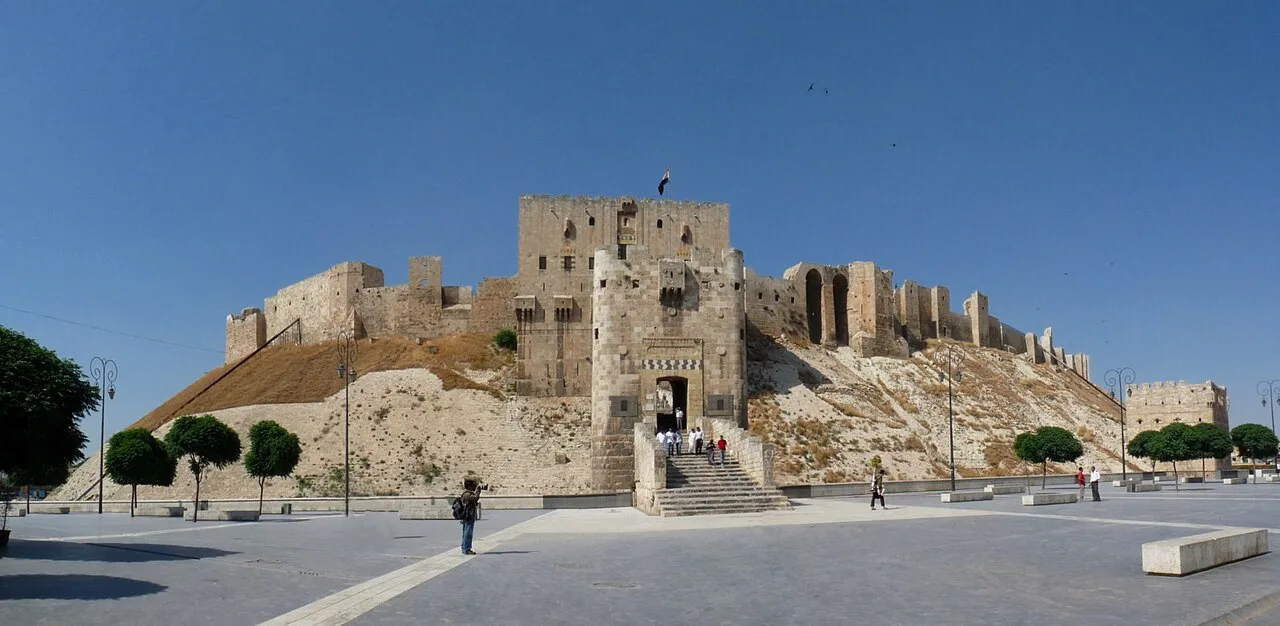
Located at the crossroads of several trade routes from the 2nd millennium B.C., Aleppo was ruled successively by the Hittites, Assyrians, Arabs, Mongols, Mamelukes and Ottomans. The 13th-century citadel, 12th-century Great Mosque and various 17th-century madrasas, palaces, caravanserais and hammams all form part of the city's cohesive, unique urban fabric, now threatened by overpopulation.
Site Details
| Category | Cultural |
| Date Inscribed | 1986 |
| Area | 364 hectares |
| Cultural Criteria | c3, c4 |
| Location | Syrian Arab Republic |
| Coordinates | 36.1992, 37.1628 |
Inscription Justification
Brief synthesis Located at the crossroads of several trade routes since the 2nd millennium B.C., Aleppo was ruled successively by the Hittites, Assyrians, Akkadians, Greeks, Romans, Umayyads, Ayyubids, Mameluks and Ottomans who left their stamp on the city. The Citadel, the 12th-century Great Mosque and various 16th and 17th-centuries madrasas, residences, khans and public baths, all form part of the city's cohesive, unique urban fabric. The monumental Citadel of Aleppo, rising above the suqs, mosques and madrasas of the old walled city, is testament to Arab military might from the 12th to the 14th centuries. With evidence of past occupation by civilizations dating back to the 10th century B.C., the citadel contains the remains of mosques, palace and bath buildings. The walled city that grew up around the citadel bears evidence of the early Graeco-Roman street layout and contains remnants of 6th century Christian buildings, medieval walls and gates, mosques and madrasas relating to the Ayyubid and Mameluke development of the city, and later mosques and palaces of the Ottoman period. Outside the walls, the Bab al-Faraj quarter to the North-West, the Jdeide area to the north and other areas to the south and west, contemporary with these periods of occupation of the walled city contain important religious buildings and residences. Fundamental changes to parts of the city took place in the 30 years before inscription, including the destruction of buildings, and the development of tall new buildings and widened roads. Nonetheless the surviving ensemble of major buildings as well as the coherence of the urban character of the suqs and residential streets and lanes all contribute to the Outstanding Universal Value. Criterion (iii): The old city of Aleppo reflects the rich and diverse cultures of its successive occupants. Many periods of history have left their influence in the architectural fabric of the city. Remains of Hittite, Hellenistic, Roman, Byzantine and Ayyubid…
Other World Heritage Sites in Syria
Cultural · Inscribed 2011Ancient Villages of Northern SyriaCultural · Inscribed 2006Crac des Chevaliers and Qal’at Salah El-DinCultural · Inscribed 1980Ancient City of BosraCultural · Inscribed 1980Site of PalmyraCultural · Inscribed 1979Ancient City of Damascus
More cultural heritage sites
Sri LankaOld Town of Galle and its FortificationsSaudi ArabiaḤimā Cultural AreaMoroccoRabat, Modern Capital and Historic City: a Shared HeritageIran (Islamic Republic of)Sassanid Archaeological Landscape of Fars RegionIsraelWhite City of Tel-Aviv – the Modern MovementIndiaSantiniketan
Sites inscribed in the 1980s
- Site of Palmyra (1980, Syrian Arab Republic)
- Ichkeul National Park (1980, Tunisia)
- Buddhist Ruins of Takht-i-Bahi and Neighbouring City Remains at Sahr-i-Bahlol (1980, Pakistan)
- Taxila (1980, Pakistan)
- Archaeological Ruins at Moenjodaro (1980, Pakistan)
- Ancient City of Bosra (1980, Syrian Arab Republic)
- Historical Monuments at Makli, Thatta (1981, Pakistan)
- Fort and Shalamar Gardens in Lahore (1981, Pakistan)
Data Source: UNESCO World Heritage Convention