 CulturalInscribed 1979
Iran (Islamic Republic of)
About This Site
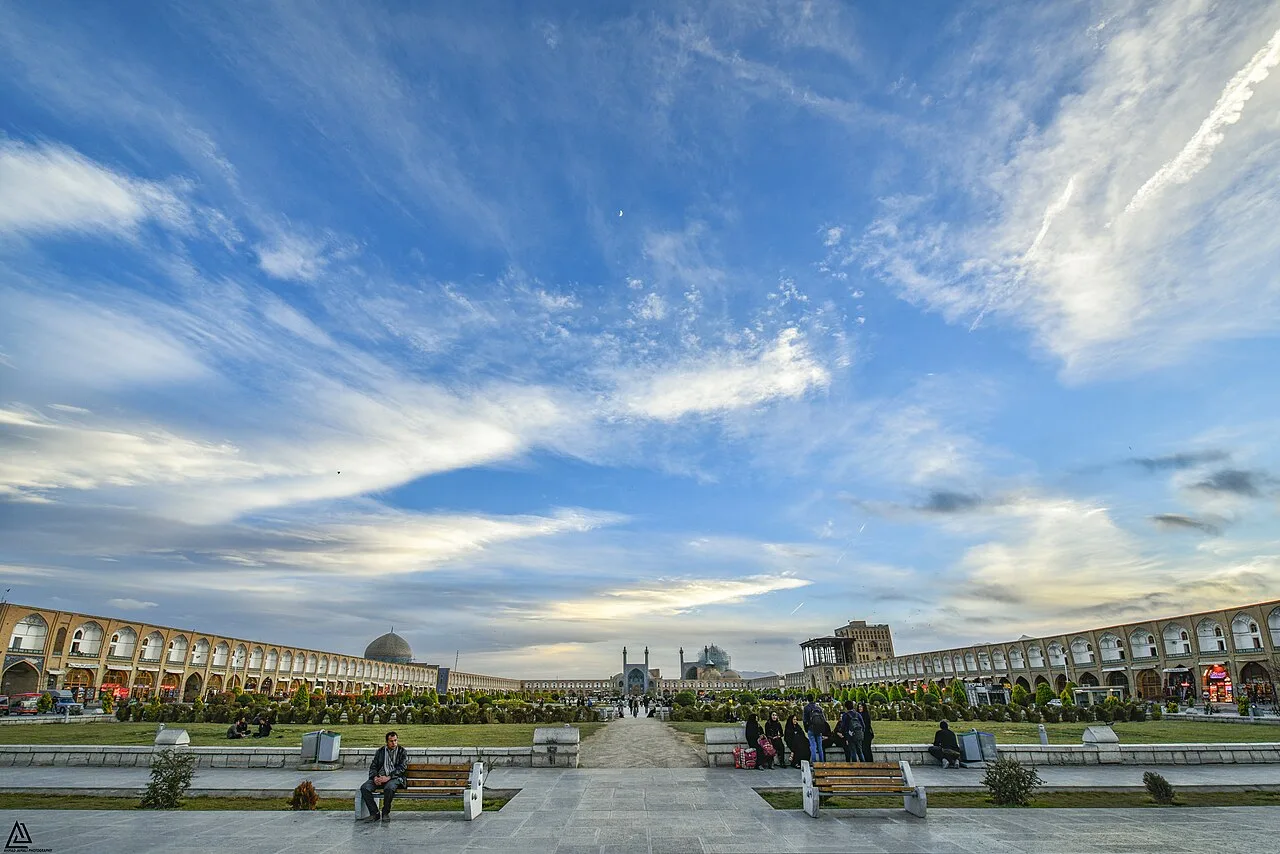
Built by Shah Abbas I the Great at the beginning of the 17th century, and bordered on all sides by monumental buildings linked by a series of two-storeyed arcades, the site is known for the Royal Mosque, the Mosque of Sheykh Lotfollah, the magnificent Portico of Qaysariyyeh and the 15th-century Timurid palace. They are an impressive testimony to the level of social and cultural life in Persia during the Safavid era.
Site Details
| Category | Cultural |
| Date Inscribed | 1979 |
| Area | 13 hectares |
| Cultural Criteria | c1, c5 |
| Location | Iran (Islamic Republic of) |
| Coordinates | 32.6575, 51.6778 |
Inscription Justification
Brief Synthesis The Meidan Emam is a public urban square in the centre of Esfahan, a city located on the main north-south and east-west routes crossing central Iran. It is one of the largest city squares in the world and an outstanding example of Iranian and Islamic architecture. Built by the Safavid shah Abbas I in the early 17th century, the square is bordered by two-storey arcades and anchored on each side by four magnificent buildings: to the east, the Sheikh Lotfallah Mosque; to the west, the pavilion of Ali Qapu; to the north, the portico of Qeyssariyeh; and to the south, the celebrated Royal Mosque. A homogenous urban ensemble built according to a unique, coherent, and harmonious plan, the Meidan Emam was the heart of the Safavid capital and is an exceptional urban realisation. Also known as Naghsh-e Jahan (“Image of the World”), and formerly as Meidan-e Shah, Meidan Emam is not typical of urban ensembles in Iran, where cities are usually tightly laid out without sizeable open spaces. Esfahan’s public square, by contrast, is immense: 560 m long by 160 m wide, it covers almost 9 ha. All of the architectural elements that delineate the square, including its arcades of shops, are aesthetically remarkable, adorned with a profusion of enamelled ceramic tiles and paintings. Of particular interest is the Royal Mosque (Masjed-e Shah), located on the south side of the square and angled to face Mecca. It remains the most celebrated example of the colourful architecture which reached its high point in Iran under the Safavid dynasty (1501-1722; 1729-1736). The pavilion of Ali Qapu on the west side forms the monumental entrance to the palatial zone and to the royal gardens which extend behind it. Its apartments, high portal, and covered terrace (tâlâr) are renowned. The portico of Qeyssariyeh on the north side leads to the 2-km-long Esfahan Bazaar, and the Sheikh Lotfallah Mosque on the east side, built as a private mosque for the royal court, is today considered one of…
Other World Heritage Sites in Iran
Cultural · Inscribed 2025Prehistoric Sites of the Khorramabad ValleyCultural · Inscribed 2024HegmatanehCultural · Inscribed 2023The Persian CaravanseraiCultural · Inscribed 2021Trans-Iranian RailwayCultural · Inscribed 2021Cultural Landscape of Hawraman/UramanatNatural · Inscribed 2019Hyrcanian Forests
More cultural heritage sites
Sri LankaAncient City of SigiriyaTurkmenistanState Historical and Cultural Park “Ancient Merv”PakistanArchaeological Ruins at MoenjodaroTajikistan, Uzbekistan, TurkmenistanSilk Roads: Zarafshan-Karakum CorridorUzbekistanItchan KalaIraqHatra
Sites inscribed in the 1970s
- Abu Mena (1979, Egypt)
- Ancient Thebes with its Necropolis (1979, Egypt)
- Persepolis (1979, Iran (Islamic Republic of))
- Tchogha Zanbil (1979, Iran (Islamic Republic of))
- Ancient City of Damascus (1979, Syrian Arab Republic)
- Nubian Monuments from Abu Simbel to Philae (1979, Egypt)
- Historic Cairo (1979, Egypt)
- Memphis and its Necropolis – the Pyramid Fields from Giza to Dahshur (1979, Egypt)
Data Source: UNESCO World Heritage Convention