 CulturalInscribed 1979
Egypt
About This Site
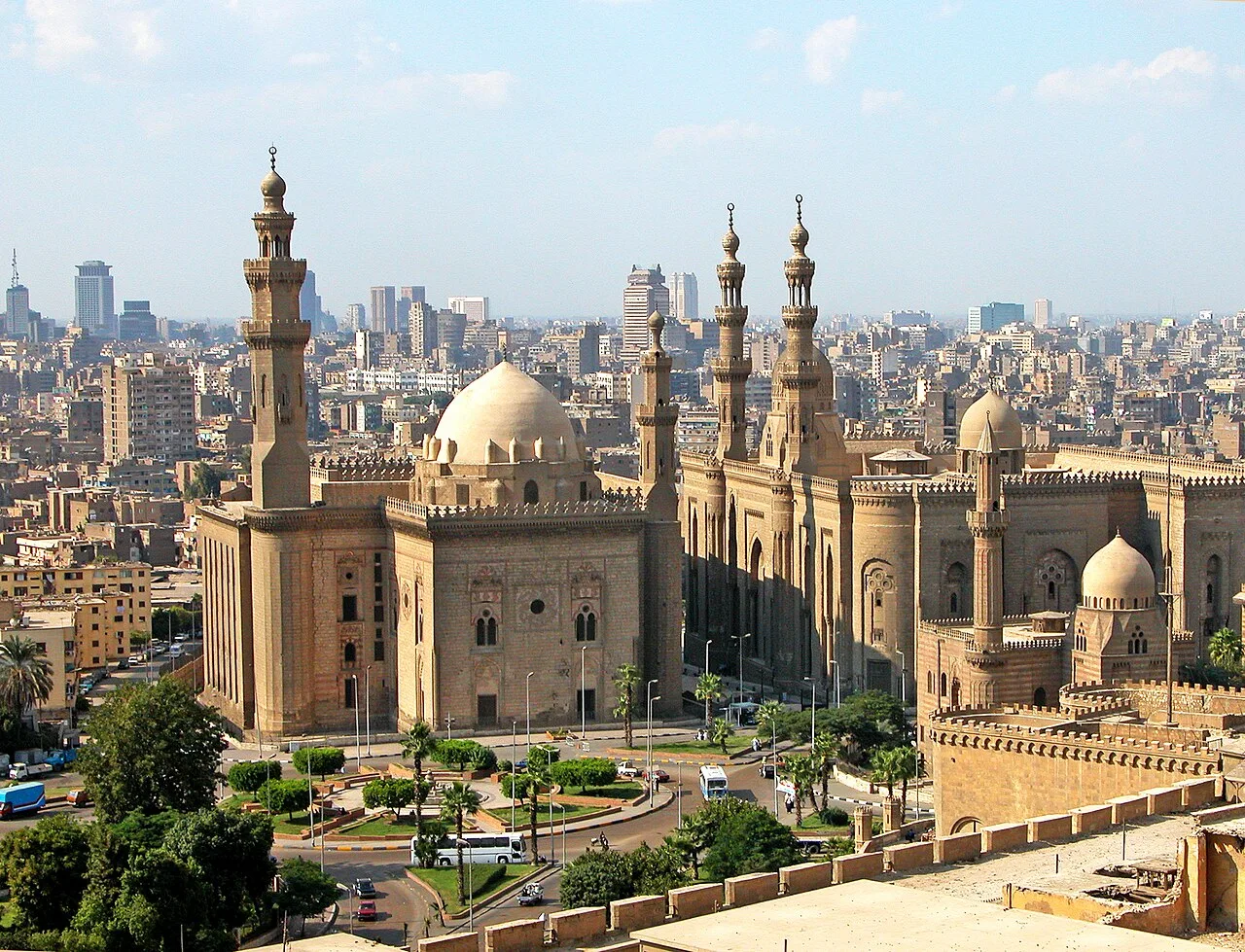
Tucked away amid the modern urban area of Cairo lies one of the world's oldest Islamic cities, with its famous mosques, madrasas, hammams and fountains. Founded in the 10th century, it became the new centre of the Islamic world, reaching its golden age in the 14th century.
Site Details
| Category | Cultural |
| Date Inscribed | 1979 |
| Area | 524 hectares |
| Cultural Criteria | c1, c5 |
| Location | Egypt |
| Coordinates | 30.0500, 31.2611 |
Inscription Justification
Brief synthesis Historic Cairo is one of the exceptional cities in the world, characterized by the extraordinary survival of its architectural, artistic and urban heritage, which fully expresses its long history and the diversity of its values. Its siting at a historic crossroads of international trade routes from Europe, Asia and Africa fostered its prosperity as a political, cultural and economic capital, a destination for scholars and a stop on major pilgrimage routes. The period between the 9th and 15th centuries – also known as the Islamic Renaissance – was a particularly golden age for the city, when pioneering scientists, doctors, astronomers, theologians and writers carried an influence and stature that stretched well beyond the Islamic World. Historic Cairo still reflects its complex ‘medieval’ urban layout, which was respected and enhanced in later eras, to reflect is role as a political capital and to accommodate population growth. Its cohesive traditional urban scene combines elements of four capitals of Islamic states. Cairo was founded as the headquarter of the Fatimid Caliphate in 969 AD. During the Ayyubid state (1176 AD), the citadel was established as the headquarters of government. The Mamluk state (1250-1517 AD) saw the expansion and extension of Cairo’s cohesive urban fabric outside the walls of the Fatimid necropolis to encompass the earlier cities of Fustat (642 AD), Al-Askar (750 AD) and Al-Qata’i (879 AD) in which the mosque of Ahmed ibn Tulun (876-879 AD) is sited, with its spiral minaret and symmetrical arches opening on to a vast square court. Subsequently Cairo became the most important city of the Ottoman Caliphate (1517-1805 AD). The 10th century Fatimid planning is the nucleus of the city, located inside the city fortification of Badr al-Gamali, with its remaining gates of Bab Zuwayla to the south, and Bab al-Nasr and Bab al-Futuh to the north. This ‘set the standard for later development’ and allowed future urban growth. Its…
Other World Heritage Sites in Egypt
Natural · Inscribed 2005Wadi Al-Hitan (Whale Valley)Cultural · Inscribed 2002Saint Catherine AreaCultural · Inscribed 1979Memphis and its Necropolis – the Pyramid Fields from Giza to DahshurCultural · Inscribed 1979Nubian Monuments from Abu Simbel to PhilaeCultural · Inscribed 1979Ancient Thebes with its NecropolisCultural · Inscribed 1979Abu Mena
More cultural heritage sites
AzerbaijanHistoric Centre of Sheki with the Khan’s PalaceSaudi ArabiaHistoric Jeddah, the Gate to MakkahTürkiyeGöbekli TepeIndiaRock Shelters of BhimbetkaLibyaOld Town of GhadamèsIran (Islamic Republic of)Trans-Iranian Railway
Sites inscribed in the 1970s
- Abu Mena (1979, Egypt)
- Ancient Thebes with its Necropolis (1979, Egypt)
- Persepolis (1979, Iran (Islamic Republic of))
- Tchogha Zanbil (1979, Iran (Islamic Republic of))
- Ancient City of Damascus (1979, Syrian Arab Republic)
- Nubian Monuments from Abu Simbel to Philae (1979, Egypt)
- Memphis and its Necropolis – the Pyramid Fields from Giza to Dahshur (1979, Egypt)
- Meidan Emam, Esfahan (1979, Iran (Islamic Republic of))
Data Source: UNESCO World Heritage Convention