 CulturalInscribed 2007
India
About This Site
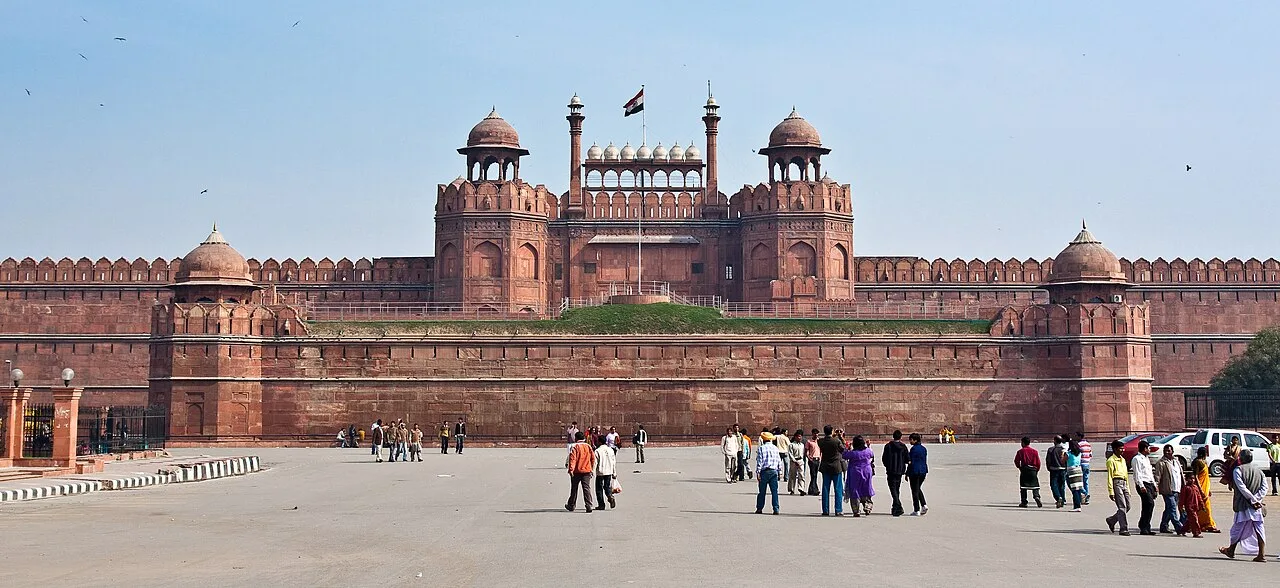
The Red Fort Complex was built as the palace fort of Shahjahanabad – the new capital of the fifth Mughal Emperor of India, Shah Jahan. Named for its massive enclosing walls of red sandstone, it is adjacent to an older fort, the Salimgarh, built by Islam Shah Suri in 1546, with which it forms the Red Fort Complex. The private apartments consist of a row of pavilions connected by a continuous water channel, known as the Nahr-i-Behisht (Stream of Paradise). The Red Fort is considered to represent the zenith of Mughal creativity which, under the Shah Jahan, was brought to a new level of refinement. The planning of the palace is based on Islamic prototypes, but each pavilion reveals architectural elements typical of Mughal building, reflecting a fusion of Persian, Timurid and Hindu traditions The Red Fort’s innovative planning and architectural style, including the garden design, strongly influenced later buildings and gardens in Rajasthan, Delhi, Agra and further afield.
Site Details
| Category | Cultural |
| Date Inscribed | 2007 |
| Area | 49 hectares |
| Cultural Criteria | c2, c3 |
| Location | India |
| Coordinates | 28.6556, 77.2408 |
Inscription Justification
The planning and design of the Red Fort represents a culmination of architectural development initiated in 1526 AD by the first Mughal Emperor and brought to a splendid refinement by Shah Jahan with a fusion of traditions: Islamic, Persian, Timurid and Hindu. The innovative planning arrangements and architectural style of building components as well as garden design developed in the Red Fort strongly influenced later buildings and gardens in Rajasthan, Delhi, Agra and further afield. The Red Fort has been the setting for events which have had a critical impact on its geo-cultural region. Criterion (ii): The final flourishing of Mughal architecture built upon local traditions but enlivened them with imported ideas, techniques, craftsmanship and designs to provide a fusion of Islamic, Persian, Timurid and Hindu traditions. The Red Fort demonstrates the outstanding results this achieved in planning and architecture. Criterion (iii): The innovative planning arrangements and architectural style of building components and garden design developed in the Red Fort strongly influenced later buildings and gardens in Rajasthan, Delhi, Agra and further afield. The Red Fort Complex also reflects the phase of British military occupation, introducing new buildings and functions over the earlier Mughal structures. Criterion (vi): The Red Fort has been a symbol of power since the reign of Shah Jahan, has witnessed the change in Indian history to British rule, and was the place where Indian independence was first celebrated, and is still celebrated today. The Red Fort Complex has thus been the setting of events critical to the shaping of regional identity, and which have had a wide impact on the geo-cultural region. The Red Fort Complex is a layered expression of both Mughal architecture and planning, and the later British military use of the forts. The most dramatic impacts on the integrity of the Red Fort Complex come from the change of the river into a major road, which alters the…
Other World Heritage Sites in India
Cultural · Inscribed 2025Maratha Military Landscapes of IndiaCultural · Inscribed 2024Moidams – the Mound-Burial System of the Ahom DynastyCultural · Inscribed 2023Sacred Ensembles of the HoysalasCultural · Inscribed 2023SantiniketanCultural · Inscribed 2021Kakatiya Rudreshwara (Ramappa) Temple, TelanganaCultural · Inscribed 2021Dholavira: a Harappan City
More cultural heritage sites
SudanGebel Barkal and the Sites of the Napatan RegionPakistanRohtas FortSyrian Arab RepublicAncient Villages of Northern SyriaBahrainDilmun Burial MoundsIndiaMaratha Military Landscapes of IndiaIsraelBahá’i Holy Places in Haifa and the Western Galilee
Sites inscribed in the 2000s
- Kinabalu Park (2000, Malaysia)
- Land of Frankincense (2000, Oman)
- Walled City of Baku with the Shirvanshah's Palace and Maiden Tower (2000, Azerbaijan)
- Gunung Mulu National Park (2000, Malaysia)
- Historic Centre of Shakhrisyabz (2000, Uzbekistan)
- Masada (2001, Israel)
- Old City of Acre (2001, Israel)
- Samarkand – Crossroad of Cultures (2001, Uzbekistan)
Data Source: UNESCO World Heritage Convention