Morocco UNESCO Intangible Cultural Heritage: Complete List of 16 Elements
Morocco’s UNESCO intangible cultural heritage comprises 16 elements — 15 on the Representative List of the Intangible Cultural Heritage of Humanity and one on the List of Intangible Cultural Heritage in Need of Urgent Safeguarding. The portfolio spans the living cultural traditions of Morocco’s diverse communities: the urban performance culture of Marrakech’s Jemaa el-Fna Square, the sub-Saharan spiritual music of the Gnawa, traditional equestrian performance (Tbourida), the craft knowledge of the Moroccan Caftan, couscous production practices, and the mountain dance tradition of Taskiwin. Morocco ratified the 2003 Convention for the Safeguarding of the Intangible Cultural Heritage on October 12, 2006. Its most internationally recognized inscription — the Cultural Space of Jemaa el-Fna Square (File 00014) — was originally proclaimed a UNESCO Masterpiece of the Oral and Intangible Heritage of Humanity in 2001, making it one of the world’s first recognized urban cultural spaces under the UNESCO ICH framework.
- Morocco has 16 UNESCO ICH elements as of 2025: 15 on the Representative List and 1 (Taskiwin, martial dance of the western High Atlas) on the Urgent Safeguarding List. Morocco ratified the 2003 Convention on October 12, 2006.
- Morocco’s first UNESCO ICH inscription was the Cultural Space of Jemaa el-Fna Square, Marrakech (File 00014, 2008) — originally proclaimed a UNESCO Masterpiece in 2001, making it one of the earliest urban spaces recognized under the UNESCO intangible heritage framework. The square hosts Halqa storytellers, Gnawa musicians, snake charmers, and traditional healers.
- Gnawa (File 01170, 2019) — the spiritual music and ritual practice of communities descended from enslaved sub-Saharan Africans brought to Morocco from the 16th century onward — is inscribed with recognition of the lila ceremony (an overnight ritual led by the maalem master musician using the guembri bass lute and qraqeb metal castanets) and its fusion of African ancestral traditions with Arab-Muslim and Berber cultural elements.
- Morocco’s most recent inscription is Moroccan Caftan: art, traditions and skills (File 02077, 2025); the only Urgent Safeguarding List element is Taskiwin (File 01256, 2017), a martial shoulder dance of the western High Atlas now confined to a small number of villages due to youth disinterest and interrupted transmission.
- Six of Morocco’s 16 inscriptions are joint nominations: Couscous (2020) with Algeria, Mauritania, and Tunisia; Falconry (2021) with 23 countries; Arabic calligraphy (2021) with 15+ countries; Mediterranean diet (2013) with five countries; Date palm (2022) with 14 countries; and Henna (2024) with six countries. The Moroccan Caftan (File 02077, 2025) is a solo Morocco nomination.
Jemaa el-Fna, Gnawa, and Morocco’s Earliest UNESCO ICH Inscriptions
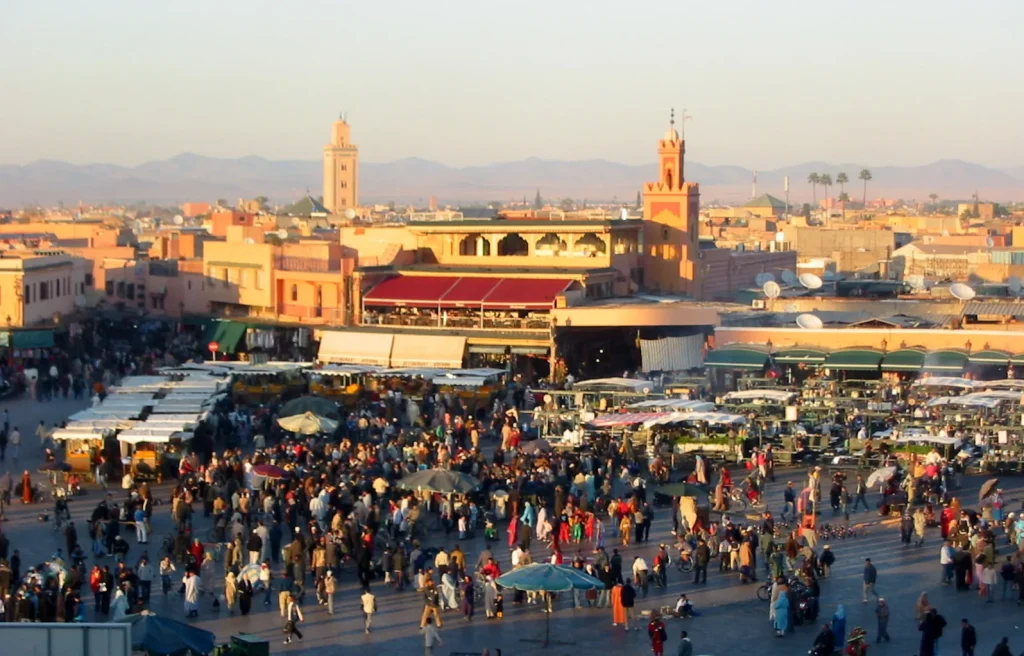
The Cultural Space of Jemaa el-Fna Square (File 00014, Representative List, Decision 3.COM 1, 2008) in Marrakech is Morocco’s oldest UNESCO ICH recognition — originally proclaimed a Masterpiece of the Oral and Intangible Heritage of Humanity in 2001 under the predecessor programme, making it one of the first five Masterpieces announced globally in that round. The square — a triangular plaza at the entrance of Marrakech’s UNESCO-listed Medina, founded in the 11th century — functions simultaneously as marketplace, performance venue, and social gathering space from morning through midnight. UNESCO’s documentation identifies its unique character in the concentration and continuity of its living performance culture: Halqa storytelling circles in which narrators perform for audiences in the traditional oral manner, Gnawa musicians performing trance music, snake charmers, imayazen Berber bards, traditional healers and herbalists, henna artists, and water carriers. UNESCO characterized it as “a major place of cultural exchange” — and noted threats including urbanization, real estate speculation, and tourism-driven acculturation as risks to the authenticity of the space. The Moussem of Tan-Tan (File 00168, Representative List, 2008) was inscribed at the same session — a tribal gathering of the nomadic and semi-nomadic peoples of the Sahara and Sahel convened at Tan-Tan in southern Morocco, recognized for its role as an annual meeting point for the broader nomadic community of the western Sahara region.
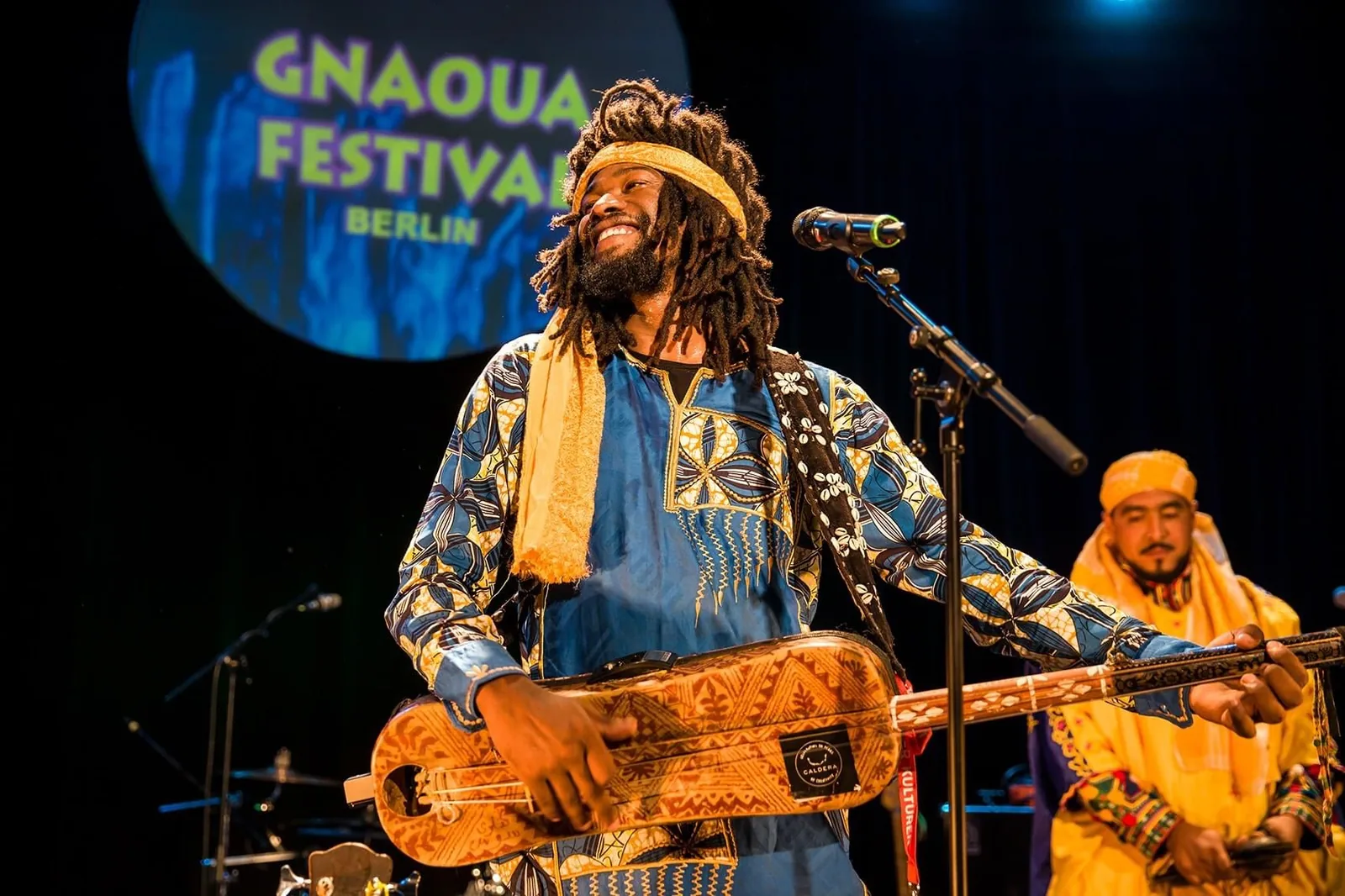
Gnawa (File 01170, Representative List, 14.COM, 2019) is Morocco’s most internationally recognized musical and spiritual tradition — a practice originating in communities descended from enslaved sub-Saharan Africans (primarily from the Hausa, Fulani, and Bambara peoples of present-day Mali, Senegal, Ghana, and Sudan) brought to Morocco from the 16th to 19th centuries. UNESCO’s inscription recognized Gnawa as “a set of musical events, performances, fraternal practices and therapeutic rituals mixing the secular with the sacred.” The central ritual event is the lila — an overnight ceremony led by the maalem (master musician and healer), guided by color-coded sequences representing seven spiritual entities (mluk): each color corresponds to a different spirit, a different set of songs, a different incense, and a different sequence of movements for participants in trance (jedba). The primary instruments are the guembri (a three-string bass lute with a skin-covered camel-skin body played by the maalem), the qraqeb (large iron castanets played by the ensemble), and the tbel (drum used in outdoor ceremonies). The annual Gnaoua and World Music Festival in Essaouira — held since 1998 — has become Morocco’s most internationally attended music festival, fusing traditional Gnawa performance with jazz, blues, and world music. For details on Morocco’s full list, ich.unesco.org/en/state/morocco-MA is the authoritative source. For the ICH framework, the UNESCO intangible cultural heritage overview explains the 2003 Convention.
Morocco’s Complete UNESCO ICH List: Tbourida, Couscous, Caftan, and Taskiwin
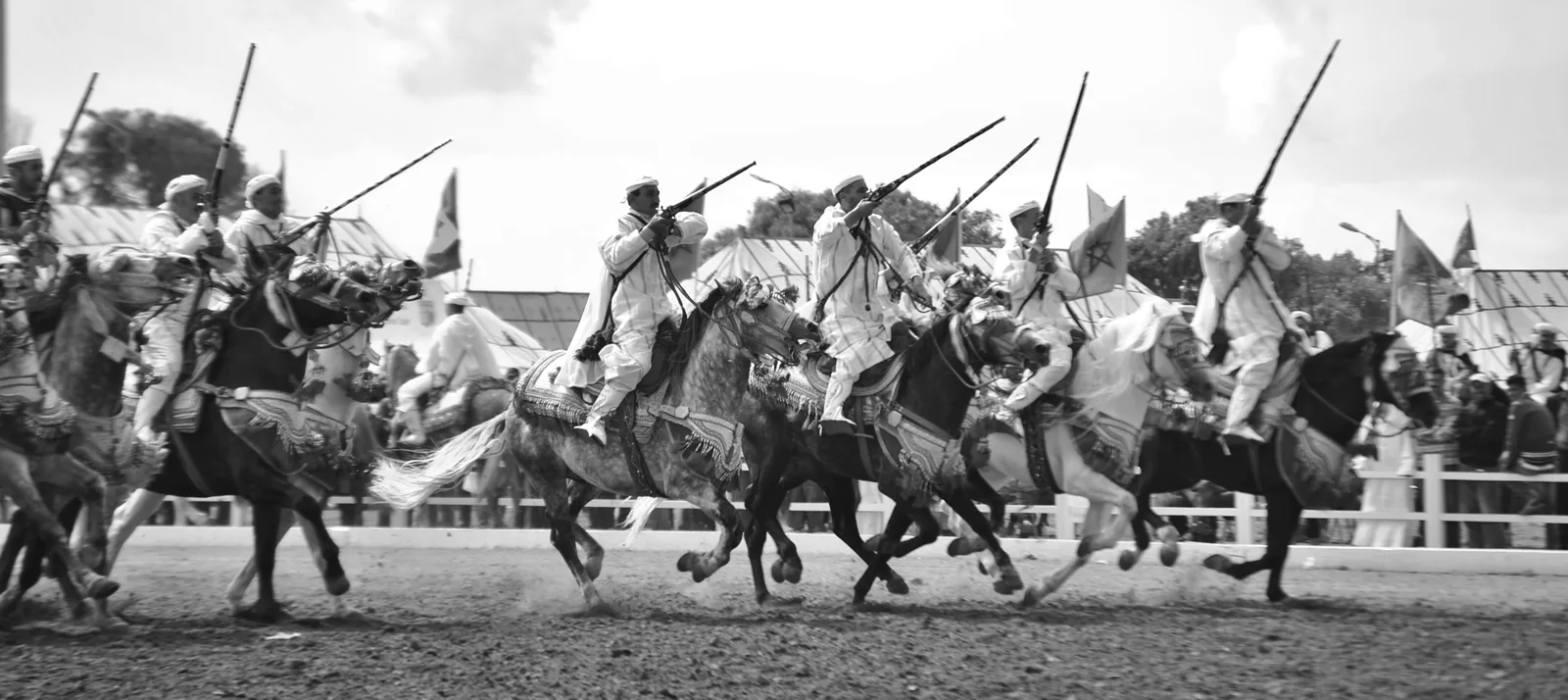
Between 2012 and 2025, Morocco added 13 more elements to its UNESCO ICH record. The Cherry Festival of Sefrou (File 00641, 2012) — an annual harvest festival in the town of Sefrou in the Middle Atlas mountains, featuring a cherry-picking ritual, the crowning of a Cherry Queen, a procession of decorated floats, and fantasia equestrian performances — was inscribed for its role in celebrating and transmitting Sefrou’s multi-ethnic cultural identity. Argan, practices and know-how concerning the argan tree (File 00955, 2014) recognized the knowledge system of the Berber communities of southwestern Morocco around the argan tree (Argania spinosa) — including the methods of argan oil extraction performed by women’s cooperatives, the cultural practices and seasonal rights of argan grove use, and the ecological knowledge of the tree’s cultivation. Tbourida (File 01483, 2021) — the traditional equestrian performance in which a group of riders in traditional dress charge in a line and simultaneously fire their muzzle-loading rifles at the end of the run — was inscribed as Morocco’s distinctive performing art combining horsemanship, historical military tradition, and collective ceremonial practice. Malhun (File 01592, 2023) — a popular poetic and musical art whose texts address love, nature, religious devotion, and social commentary in colloquial Moroccan Arabic — represents the urban oral poetry tradition of Moroccan cities (Fez, Marrakech, Meknès, Salé). The Moroccan Caftan (File 02077, 2025, sole Morocco nomination) — the most recent inscription — recognized the design knowledge, embroidery techniques (sfifa cord and aakad knot), and tailoring practices embedded in the production of Morocco’s formal dress garment.
The one element on Morocco’s Urgent Safeguarding List is Taskiwin (File 01256, 2017) — a martial dance of the western High Atlas in which male performers execute approximately forty rhythmic shoulder sequences while holding the Tiskt, an ornately decorated horn with silver plates and a leather fringe. UNESCO inscribed it on the Urgent Safeguarding List because the practice is confined to a small number of villages, transmission to younger generations has largely ceased due to youth disinterest and globalization, and the craft knowledge for producing the Tiskt and terra cotta tambourines used in the dance is also at risk. Couscous (File 01602, 2020, joint with Algeria, Mauritania, and Tunisia) recognized the knowledge, know-how, and practices pertaining to the preparation and consumption of couscous — the semolina-based staple food of North Africa — as a transnational ICH element representing a shared foodway across the Maghreb. Morocco’s joint inscriptions account for seven of its 16 elements, reflecting its participation in regional and global nomination coalitions for shared cultural traditions including falconry (with 23 nations), Arabic calligraphy (with 15 nations), the Mediterranean diet (with Greece, Spain, Italy, Cyprus, Portugal, and Croatia), and the date palm (with 14 countries).
Frequently Asked Questions
How many UNESCO intangible cultural heritage elements does Morocco have?
Morocco has 16 UNESCO ICH elements as of 2025: 15 on the Representative List of the Intangible Cultural Heritage of Humanity and 1 (Taskiwin) on the List of Intangible Cultural Heritage in Need of Urgent Safeguarding. Morocco ratified the 2003 Convention on October 12, 2006. The most recent inscription is the Moroccan Caftan (File 02077, 2025) — a sole Morocco nomination, not a joint nomination.
What was Morocco’s first UNESCO intangible cultural heritage?
Morocco’s first UNESCO ICH recognition was the Cultural Space of Jemaa el-Fna Square, Marrakech (File 00014) — originally proclaimed a UNESCO Masterpiece of the Oral and Intangible Heritage of Humanity in 2001, one of the first five Masterpieces announced in that year. It was formally transferred to the Representative List in 2008 when the 2003 Convention came into force. The Moussem of Tan-Tan (File 00168) was also inscribed in 2008 at the same session.
What is Gnawa?
Gnawa (File 01170, Representative List, 2019) is a Moroccan spiritual music and ritual practice originating in communities descended from enslaved sub-Saharan Africans brought to Morocco from the 16th to 19th centuries. It centers on the lila — an overnight ceremony led by the maalem (master musician) using the guembri (bass lute) and qraqeb (iron castanets) — in which color-coded sequences invoke seven spiritual entities and participants enter guided trance. UNESCO recognized Gnawa as a set of musical events, performances, and therapeutic rituals mixing the secular with the sacred.
What is Taskiwin?
Taskiwin (File 01256, Urgent Safeguarding List, 2017) is a martial shoulder dance of the western High Atlas mountain region of Morocco in which male performers execute approximately forty rhythmic sequences while holding the Tiskt — an ornately decorated horn with silver plates. UNESCO inscribed it on the Urgent Safeguarding List because practice has declined to a small number of villages, youth transmission has largely ceased, and the craft knowledge for producing traditional instruments is also threatened.
Is couscous a UNESCO intangible cultural heritage of Morocco?
Yes. Couscous — the knowledge, know-how, and practices pertaining to the production and consumption of couscous — is inscribed on UNESCO’s Representative List as File 01602 (2020) as a joint nomination by Morocco, Algeria, Mauritania, and Tunisia. The inscription recognized couscous preparation and communal consumption as a shared Maghrebi cultural heritage. Morocco is one of four co-nominating states.