Bulgaria UNESCO Intangible Cultural Heritage: Complete List of 9 Elements
Bulgaria’s UNESCO intangible cultural heritage comprises 9 elements — 7 on the Representative List of the Intangible Cultural Heritage of Humanity and 2 on the Register of Good Safeguarding Practices (under Article 18 of the 2003 Convention). Bulgaria has no elements on the Urgent Safeguarding List. The portfolio spans an ancient polyphonic vocal tradition of elderly women from the Shoplouk region (Bistritsa Babi), a fire-dancing ritual with Thracian-era roots (Nestinarstvo), hand-woven kilimi carpet-making (Chiprovtsi), a masked New Year masquerade (Surova), a spring equinox thread-exchange tradition shared with three nations (Martenitsa), multipart singing from south-western Bulgaria (Visoko), and bagpipe playing. Bulgaria ratified the 2003 Convention for the Safeguarding of the Intangible Cultural Heritage on 10 March 2006. Its first inscription came at the 3rd session in 2008 with Bistritsa Babi: archaic polyphony, dances and rituals from the Shoplouk region — originally proclaimed a UNESCO Masterpiece of the Oral and Intangible Heritage of Humanity in 2005. For the complete official record, ich.unesco.org/en/state/bulgaria-BG is the authoritative source.
- Bulgaria has 9 UNESCO ICH elements as of 2025 — 7 on the Representative List and 2 on the Register of Good Safeguarding Practices. Bulgaria ratified the 2003 Convention on 10 March 2006. Bulgaria has no elements on the Urgent Safeguarding List.
- Bulgaria’s first inscription (2008, 3rd session) was Bistritsa Babi — archaic polyphony, dances and rituals from the Shoplouk region, originally proclaimed a UNESCO Masterpiece of the Oral and Intangible Heritage of Humanity in 2005. The tradition is maintained by elderly women from the village of Bistritsa.
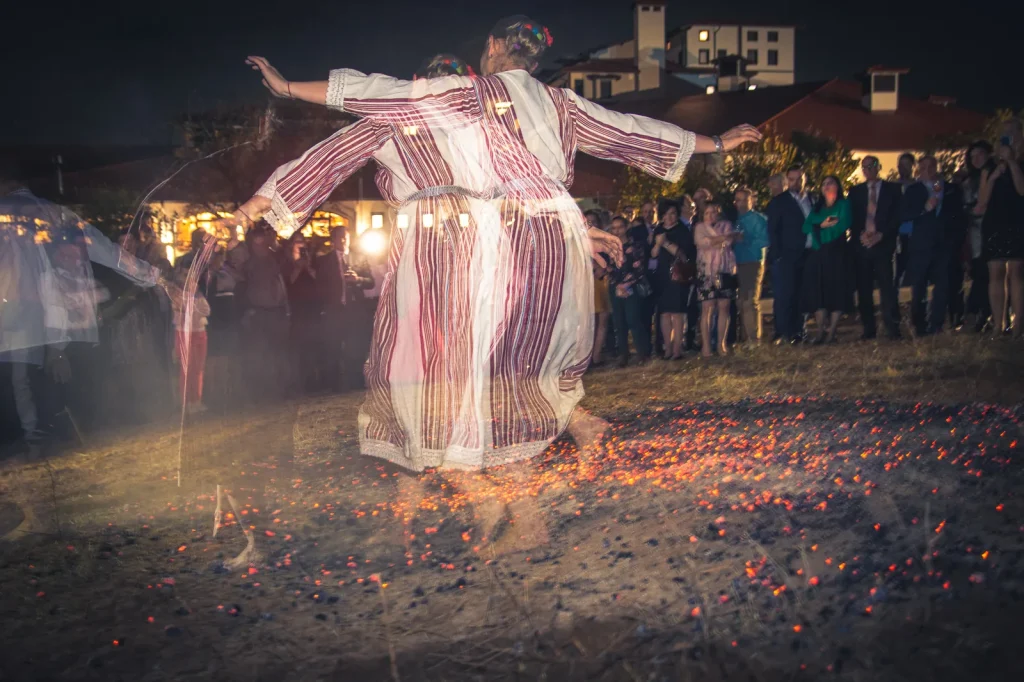
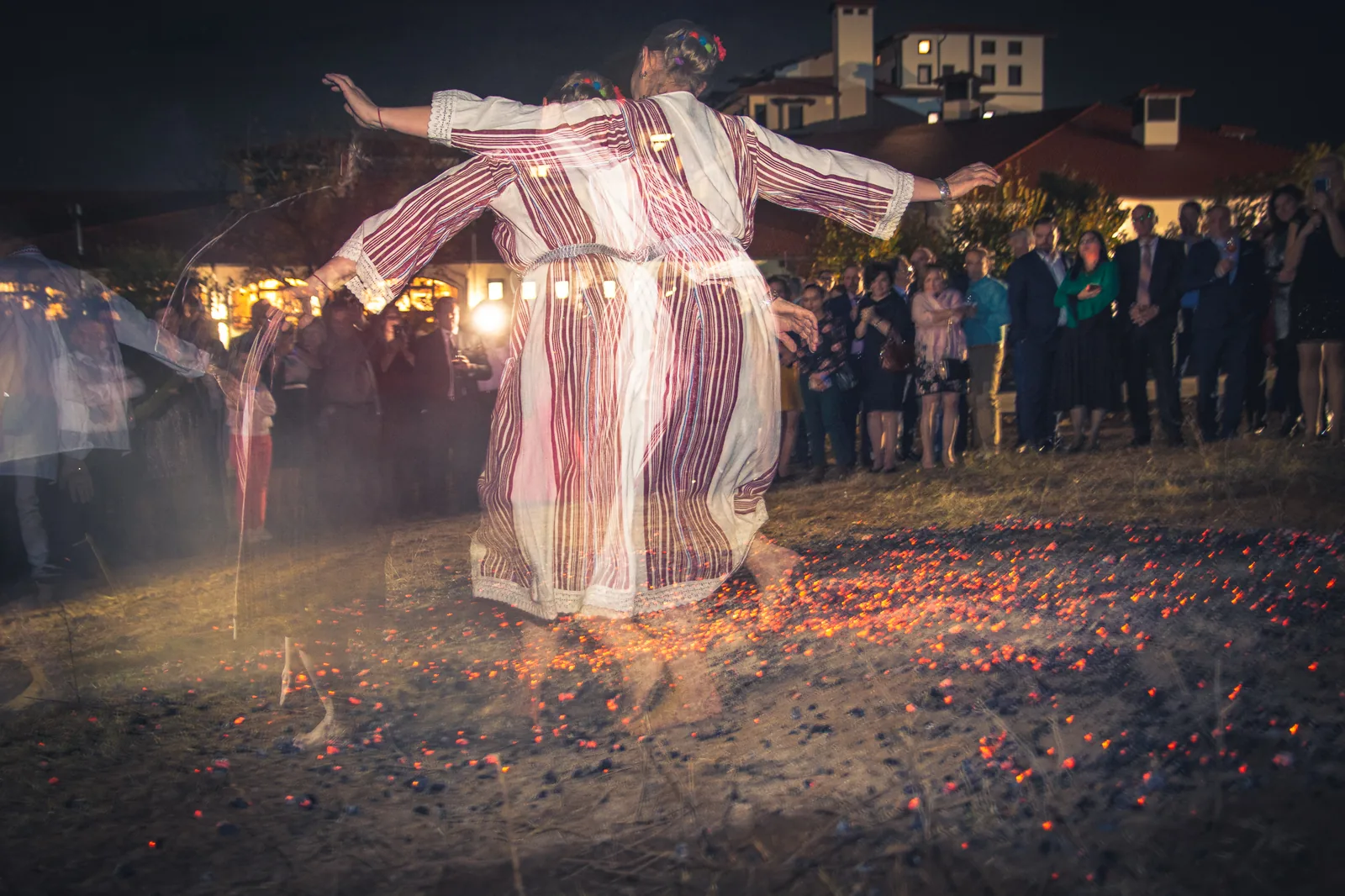
- Nestinarstvo (2009) — fire-walking on glowing embers at the Panagyr of Saints Constantine and Helena in the village of Bulgari, Mount Strandzha — is Bulgaria’s most internationally recognized UNESCO ICH element, associated with ritual practices potentially traceable to pre-Christian Thracian origins.
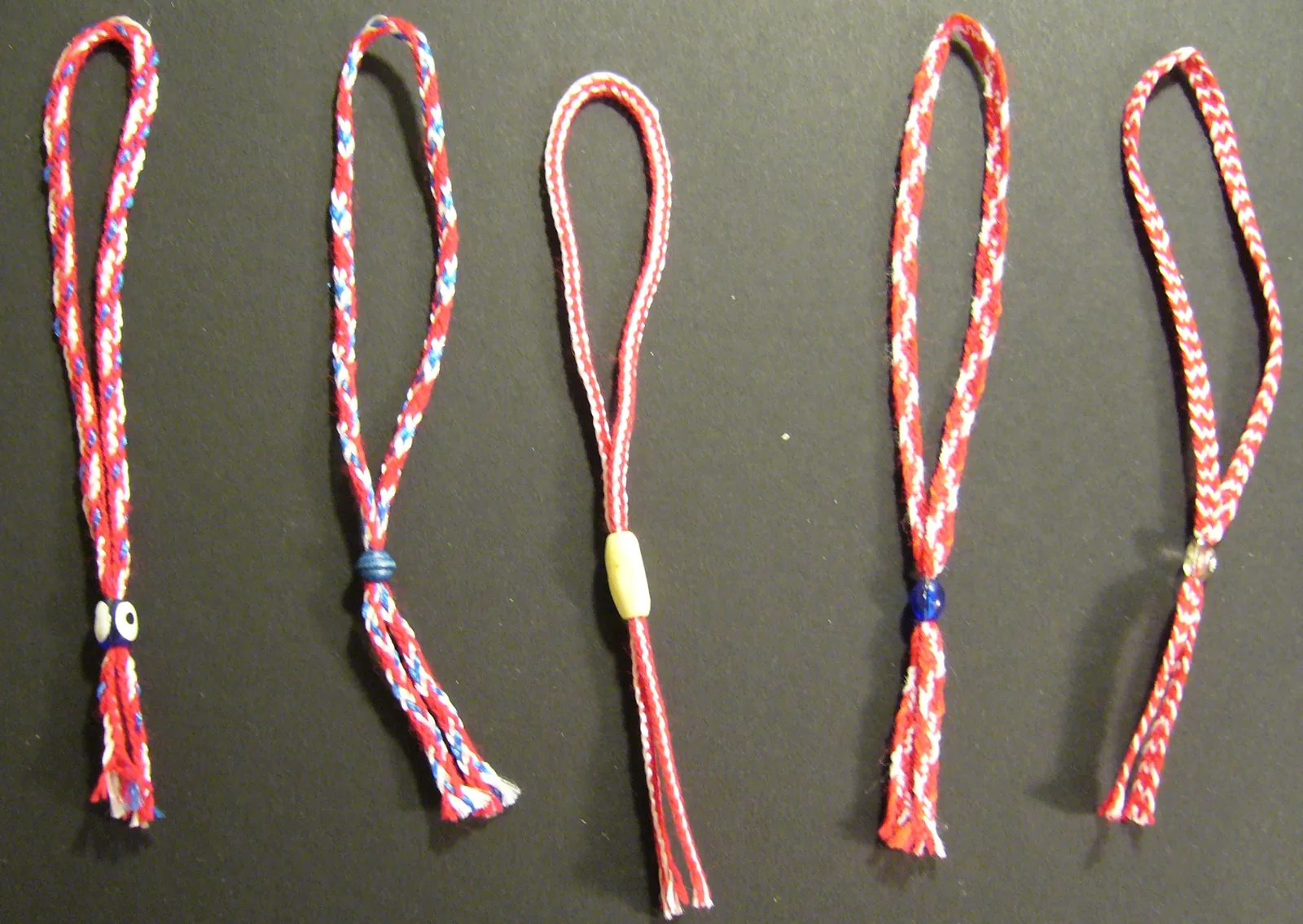
- The Cultural practices associated to the 1st of March (2017) — jointly inscribed by Bulgaria, North Macedonia, Republic of Moldova, and Romania — includes the Martenitsa tradition of exchanging red and white thread bracelets worn until the first sign of spring, symbolizing protection against winter’s final perils.
- Bulgaria’s most recent inscription is Bagpipes and bagpipe playing in Bulgaria (Representative List, 20.COM, 2025) — the transmission of traditional knowledge, skills, and performance associated with the gaida (Bulgarian bagpipe), inscribed at the 20th session in New Delhi.
Bistritsa Babi, Nestinarstvo, and Bulgaria’s Founding UNESCO ICH Inscriptions (2008–2016)
Bistritsa Babi: archaic polyphony, dances and rituals from the Shoplouk region (Representative List, 3.COM, 2008; Masterpiece 2005) is Bulgaria’s first UNESCO ICH inscription — a vocal and ritual tradition maintained by the “Bistritsa Babi” (Grandmothers of Bistritsa), elderly women from the village of Bistritsa in the Shoplouk ethnographic region of western Bulgaria. The tradition encompasses a unique form of archaic three-voice polyphony (diaphony, or “shoppe polyphony”) considered among the most ancient surviving vocal forms in Europe; the horo chain dances performed in open circles or lines; and the lazarouvane initiation ritual, in which young unmarried women visit houses carrying willow branches at Easter, performing songs to mark the transition from girlhood to womanhood. Bistritsa Babi is one of the few remaining communities in which this archaic vocal form has been continuously transmitted through oral apprenticeship. Nestinarstvo: the Panagyr of Saints Constantine and Helena in the village of Bulgari (Representative List, 4.COM, 2009) recognizes the fire-dancing ritual practiced in the village of Bulgari in the Mount Strandzha region of south-eastern Bulgaria — the sole site where the ritual is maintained in its authentic form. On the feast days of Saints Constantine and Helena (June 3 and 4), Nestinari (fire-dancers) enter a trance-like state and dance barefoot on a bed of glowing embers, carrying sacred icons of the two saints. The Panagyr begins with a morning procession to a holy spring, where the icons are carried by horseback and the community receives holy water and candles; the fire-dancing takes place at dusk. Scholars associate Nestinarstvo with pre-Christian Thracian ritual practices absorbed into Bulgarian Orthodox Christian tradition over centuries.
The tradition of carpet-making in Chiprovtsi (Representative List, 9.COM, 2014) recognizes the hand-woven kilim carpet tradition of the town of Chiprovtsi in north-western Bulgaria, where women weave two-sided wool tapestries on vertical handlooms using 27 documented symbolic motifs encoding religious beliefs and community memory — while men engage in wool processing and dyeing. The tradition has been transmitted orally within households for generations; in the late 19th century, approximately 1,400 women in the region were active weavers, and the carpets were sold across the Ottoman Empire. The Surova folk feast in Pernik region (Representative List, 10.COM, 2015) recognizes the kukeri masquerade tradition of the Pernik region, celebrated on January 13 and 14 (the New Year according to the old Julian calendar). Male performers known as kukeri dress in elaborate costumes of animal fur, bells, and terrifying carved wooden masks — parading through villages and performing acrobatic dances to chase away evil spirits, ensure fertility, and secure good fortune for the coming year. The Surva International Festival in Pernik attracts more than 10,000 performers from 20 countries. The Festival of folklore in Koprivshtitsa: heritage presentation and transmission system (Register of Good Safeguarding Practices, 11.COM, 2016) recognized Bulgaria’s model of a national folklore festival (held every five years in the historic town of Koprivshtitsa) as a best-practice heritage transmission system, inscribed on the Register of Good Safeguarding Practices rather than the Representative List. For context on UNESCO’s ICH framework, the UNESCO intangible cultural heritage overview explains the 2003 Convention structure.
Martenitsa, Visoko Singing, and Bulgaria’s Recent UNESCO ICH Inscriptions (2017–2025)
At the 12th session in 2017, Bulgaria received two inscriptions. Cultural practices associated to the 1st of March (Representative List, 12.COM, 2017) — jointly inscribed by Bulgaria, North Macedonia, Republic of Moldova, and Romania — recognizes the spring equinox traditions in which red and white braided threads (Martenitsa in Bulgaria, Mărțișor in Romania, Martinka in North Macedonia, Mărțișor in Moldova) are crafted and exchanged on March 1, then worn by recipients until they see the first sign of spring — a blooming tree, a swallow, or a stork — at which point the bracelet is tied to a fruit tree or thrown into a river. The red thread symbolizes health and vitality; the white symbolizes purity; the combined practice serves as symbolic protection against the capricious transition from winter to spring, reinforcing community bonds across generations and cultural boundaries. The same year, the Bulgarian Chitalishte (Community Cultural Centre): practical experience in safeguarding (Register of Good Safeguarding Practices, 12.COM, 2017) was inscribed on the Good Practices Register for the Bulgarian network of over 3,000 Chitalishte institutions — community cultural centres with a 150-year history in Bulgaria that serve as primary vehicles for collecting, preserving, and transmitting ICH within local communities through library services, amateur theatrical troupes, folk dance ensembles, and heritage workshops.
Visoko multipart singing from Dolen and Satovcha, South-western Bulgaria (Representative List, 16.COM, 2021) recognized the traditional polyphonic vocal tradition of the Rhodope Mountains communities of Dolen and Satovcha — a form of multipart singing in which groups of female singers perform without instrumental accompaniment, using specific tuning systems and elongated vowels that produce a distinctive tonal quality; the songs are tied to the agricultural cycle, life-cycle ceremonies (birth, marriage, harvest), and the transmission of community memory through interlocking vocal lines. Bagpipes and bagpipe playing in Bulgaria: transmission of knowledge and skills (Representative List, 20.COM, 2025) — Bulgaria’s most recent inscription — recognized the traditional gaida (Bulgarian bagpipe) and its transmission system at the 20th session of the Intergovernmental Committee in New Delhi, encompassing the craft knowledge of gaida construction from animal hide and wood, the repertoire of dance music and ceremonial songs, the system of master-apprentice training within families and communities, and the role of the gaida in community celebrations, harvest festivals, and wedding ceremonies across Bulgarian regions. Bulgaria’s 9 UNESCO ICH elements reflect a portfolio particularly strong in archaic vocal traditions, ritual fire and masquerade practices, and textile crafts — spanning the country’s Shoplouk, Strandzha, Rhodope, and north-western regional heritage zones. For the broader view of all UNESCO ICH inscriptions worldwide, the full UNESCO ICH list covers all elements globally.
Frequently Asked Questions
How many UNESCO intangible cultural heritage elements does Bulgaria have?
Bulgaria has 9 elements on UNESCO’s intangible cultural heritage lists as of 2025 — 7 on the Representative List and 2 on the Register of Good Safeguarding Practices (Koprivshtitsa Festival, 2016; Bulgarian Chitalishte, 2017). Bulgaria ratified the 2003 Convention on March 10, 2006. The most recent inscription is Bagpipes and bagpipe playing in Bulgaria (2025, 20th session, New Delhi).
What is Bulgaria’s first UNESCO intangible cultural heritage?
Bulgaria’s first UNESCO ICH inscription was Bistritsa Babi: archaic polyphony, dances and rituals from the Shoplouk region — inscribed at the 3rd session in 2008 (originally proclaimed a UNESCO Masterpiece of the Oral and Intangible Heritage of Humanity in 2005). The tradition is maintained by elderly women from the village of Bistritsa, combining archaic three-voice polyphony, horo chain dances, and the lazarouvane initiation ritual.
What is Nestinarstvo and is it a UNESCO heritage?
Yes. Nestinarstvo — the Panagyr of Saints Constantine and Helena in the village of Bulgari — is inscribed on UNESCO’s Representative List (4th session, 2009). It is a fire-dancing ritual practiced in the village of Bulgari in the Mount Strandzha region of south-eastern Bulgaria, in which Nestinari (fire-dancers) dance barefoot on glowing embers during the feast days of Saints Constantine and Helena (June 3–4). The practice is associated with pre-Christian Thracian ritual origins absorbed into Bulgarian Orthodox tradition.
Is the Martenitsa a UNESCO intangible cultural heritage?
Yes. The Cultural practices associated to the 1st of March — including the Bulgarian Martenitsa tradition — are inscribed on UNESCO’s Representative List (12th session, 2017) as a joint inscription by Bulgaria, North Macedonia, Republic of Moldova, and Romania. The practice involves crafting and exchanging red and white thread bracelets on March 1 as symbolic protection for the spring transition, worn until the first spring sighting.
What is Bulgaria’s most recent UNESCO ICH inscription?
Bulgaria’s most recent UNESCO ICH inscription is Bagpipes and bagpipe playing in Bulgaria: transmission of knowledge and skills — inscribed at the 20th session of the Intergovernmental Committee in New Delhi (December 2025). The inscription recognized the traditional gaida (Bulgarian bagpipe), its craft construction, ceremonial repertoire, and master-apprentice transmission system within Bulgarian regional communities.