 CulturalInscribed 1990
Uzbekistan
About This Site
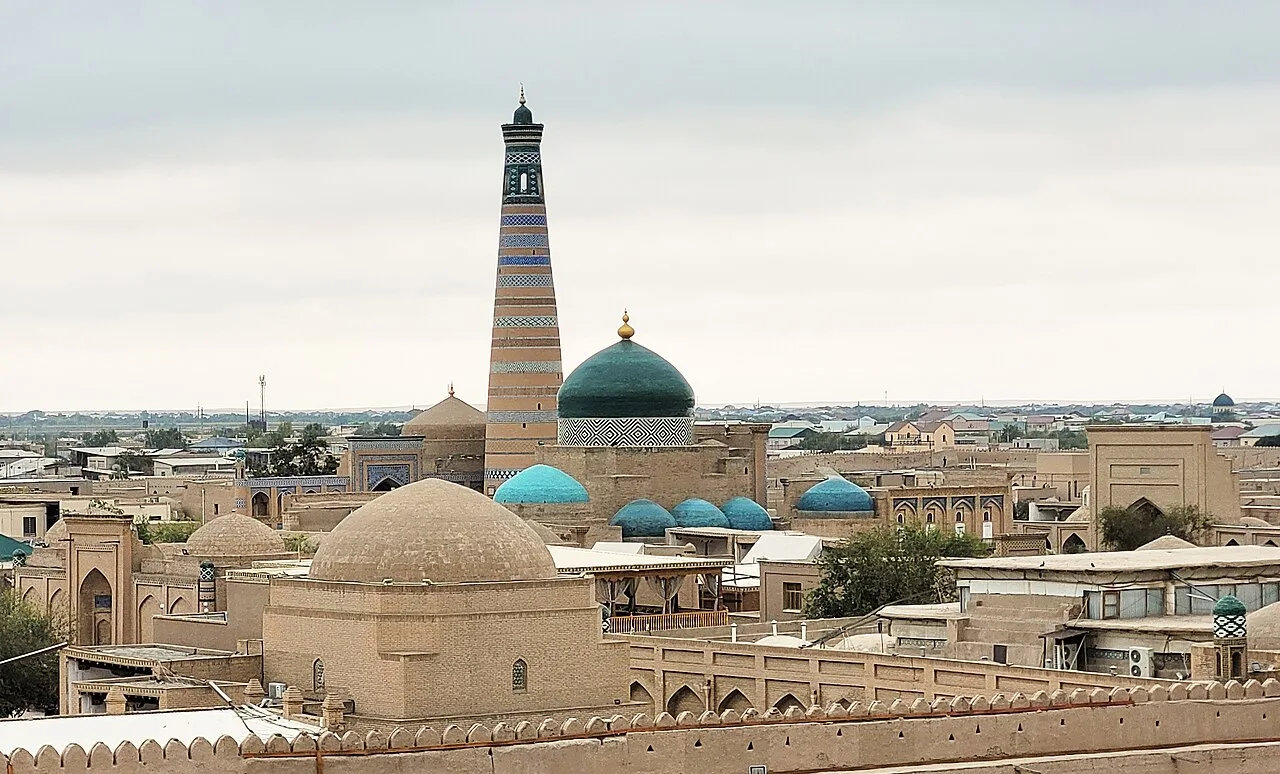
Itchan Kala is the inner town (protected by brick walls some 10 m high) of the old Khiva oasis, which was the last resting-place of caravans before crossing the desert to Iran. Although few very old monuments still remain, it is a coherent and well-preserved example of the Muslim architecture of Central Asia. There are several outstanding structures such as the Djuma Mosque, the mausoleums and the madrasas and the two magnificent palaces built at the beginning of the 19th century by Alla-Kulli-Khan.
Site Details
| Category | Cultural |
| Date Inscribed | 1990 |
| Area | 38 hectares |
| Cultural Criteria | c3, c4, c5 |
| Location | Uzbekistan |
| Coordinates | 41.3781, 60.3603 |
Inscription Justification
Brief synthesis Itchan Kala, the inner fortress of Khiva, is located to the South of the Amu Darya River (known as the Oxus in ancient times) in the Khorezm region of Uzbekistan and it was the last resting-place of caravans before crossing the desert to Persia. Itchan Kala has a history that spans over two millennia. The inner town has 26 hectares and was built according to the ancient traditions of Central Asian town building, as a regular rectangle (650 by 400 meters) elongated from south to north and closed by brick fortification walls that are up to ten meters high. The property is the site of 51 ancient monumental structures and 250 dwellings and displays remarkable types of architectural ensembles such as Djuma Mosque, Oq Mosque, madrasahs of Alla-Kulli-Khan, Muhammad Aminkhon, Muhammad Rakhimkhon, Mausoleums of Pahlavon Mahmoud, Sayid Allavuddin, Shergozikhon as well as caravanserais and markets. The attributes are outstanding examples of Islamic architecture of Central Asia. Djuma Mosque, a mosque with a covered courtyard designed for the rugged climate of Central Asia, is unique in its proportions and the structure of its inner dimensions (55m x 46m), faintly lit by two octagonal lanterns and adorned with 212 columns. The madrasahs, which make up the social areas, have majestic proportions with a simple decoration, and they form another type of Islamic architecture specific to Central Asia. The place of the architectural heritage of Itchan Kala in the history of Central Asian architecture is determined not only by the abundance of surviving architectural monuments, but also by the unique contribution of Khorezmian master builders to Central Asian architecture and preservation of its classical traditions. The domestic architecture of Khiva, with its enclosed houses with their courtyard, reception room with portico or avian supported by delicately sculptured wooden posts, and private apartments, is also an important attribute of the property that can be…
Other World Heritage Sites in Uzbekistan
Natural · Inscribed 2023Cold Winter Deserts of TuranCultural · Inscribed 2023Silk Roads: Zarafshan-Karakum CorridorNatural · Inscribed 2016Western Tien-ShanCultural · Inscribed 2001Samarkand – Crossroad of CulturesCultural · Inscribed 2000Historic Centre of ShakhrisyabzCultural · Inscribed 1993Historic Centre of Bukhara
More cultural heritage sites
IndiaSacred Ensembles of the HoysalasJordanPetraAzerbaijanHistoric Centre of Sheki with the Khan’s PalaceTürkiyeXanthos-LetoonIran (Islamic Republic of)Sheikh Safi al-din Khānegāh and Shrine Ensemble in ArdabilUzbekistanHistoric Centre of Shakhrisyabz
Sites inscribed in the 1990s
- Rangiri Dambulla Cave Temple (1991, Sri Lanka)
- Humayun's Tomb, Delhi (1993, India)
- Historic Town of Zabid (1993, Yemen)
- Qutb Minar and its Monuments, Delhi (1993, India)
- Historic Centre of Bukhara (1993, Uzbekistan)
- City of Safranbolu (1994, Türkiye)
- Historic City of Meknes (1996, Morocco)
- Ancient <I>Ksour</I> of Ouadane, Chinguetti, Tichitt and Oualata (1996, Mauritania)
Data Source: UNESCO World Heritage Convention