 CulturalInscribed 1993
India
About This Site
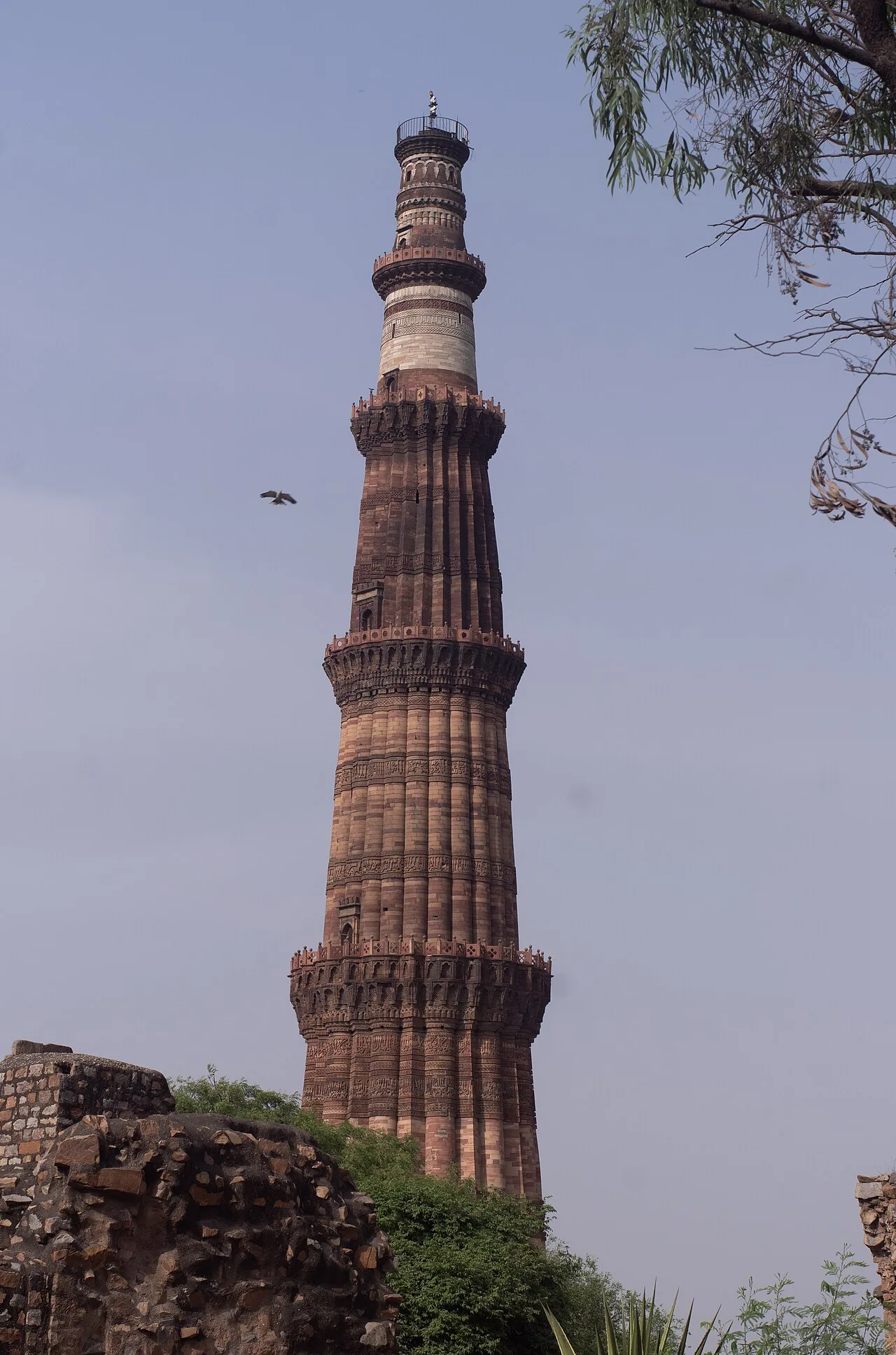
Built in the early 13th century a few kilometres south of Delhi, the red sandstone tower of Qutb Minar is 72.5 m high, tapering from 2.75 m in diameter at its peak to 14.32 m at its base, and alternating angular and rounded flutings. The surrounding archaeological area contains funerary buildings, notably the magnificent Alai-Darwaza Gate, the masterpiece of Indo-Muslim art (built in 1311), and two mosques, including the Quwwatu'l-Islam, the oldest in northern India, built of materials reused from some 20 Brahman temples.
Site Details
| Category | Cultural |
| Date Inscribed | 1993 |
| Cultural Criteria | c4 |
| Location | India |
| Coordinates | 28.5258, 77.1853 |
Inscription Justification
Brief synthesis The ensemble of mosques, minars, and other structures in the Qutb Minar complex is an outstanding testimony to the architectural and artistic achievements of Islamic rulers after they first established their power in the Indian subcontinent in the 12th century. The complex, located at the southern fringe of New Delhi, illustrates the new rulers’ aspiration to transform India from Dar-al-Harb to Dar-al-Islam with the introduction of distinctive building types and forms. Referred to as the Qutb mosque, the Quwwatu’l-Islam, meaning the Might of Islam, introduced to India the classic model of Islamic architecture that had developed in western Asia. The mosque constituted a large rectangular courtyard enclosed by arcades having carved pillars on three sides and an imposing five-arched screen marking the west. Incorporating temple elements such as the carved pillars and cladding characteristic of Hindu and Jain temples, it was completed by subsequent rulers – Qutb ud din Aibak and Shamsu’d-Din Iltutmish. Drawing references from their Ghurid homeland, they constructed a minar (minaret) at the south-eastern corner of the Quwwatu’l-Islam between 1199 and 1503, thereby completing the vocabulary of a typical classic Islamic mosque. Built of red and buff sandstone and eloquently carved with inscriptional bands, the Qutb Minar is the tallest masonry tower in India, measuring 72.5 metres high, with projecting balconies for calling all Muadhdhin to prayer. An iron pillar in the courtyard gave the mosque a unique Indian aesthetic. The 13th-century square tomb of Iltutmish in the north-western part of Quwwatu’l-Islam marks the beginning of the tradition of constructing royal tombs, a practice followed as late as the Mughal era in India. The tomb-chamber is profusely carved with inscriptions and geometrical and arabesque patterns associated with Saracenic tradition. Expansions made by Allaudin Khilji to the existing ensemble between 1296 and 1311 reflect the power…
Other World Heritage Sites in India
Cultural · Inscribed 2025Maratha Military Landscapes of IndiaCultural · Inscribed 2024Moidams – the Mound-Burial System of the Ahom DynastyCultural · Inscribed 2023Sacred Ensembles of the HoysalasCultural · Inscribed 2023SantiniketanCultural · Inscribed 2021Kakatiya Rudreshwara (Ramappa) Temple, TelanganaCultural · Inscribed 2021Dholavira: a Harappan City
More cultural heritage sites
IsraelNecropolis of Bet She’arim: A Landmark of Jewish RenewalIran (Islamic Republic of)The Persian CaravanseraiSyrian Arab RepublicCrac des Chevaliers and Qal’at Salah El-DinIndiaChampaner-Pavagadh Archaeological ParkIran (Islamic Republic of)PasargadaeTürkiyeArslantepe Mound
Sites inscribed in the 1990s
- Itchan Kala (1990, Uzbekistan)
- Rangiri Dambulla Cave Temple (1991, Sri Lanka)
- Humayun's Tomb, Delhi (1993, India)
- Historic Town of Zabid (1993, Yemen)
- Historic Centre of Bukhara (1993, Uzbekistan)
- City of Safranbolu (1994, Türkiye)
- Historic City of Meknes (1996, Morocco)
- Ancient <I>Ksour</I> of Ouadane, Chinguetti, Tichitt and Oualata (1996, Mauritania)
Data Source: UNESCO World Heritage Convention