 CulturalInscribed 2004
Iran (Islamic Republic of)
About This Site
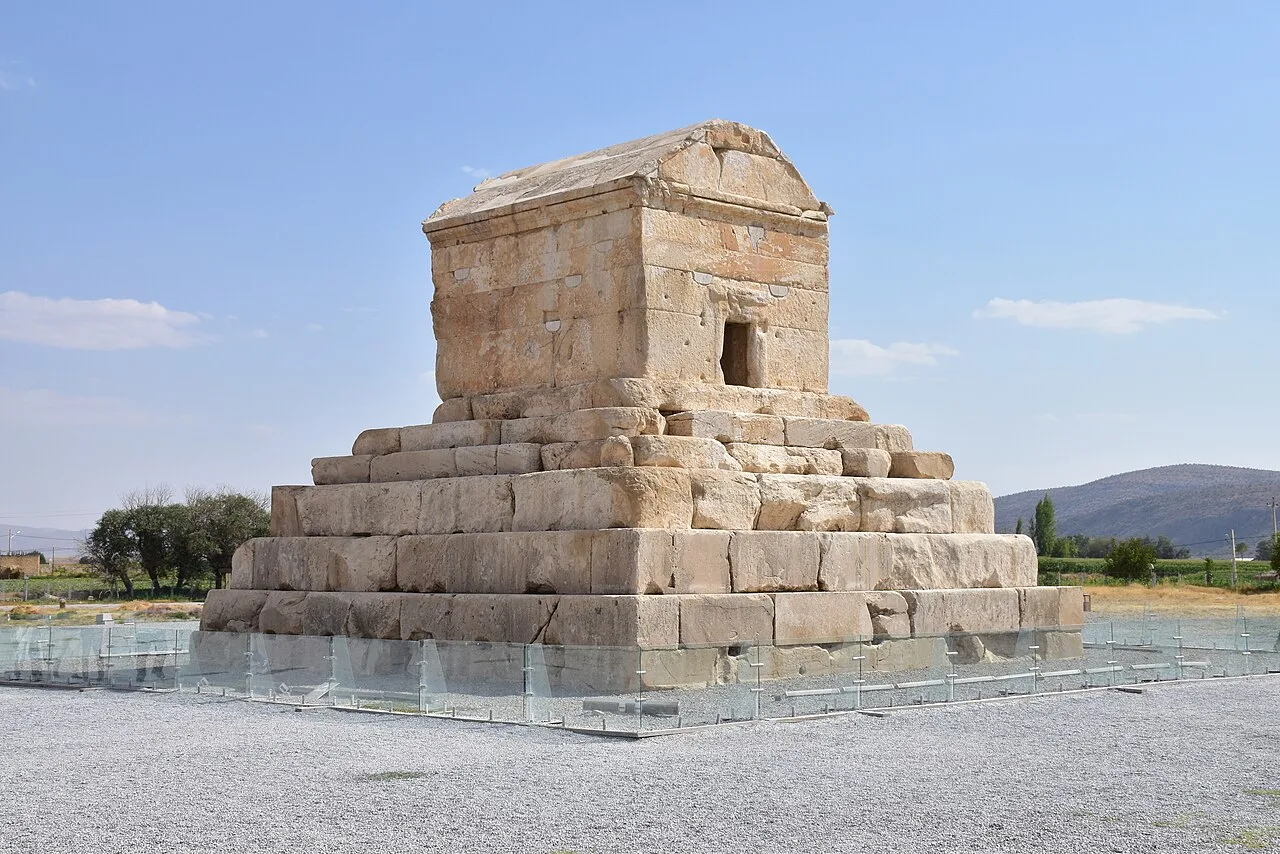
Pasargadae was the first dynastic capital of the Achaemenid Empire, founded by Cyrus II the Great, in Pars, homeland of the Persians, in the 6th century BC. Its palaces, gardens and the mausoleum of Cyrus are outstanding examples of the first phase of royal Achaemenid art and architecture and exceptional testimonies of Persian civilization. Particularly noteworthy vestiges in the 160-ha site include: the Mausoleum of Cyrus II; Tall-e Takht, a fortified terrace; and a royal ensemble of gatehouse, audience hall, residential palace and gardens. Pasargadae was the capital of the first great multicultural empire in Western Asia. Spanning the Eastern Mediterranean and Egypt to the Hindus River, it is considered to be the first empire that respected the cultural diversity of its different peoples. This was reflected in Achaemenid architecture, a synthetic representation of different cultures.
Site Details
| Category | Cultural |
| Date Inscribed | 2004 |
| Area | 160 hectares |
| Cultural Criteria | c1, c2, c3, c4 |
| Location | Iran (Islamic Republic of) |
| Coordinates | 30.1938, 53.1673 |
Inscription Justification
Brief Synthesis Founded in the 6th century BC in the heartland of the Persians (today the province of Fars in southwestern Iran), Pasargadae was the earliest capital of the Achaemenid (First Persian) Empire. The city was created by Cyrus the Great with contributions from the different peoples who comprised the first great multicultural empire in Western Asia. The archaeological remains of its palaces and garden layout as well as the tomb of Cyrus constitute an outstanding example of the first phase of the evolution of royal Achaemenid art and architecture, and an exceptional testimony to the Achaemenid civilisation in Persia. The “Four Gardens” type of royal ensemble, which was created in Pasargadae, became a prototype for Western Asian architecture and design. The 160-ha archaeological site of Pasargadae presents some of the earliest manifestations of Persian art and architecture. It includes, among other monuments, the compact limestone tomb on the Morgab plain that once held Cyrus the Great’s gilded sarcophagus; Tall-e Takht (“Solomon’s Throne”), a great fortified platform built on a hill and later incorporated into a sprawling citadel with substantial mud-brick defences; and the royal ensemble, which consists of several palaces originally located within a garden layout (the so-called “Four Gardens”). Pasargadae became a prototype for the Persian Garden concept of four quadrants formally divided by waterways or pathways, its architecture characterised by refined details and slender verticality. Pasargadae stands as an exceptional witness to the Achaemenid civilisation. The vast Achaemenid Empire, which extended from the eastern Mediterranean and Egypt to the Hindus River in India, is considered the first empire to be characterised by a respect for the cultural diversity of its peoples. This respect was reflected in the royal Achaemenid architecture, which became a synthesized representation of the empire’s different cultures. Pasargadae represents the first…
Other World Heritage Sites in Iran
Cultural · Inscribed 2025Prehistoric Sites of the Khorramabad ValleyCultural · Inscribed 2024HegmatanehCultural · Inscribed 2023The Persian CaravanseraiCultural · Inscribed 2021Trans-Iranian RailwayCultural · Inscribed 2021Cultural Landscape of Hawraman/UramanatNatural · Inscribed 2019Hyrcanian Forests
More cultural heritage sites
Syrian Arab RepublicAncient City of AleppoIndiaSun Temple, KonârakTürkiyePergamon and its Multi-Layered Cultural LandscapeOmanAncient City of QalhatTürkiyeSardis and the Lydian Tumuli of Bin TepeUzbekistanItchan Kala
Sites inscribed in the 2000s
- Kinabalu Park (2000, Malaysia)
- Land of Frankincense (2000, Oman)
- Walled City of Baku with the Shirvanshah's Palace and Maiden Tower (2000, Azerbaijan)
- Gunung Mulu National Park (2000, Malaysia)
- Historic Centre of Shakhrisyabz (2000, Uzbekistan)
- Masada (2001, Israel)
- Old City of Acre (2001, Israel)
- Samarkand – Crossroad of Cultures (2001, Uzbekistan)
Data Source: UNESCO World Heritage Convention