 CulturalInscribed 1985
Jordan
About This Site
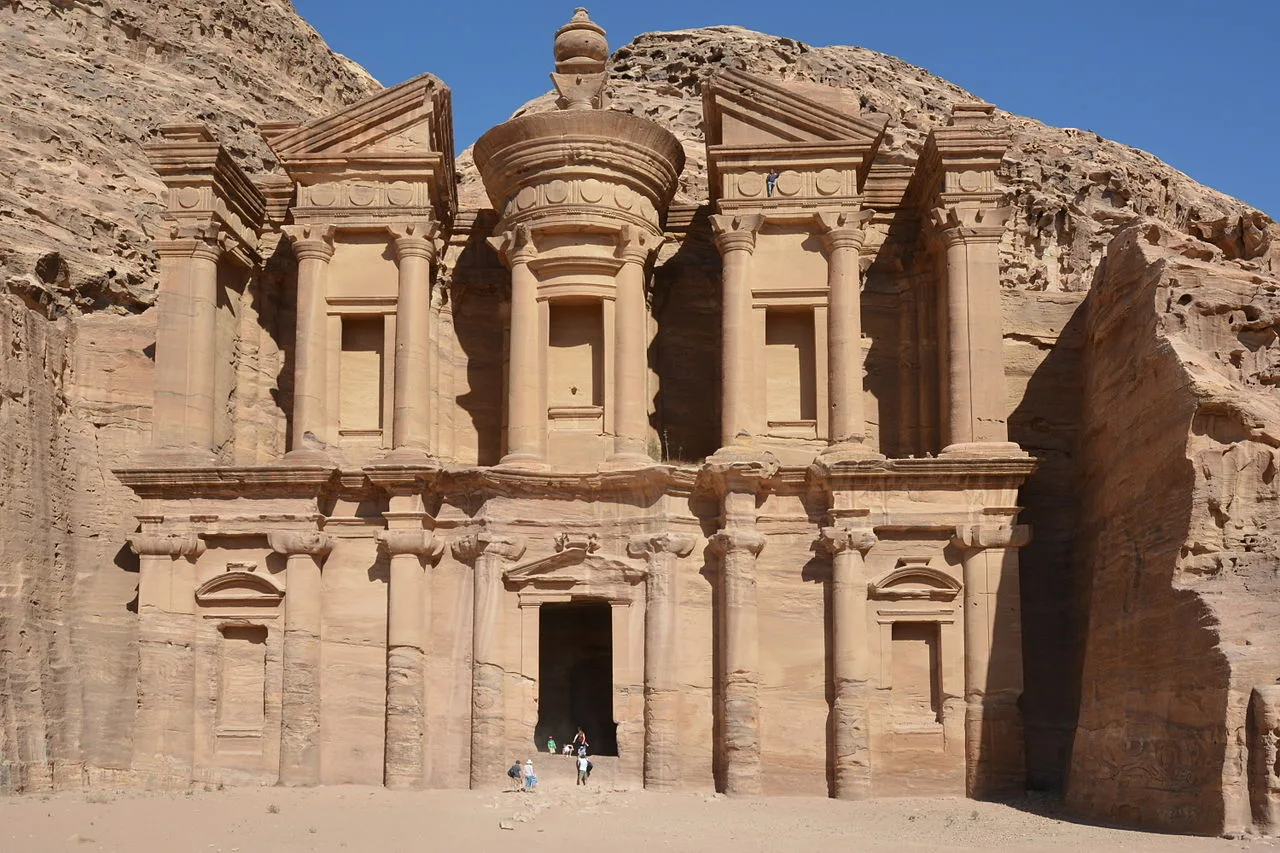
Inhabited since prehistoric times, this Nabataean caravan-city, situated between the Red Sea and the Dead Sea, was an important crossroads between Arabia, Egypt and Syria-Phoenicia. Petra is half-built, half-carved into the rock, and is surrounded by mountains riddled with passages and gorges. It is one of the world's most famous archaeological sites, where ancient Eastern traditions blend with Hellenistic architecture.
Site Details
| Category | Cultural |
| Date Inscribed | 1985 |
| Area | 26,171 hectares |
| Cultural Criteria | c1, c3, c4 |
| Location | Jordan |
| Coordinates | 30.3306, 35.4433 |
Inscription Justification
Brief synthesis Situated between the Red Sea and the Dead Sea and inhabited since prehistoric times, the rock-cut capital city of the Nabateans, became during Hellenistic and Roman times a major caravan centre for the incense of Arabia, the silks of China and the spices of India, a crossroads between Arabia, Egypt and Syria-Phoenicia. Petra is half-built, half-carved into the rock, and is surrounded by mountains riddled with passages and gorges. An ingenious water management system allowed extensive settlement of an essentially arid area during the Nabataean, Roman and Byzantine periods. It is one of the world's richest and largest archaeological sites set in a dominating red sandstone landscape. The Outstanding Universal Value of Petra resides in the vast extent of elaborate tomb and temple architecture; religious high places; the remnant channels, tunnels and diversion dams that combined with a vast network of cisterns and reservoirs which controlled and conserved seasonal rains, and the extensive archaeological remains including of copper mining, temples, churches and other public buildings. The fusion of Hellenistic architectural facades with traditional Nabataean rock-cut temple/tombs including the Khasneh, the Urn Tomb, the Palace Tomb, the Corinthian Tomb and the Deir (monastery) represents a unique artistic achievement and an outstanding architectural ensemble of the first centuries BC to AD. The varied archaeological remains and architectural monuments from prehistoric times to the medieval periods bear exceptional testimony to the now lost civilisations which succeeded each other at the site. Criterion (i): The dramatic Nabataean/Hellenistic rock-cut temple/tombs approached via a natural winding rocky cleft (the Siq), which is the main entrance from the east to a once extensive trading city, represent a unique artistic achievement. They are masterpieces of a lost city that has fascinated visitors since the early 19th century. The entrance approach and the…
Other World Heritage Sites in Jordan
Cultural · Inscribed 2024Umm Al-JimālCultural · Inscribed 2021As-Salt - The Place of Tolerance and Urban HospitalityCultural · Inscribed 2015Baptism Site “Bethany Beyond the Jordan” (Al-Maghtas)Mixed · Inscribed 2011Wadi Rum Protected AreaCultural · Inscribed 2004Um er-Rasas (Kastrom Mefa'a)Cultural · Inscribed 1985Quseir Amra
More cultural heritage sites
Sri LankaSacred City of AnuradhapuraIndiaBuddhist Monuments at SanchiBahrainDilmun Burial MoundsMalaysiaThe Archaeological Heritage of Niah National Park’s Caves ComplexJordanBaptism Site “Bethany Beyond the Jordan” (Al-Maghtas)EgyptNubian Monuments from Abu Simbel to Philae
Sites inscribed in the 1980s
- Site of Palmyra (1980, Syrian Arab Republic)
- Ichkeul National Park (1980, Tunisia)
- Buddhist Ruins of Takht-i-Bahi and Neighbouring City Remains at Sahr-i-Bahlol (1980, Pakistan)
- Taxila (1980, Pakistan)
- Archaeological Ruins at Moenjodaro (1980, Pakistan)
- Ancient City of Bosra (1980, Syrian Arab Republic)
- Historical Monuments at Makli, Thatta (1981, Pakistan)
- Fort and Shalamar Gardens in Lahore (1981, Pakistan)
Data Source: UNESCO World Heritage Convention