 CulturalInscribed 1986
India
About This Site
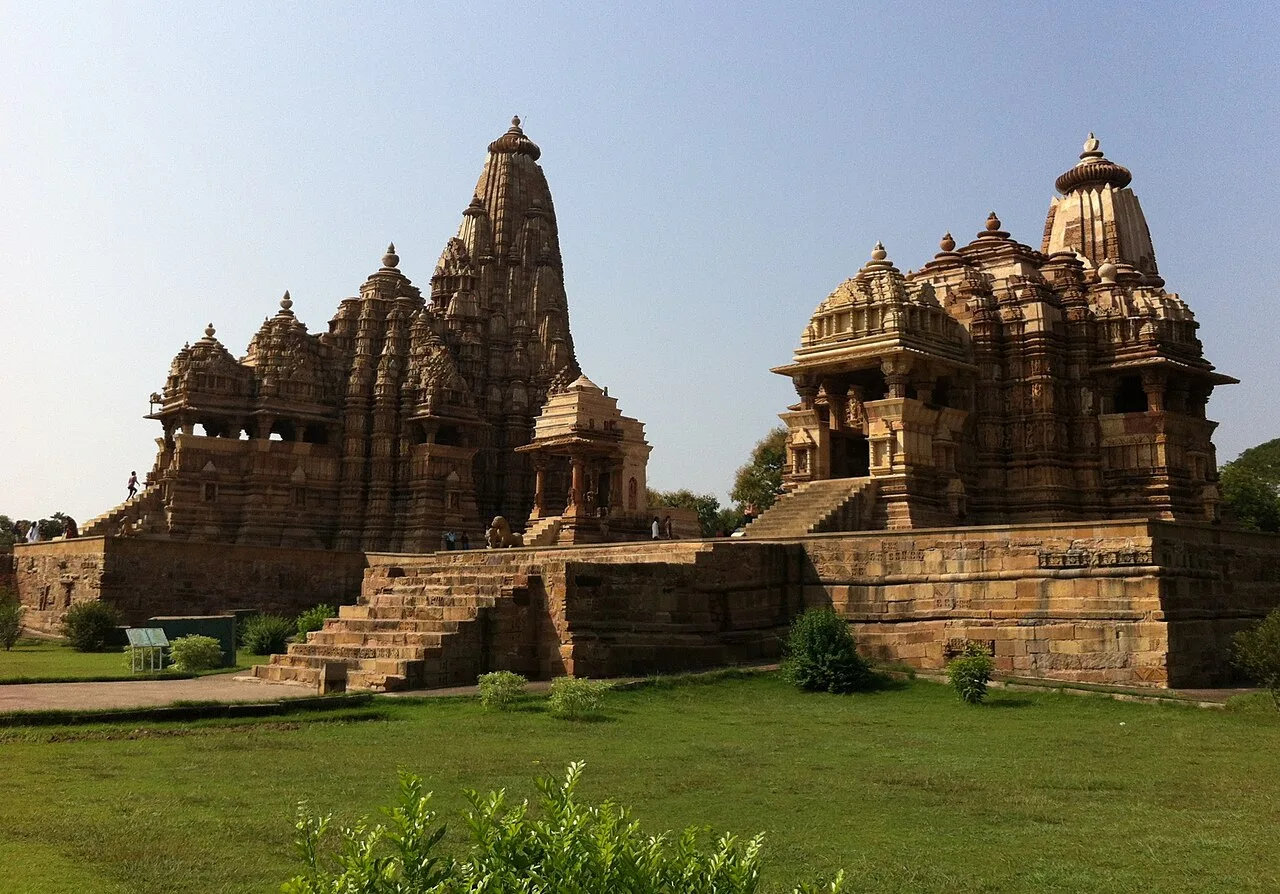
The temples at Khajuraho were built during the Chandella dynasty, which reached its apogee between 950 and 1050. Only about 20 temples remain; they fall into three distinct groups and belong to two different religions – Hinduism and Jainism. They strike a perfect balance between architecture and sculpture. The Temple of Kandariya is decorated with a profusion of sculptures that are among the greatest masterpieces of Indian art.
Site Details
| Category | Cultural |
| Date Inscribed | 1986 |
| Cultural Criteria | c1, c3 |
| Location | India |
| Coordinates | 24.8522, 79.9222 |
Inscription Justification
Brief synthesis The group of temples of Khajuraho testifies to the culmination of northern Indian temple art and architecture of the Chandella dynasty who ruled the region in the 10th and 11th centuries CE. Distributed over an area of 6 square km in a picturesque landscape, the 23 temples (including one partly excavated structure) that form the western, eastern, and southern clusters of the Khajuraho Group of Monuments are rare surviving examples that display the originality and high quality of Nagara-style temple architecture. The Khajuraho Group of Monuments demonstrates in layout and physical form, the pinnacle of temple architectural development in northern India. Built in sandstone, each temple is elevated from its environs by a highly ornate terraced platform, or jagati, on which stands the body, or jangha, whose sanctum is topped by a tower, or shikhara, of a type unique to Nagara, where the verticality of the principal spire atop the sanctum is accentuated by a series of miniature spires flanking it, each symbolizing Mount Kailasa, the abode of the Gods. The plan of the temples shows the spatial hierarchy of axially aligned interconnected spaces. The temples are entered through an ornate entrance porch (ardhamandapa), which leads to the main hall (mandapa), through which one accesses the vestibule (antarala) before reaching the sanctum (garbhagriha). The main halls of the temples were often accompanied by lateral transepts with projecting windows as well as a circumambulatory path around the sanctum. Larger temples had an additional pair of transepts and were accompanied by subsidiary shrines on the four corners of its jagati. The temples of Khajuraho are known for the harmonious integration of sculptures with their architecture. All surfaces are profusely carved with anthropomorphic and non-anthropomorphic motifs depicting sacred and secular themes. Sculptures depicting acts of worship, clan and minor deities, and couples in union, all reflect the sacred…
Other World Heritage Sites in India
Cultural · Inscribed 2025Maratha Military Landscapes of IndiaCultural · Inscribed 2024Moidams – the Mound-Burial System of the Ahom DynastyCultural · Inscribed 2023Sacred Ensembles of the HoysalasCultural · Inscribed 2023SantiniketanCultural · Inscribed 2021Kakatiya Rudreshwara (Ramappa) Temple, TelanganaCultural · Inscribed 2021Dholavira: a Harappan City
More cultural heritage sites
State of PalestineSaint Hilarion Monastery/ Tell Umm AmerJordanUm er-Rasas (Kastrom Mefa'a)MyanmarPyu Ancient CitiesIran (Islamic Republic of)Armenian Monastic Ensembles of IranIran (Islamic Republic of)Meidan Emam, EsfahanSudanArchaeological Sites of the Island of Meroe
Sites inscribed in the 1980s
- Site of Palmyra (1980, Syrian Arab Republic)
- Ichkeul National Park (1980, Tunisia)
- Buddhist Ruins of Takht-i-Bahi and Neighbouring City Remains at Sahr-i-Bahlol (1980, Pakistan)
- Taxila (1980, Pakistan)
- Archaeological Ruins at Moenjodaro (1980, Pakistan)
- Ancient City of Bosra (1980, Syrian Arab Republic)
- Historical Monuments at Makli, Thatta (1981, Pakistan)
- Fort and Shalamar Gardens in Lahore (1981, Pakistan)
Data Source: UNESCO World Heritage Convention