 Islamic ArtTextiles-Wovenfirst half 16th century
Artwork Details
| Title | Silk Fragment with Circular Rosace-like Floriate Medallions |
| Medium | Silk, metal wrapped thread; lampas (kemha) |
| Dimensions | Textile: H. 50 in. (127 cm) W. 25 1/2 in. (64.8 cm) Mount: H. 54 3/8 in. (138.1 cm) W. 30 in. (76.2 cm) D. 1 in. (2.5 cm) |
| Classification | Textiles-Woven |
| Department | Islamic Art |
| Date | first half 16th century |
| Credit Line | Purchase, Joseph Pulitzer Bequest, 1952 |
| Object Page | View at The Met |
Provenance
| City | probably Istanbul |
| Country | Turkey |
Artifacts from probably Istanbul, Turkey

late 15th–16th centuryTurban Helmet
AO
ca. 1500Album of Calligraphies Including Poetry and Prophetic…
F
first half 16th centuryFragment
F
early 16th centuryFragment
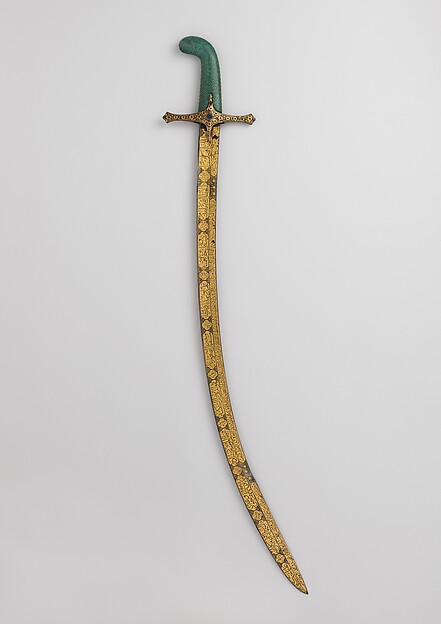
1522–66Saber
FO
mid-16th centuryFragment of a Kaftan Back
F
mid-16th centuryFragment
H
ca. 1560Helmet
Data Source: The Metropolitan Museum of Art Open Access · Object 451098