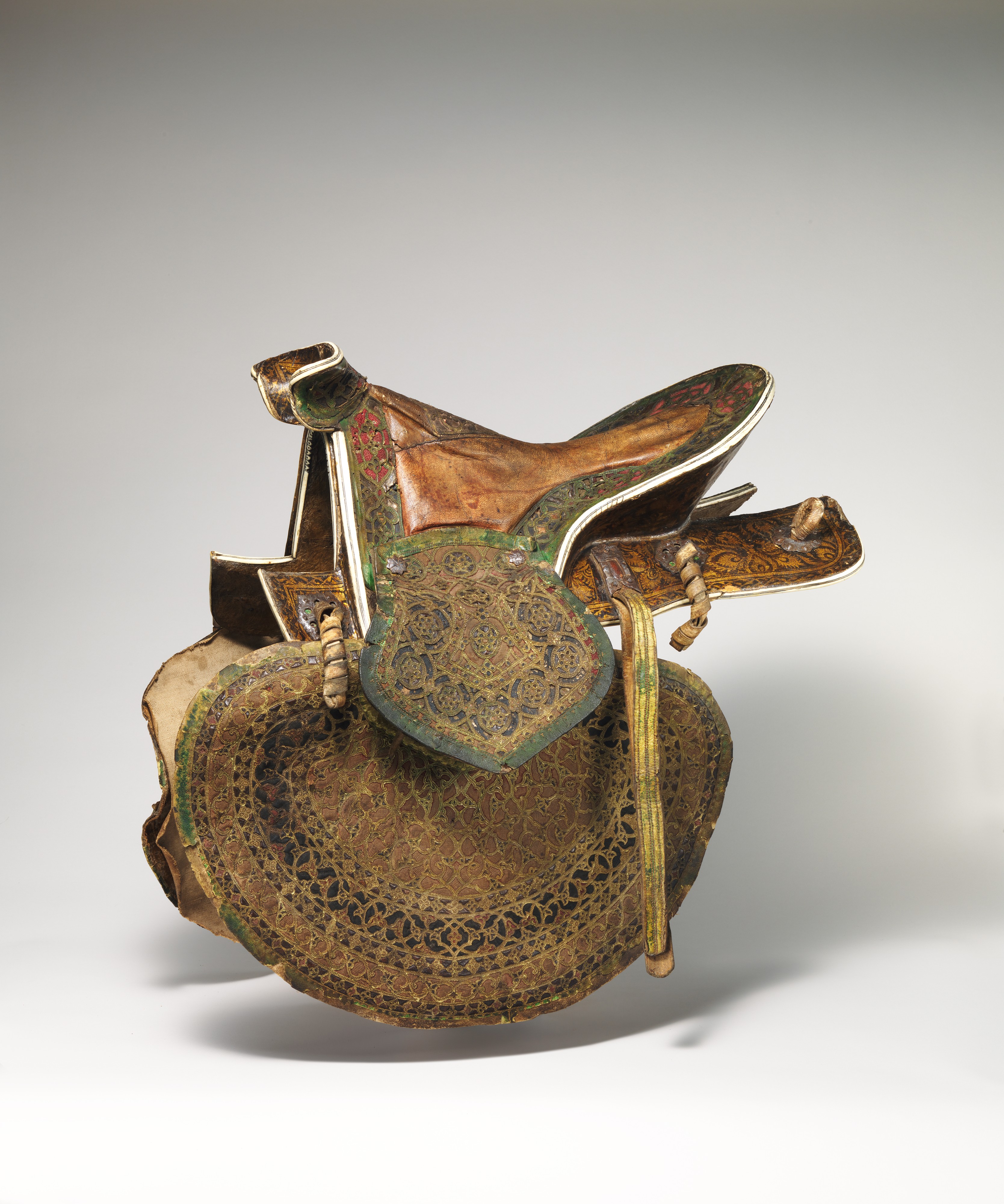
Saddle
Flag of TurkeyArms & ArmorEquestrian Equipment-Saddleslate 16th–17th century

Saddle is a equestrian equipment-saddles of Turkish origin created in late 16th–17th century using wood, bone (staghorn), bark, leather, textile, iron, pigment measuring H. 22 3/4 in. (57.8 cm); W. 24 in. (61 cm); Wt. 9 lb. 2 oz… — now part of the Arms and Armor collection at The Metropolitan Museum of Art.

About This Artwork

MediumWood, bone (staghorn), bark, leather, textile, iron, pigment
DimensionsH. 22 3/4 in. (57.8 cm); W. 24 in. (61 cm); Wt. 9 lb. 2 oz. (4130 g)
ClassificationEquestrian Equipment-Saddles
DepartmentArms and Armor
Credit LineGift of William H. Riggs, 1913
Datelate 16th–17th century

Historical Context

Culture & Period

This work belongs to the Turkish culture. The estimated date range is 1550 – 1700.

Frequently Asked Questions

What department houses Saddle?

Saddle is housed in the Arms and Armor department of The Metropolitan Museum of Art.

When was Saddle created?

Saddle dates to late 16th–17th century.

What material is Saddle made from?

Saddle is crafted from wood, bone (staghorn), bark, leather, textile, iron, pigment.

Is Saddle in the public domain?

Saddle is in the public domain and can be freely used.

Data Source: The Metropolitan Museum of Art Open Access · Last updated: April 2026

Related