 Arms & ArmorShafted Weapons17th–18th century
Artwork Details
| Title | Sacrifical Axe (Matchu) |
| Medium | Steel |
| Dimensions | H. 15 11/16 in. (39.8 cm); H. of blade 8 in. (20.3 cm); W. 2 3/16 in. (5.6 cm); Wt. 3 lbs. 9.1 oz. (1618.8 g) |
| Classification | Shafted Weapons |
| Department | Arms & Armor |
| Date | 17th–18th century |
| Credit Line | Bequest of George C. Stone, 1935 |
| Object Page | View at The Met |
Cultural Origin
| Culture | Indian, Thanjavur |
| Date Range | 1600 – 1800 |
Provenance
| City | Thanjavur |
Artifacts from Thanjavur
GD
16th centuryGuarded Dagger (Katar)
GD
16th centuryGuarded Dagger (Katar)
D(
16th centuryDagger (Katar)
D(
16th centuryDagger (Katar)
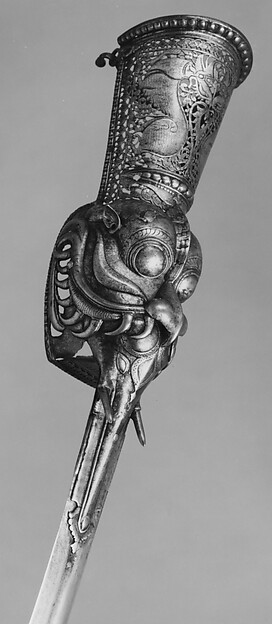
hilt, 17th–18th century; blade, 18th centuryGauntlet Sword (Pata)
S
17th centurySari
S
17th centuryShawl
D(
17th centuryDagger (Bichuwa)
Data Source: The Metropolitan Museum of Art Open Access · Object 31290