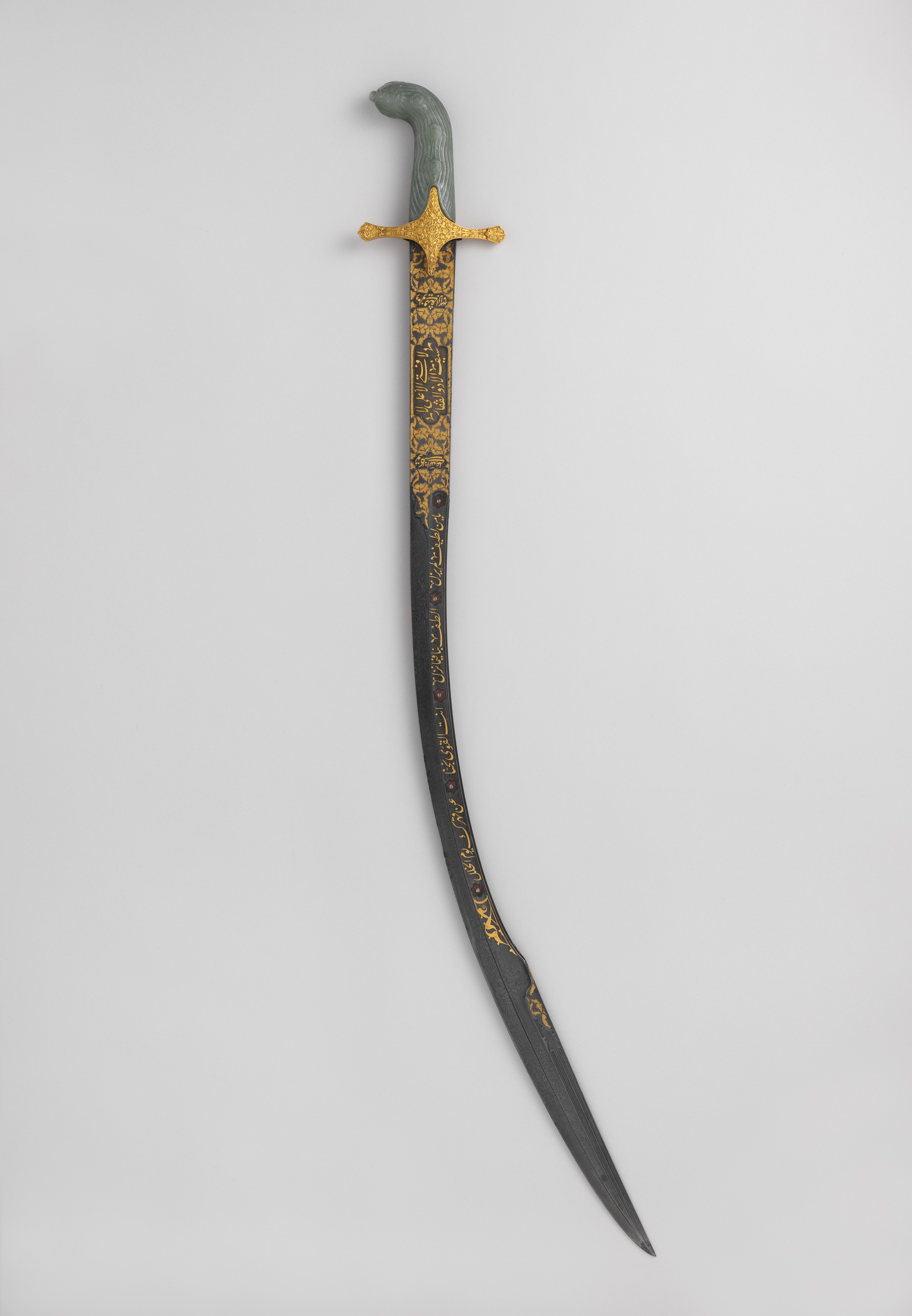
 Arms & ArmorSwordsGrip and guard, second half of the 17th century; blade, late 18th–19th century
Artwork Details
| Title | Saber |
| Medium | Steel, jade (nephrite), gold, copper, diamond |
| Dimensions | L. 38 in. (96.5 cm); L. of blade 32 3/4 in. (83.2 cm); Wt. 1 lb. 15 oz. (889 g) |
| Classification | Swords |
| Department | Arms & Armor |
| Date | Grip and guard, second half of the 17th century; blade, late 18th–19th century |
| Credit Line | Bequest of George C. Stone, 1935 |
| Object Page | View at The Met |
Cultural Origin
| Culture | Turkish |
| Date Range | 1650 – 1900 |
More swords from the Turkish tradition
S(
19th centurySword (Kilij) with Scabbard
S(
19th centurySword (Kilij) with Scabbard
S(
18th–19th centurySword (Yatagan) with Scabbard
S(
18th–19th centurySword (Yatagan) with Scabbard
S(
A.H. 1225/ A.D. 1810–11Sword (Yatagan) and Scabbard with Shoulder Strap
SW
18th centuryScimitar with Sheath
S(
18th centurySword (Kilij) with Scabbard
S(
A.H. 1105/ A.D. 1693–94Sword (Yatagan) with Scabbard
Data Source: The Metropolitan Museum of Art Open Access · Object 24321