 Arms & ArmorDaggers17th–18th century
Artwork Details
| Title | Hilt of a Crutch Dagger (Zafar Takieh, "Cushion of Victory") |
| Medium | Jade, ruby, gold |
| Dimensions | W. 5 in. (12.7 cm); Wt. 2.2 oz. (62.4 g) |
| Classification | Daggers |
| Department | Arms & Armor |
| Date | 17th–18th century |
| Credit Line | Bequest of George C. Stone, 1935 |
| Object Page | View at The Met |
Cultural Origin
| Culture | Indian, Mughal |
| Date Range | 1601 – 1800 |
More daggers from the Indian, Mughal tradition
D(
17th centuryDagger (Katar) with Sheath
D(
18th centuryDagger (Katar)
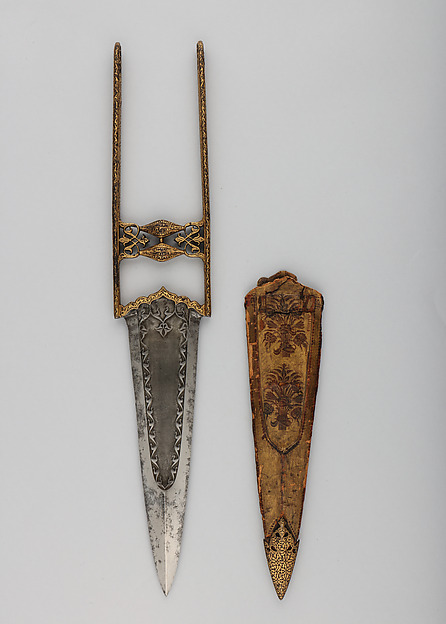
17th centuryDagger (Katar) and Sheath
D(
mid-17th centuryDagger (Khanjar)
HO
late 17th–early 18th centuryHilt of a Dagger
D
18th centuryDagger
D(
17th–18th centuryDagger (Katar) with Sheath
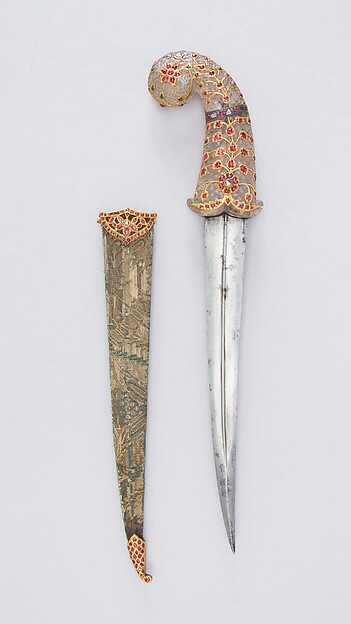
18th centuryDagger with Sheath
Data Source: The Metropolitan Museum of Art Open Access · Object 31473