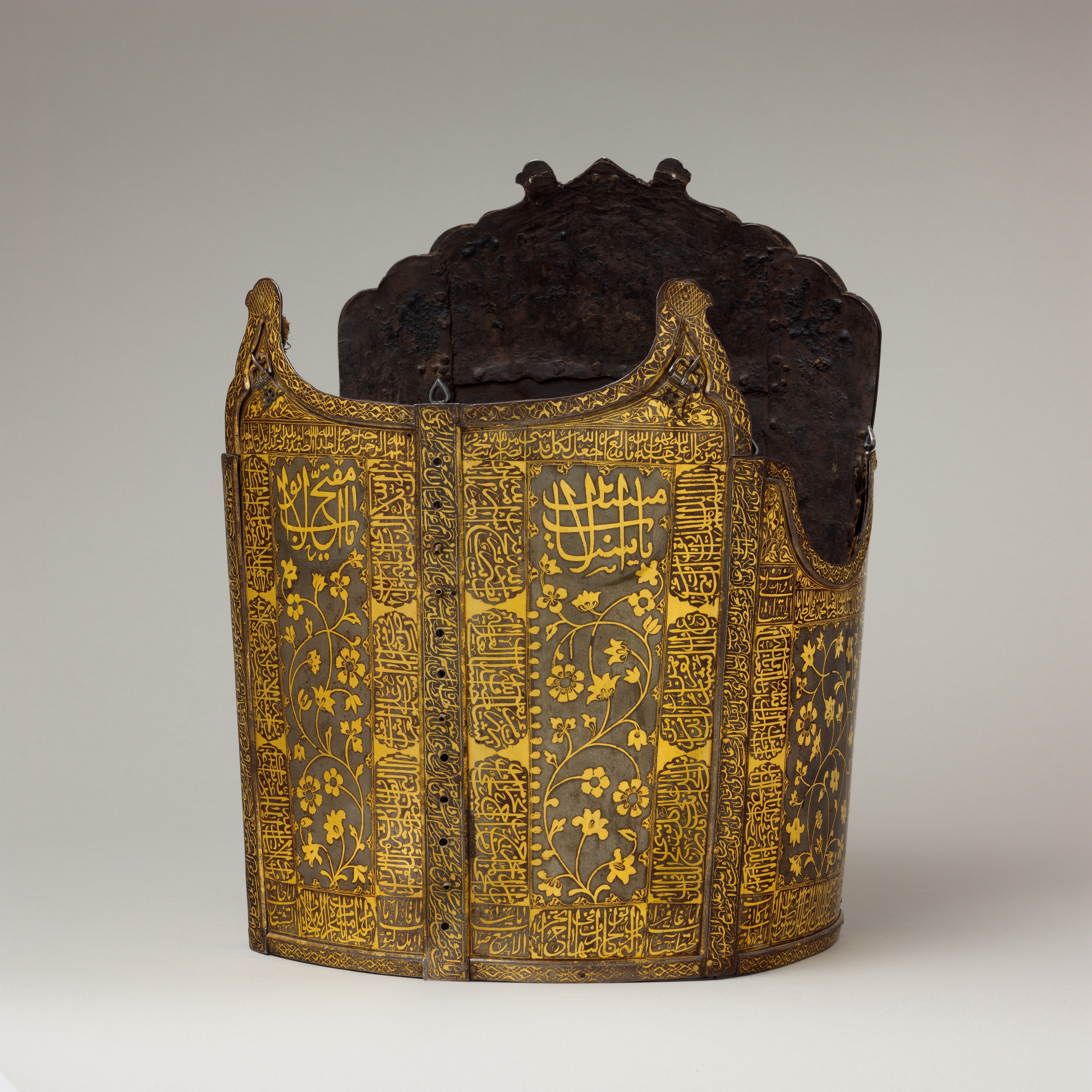
 Arms & ArmorArmor Parts-Cuirasseslate 18th–early 19th century
Cuirass (Char-aina) is a armor parts-cuirasses of Indian or Iranian origin created in late 18th–early 19th century using steel, gold, textile measuring of breastplate H. 13 in. (33 cm); of backplate H. 15 1/2… — now part of the Arms and Armor collection at The Metropolitan Museum of Art.
About This Artwork
| Medium | Steel, gold, textile |
| Dimensions | of breastplate H. 13 in. (33 cm); of backplate H. 15 1/2 in. (39.37 cm); of sides H. 9 5/8 in. (24.5 cm); of whole cuirass W. 11 1/4 in. (28.5 cm); of whole cuirass D. 9 1/2 in. (24 cm); of whole cuirass Wt. 7 lb. (3163 g) |
| Classification | Armor Parts-Cuirasses |
| Department | Arms and Armor |
| Credit Line | Gift of Harry G. Friedman, 1948 |
| Date | late 18th–early 19th century |
Historical Context
Culture & Period
This work belongs to the Indian or Iranian culture. The estimated date range is 1750 – 1850.
Frequently Asked Questions
What department houses Cuirass (Char-aina)?
Cuirass (Char-aina) is housed in the Arms and Armor department of The Metropolitan Museum of Art.
When was Cuirass (Char-aina) created?
Cuirass (Char-aina) dates to late 18th–early 19th century.
What material is Cuirass (Char-aina) made from?
Cuirass (Char-aina) is crafted from steel, gold, textile.
Is Cuirass (Char-aina) in the public domain?
Cuirass (Char-aina) is in the public domain and can be freely used.
Data Source: The Metropolitan Museum of Art Open Access · Last updated: April 2026