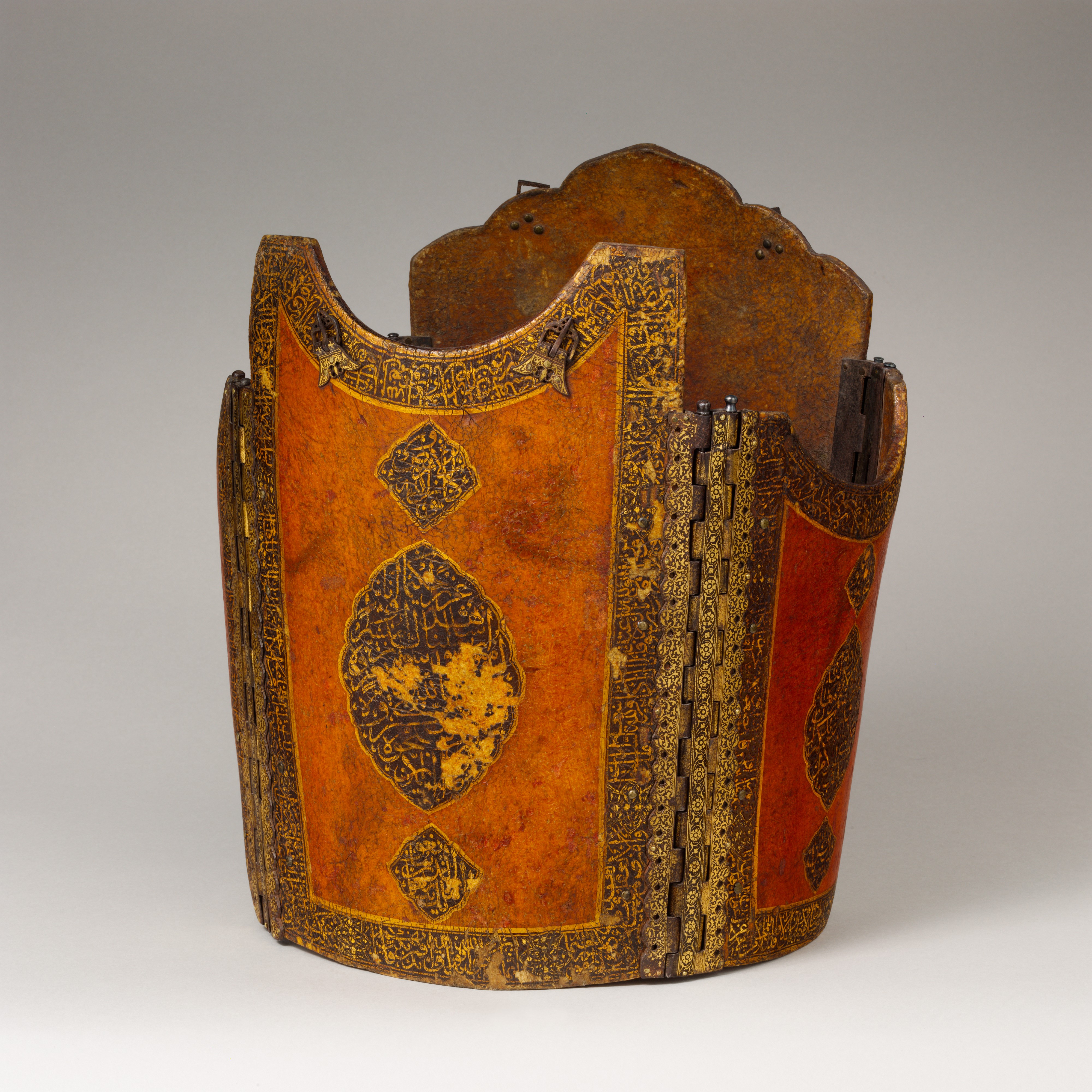
 Arms & ArmorArmor Parts-Cuirasseslate 18th–early 19th century
Artwork Details
| Title | Cuirass |
| Medium | Leather, lacquer, pigment, iron, copper alloy, gold |
| Dimensions | of breastplate H. 14 in. (35.6 cm); of backplate H. 15 3/16 in. (38.5 cm); of sideplates H. 11 in. (28 cm); of whole cuirass W. 13 1/2 in. (34.3 cm); of whole cuirass D. 10 3/8 in. (26.5 cm); of whole cuirass Wt. 7 lb. 14 oz. (3566 g) |
| Classification | Armor Parts-Cuirasses |
| Department | Arms & Armor |
| Date | late 18th–early 19th century |
| Credit Line | Bequest of George C. Stone, 1935 |
| Object Page | View at The Met |
Cultural Origin
| Culture | Iranian |
| Date Range | 1750 – 1850 |
Data Source: The Metropolitan Museum of Art Open Access · Object 24182