 Arms & ArmorShafted Weapons18th–19th century
Artwork Details
| Title | Crowbill (Zaghnal) with Sheath |
| Medium | Steel, silver, copper, gold, wood, velvet |
| Dimensions | L. 21 1/4 in. (54 cm) |
| Classification | Shafted Weapons |
| Department | Arms & Armor |
| Date | 18th–19th century |
| Credit Line | Bequest of George C. Stone, 1935 |
| Object Page | View at The Met |
Cultural Origin
| Culture | Indian |
| Date Range | 1701 – 1900 |
More shafted weapons from the Indian tradition
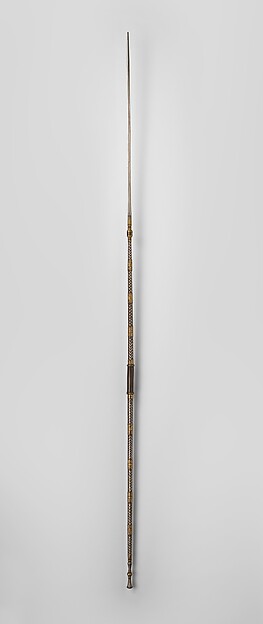
18th centuryLance
JO
18th centuryJavelin or Spear
S
17th centurySpear
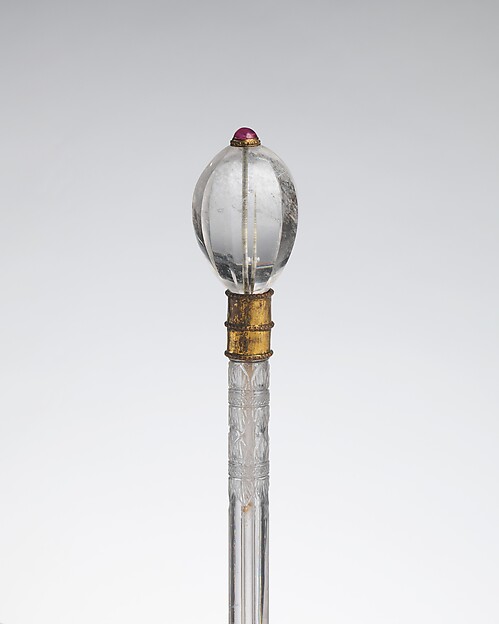
18th centuryCeremonial Mace
C(
1871Crowbill (Zaghnal)
AW
17th centuryAxe with Stiletto
SW
18th–19th centurySpearhead with Spear Butt
A
18th–19th centuryAxe
Data Source: The Metropolitan Museum of Art Open Access · Object 30787